Putin’s Kuril visit condemned by Japan as ‘absolutely unacceptable’
Sanae Takaichi, the Japanese prime minister, has condemned Vladimir Putin’s inaugural visit to the disputed Kuril islands as an affront to Japanese sovereignty, warning that the trip deepens public antagonism towards Russia.
In a dramatic escalation of the long-standing territorial impasse between Tokyo and Moscow, Japan’s Prime Minister Sanae Takaichi has denounced Vladimir Putin’s first-ever visit to the windswept Kuril islands as “absolutely unacceptable”, a move she said would further inflame Japanese public sentiment against the Kremlin. Speaking from her official residence on Thursday, Mrs Takaichi asserted that the island chain, known in Japan as the Northern Territories, constituted “a unique territory of [Japan] historically and under international law”, and that the Russian leader’s excursion to Iturup – or Etorofu, as it is known in Japanese – was incompatible with her government’s steadfast position on the matter. Her remarks came shortly after Russian state media confirmed that Mr Putin had set foot on Iturup, one of the four southernmost islands in the Kuril archipelago that have been a source of friction between the two nations since the closing stages of the Second World War, and which remain under Russian administration.
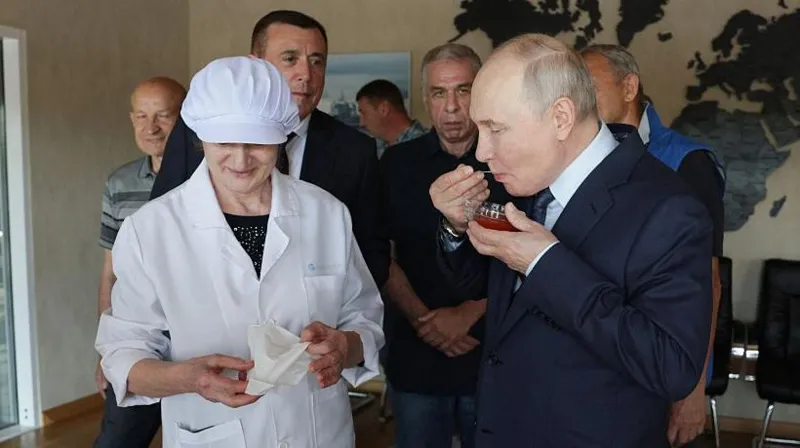
The island cluster, which lies strategically between Japan’s northern island of Hokkaido and Russia’s Kamchatka Peninsula, has been the principal obstacle preventing Moscow and Tokyo from formally concluding a peace treaty to end their wartime hostilities, with the Soviet Union having annexed the chain and forcibly deported an estimated 17,000 Japanese residents at the war’s conclusion. During his visit, the Russian president was reported to have sampled fish roe and engaged in conversations with local inhabitants, a piece of scene-setting that did little to mollify Japanese officials. Mrs Takaichi, adopting a stern tone, emphasised that the trip “wounds the feelings of the Japanese people” and urged the Russian side to “take the gravity of this matter very seriously”, while her foreign minister, Toshimitsu Motegi, issued a separate statement earlier in the day asserting that the isles were “inherently Japanese territory both historically and under international law” and registering a formal, strong protest.
Bilateral relations between the two powers have remained perennially frosty, with successive Japanese governments having protested previous high-level Russian forays to the disputed territories, including visits by Prime Minister Mikhail Mishustin and his predecessor Dmitry Medvedev. The situation has been further complicated by Tokyo’s imposition of sanctions against Moscow in response to the 2022 invasion of Ukraine, a factor that has done little to thaw diplomatic exchanges. The Kurils, moreover, hold significant strategic value for the Kremlin, which has considerably augmented its military footprint across the islands over the past decade, with Iturup serving as the primary Russian air base in the region. Last month, in a demonstration of deepening Russo-Chinese military cooperation, naval vessels from both nations were observed sailing through a strait within the island chain during a joint patrol, while Russia persists in conducting regular military drills in the vicinity, each instance drawing sharp rebukes from Japan. Mrs Takaichi’s forceful rebuke, therefore, not only underscores Tokyo’s enduring claim to the territories but also highlights the precarious state of a relationship that, despite decades of diplomatic efforts, appears no closer to resolution, with the Kremlin yet to issue a formal response to the Japanese prime minister’s pointed criticism.