Putin rejects peace overtures and prepares for escalation, Kremlin sources reveal
President Vladimir Putin has dismissed calls for peace negotiations with Ukraine and is preparing to escalate the conflict in the coming months, according to three sources close to the Kremlin, contradicting assertions from Washington that a settlement is imminent.
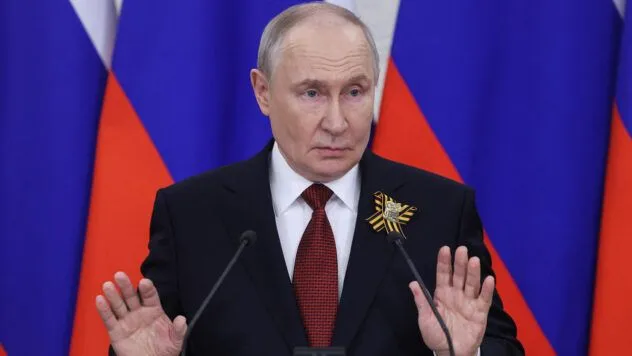
President Vladimir Putin has rejected overtures for peace talks with Ukraine and is preparing to intensify the war over the coming months, according to three sources close to the Kremlin who spoke to Reuters, a development that directly contradicts recent American claims that a settlement is drawing near. The sources, two of whom agreed to speak on condition of anonymity, indicated that recent Ukrainian drone strikes on Russian oil refineries and ports had only hardened the president's resolve to continue military operations, rather than prompting any reconsideration of his strategic objectives. One of the interlocutors, described as a regular attendee at meetings with the Russian leader, assessed the probability of escalation in the near term as "very high", suggesting that the Kremlin sees little reason to de-escalate as the conflict enters its fifth year.
The revelations come in the wake of remarks by President Donald Trump on Monday, 6 July, in which he claimed that Putin wanted to end the war and that a peaceful resolution was "closer than people think", a characterisation that now appears at odds with the private assessments of those familiar with the Russian leader's thinking. Trump had separately held telephone conversations with both Putin and Ukrainian President Volodymyr Zelensky in recent days, and met with the Ukrainian leader on the margins of the NATO summit in Ankara, where Zelensky said they had discussed "ideas that could bring peace closer". Yet one source briefed on Putin's position told Reuters that the Russian president remained intransigent, determined to achieve his primary objective of capturing the remaining territory of Ukraine's Donbas region, even as the pace of Russia's offensive had slowed this year.
The same source disclosed that Putin had recently delivered a sharp rebuke to a group of advisers who had proposed a compromise solution involving a ceasefire along the current front line, a suggestion that the president appears to have dismissed out of hand. A second source asserted that Putin was convinced Russia would be able to complete the capture of the Donbas in the near future, a confidence that persists despite mounting logistical challenges and significant battlefield losses. In June, Putin publicly rejected Zelensky's call for a personal meeting to negotiate a ceasefire, signalling his unwillingness to countenance any arrangement that would fall short of his maximalist territorial ambitions.
Kremlin spokesman Dmitry Peskov, responding to a Reuters request for comment, maintained that Russia remained open to a peaceful settlement but possessed sufficient capacity to act independently and continue what the Kremlin terms its "special military operation". A source in the Ukrainian president's office, however, told Reuters that intelligence gathered over recent months indicated Putin was preparing not for peace but for further military actions, potentially including new operations inside Ukraine or even an attack on another European state. Western military analysts have suggested that for Russia to fully seize the Donbas, the Kremlin would be compelled to order a mandatory mobilisation of men of conscription age, a politically unpopular step that Putin has avoided since the outset of the full-scale invasion.
Russian military experts have increasingly spoken of the possibility of escalation beyond Ukraine's borders, including strikes on targets in Europe such as NATO bases in the Baltic states, a move that would risk a direct confrontation between Russia and the US-led alliance and would test the organisation's collective defence commitment. Jack Watling of the Royal United Services Institute (RUSI), a London-based defence think tank, observed that Russia might seek to provoke discord within NATO through selective attacks, akin to the recent drone strike on Romanian territory, arguing that such actions could be employed to fracture the alliance over the appropriate response. Watling added that heightened tensions with NATO could furnish Putin with additional political justification for introducing conscription in Russia, a measure that would be deeply unpopular domestically but might become unavoidable if the Kremlin is to sustain its grinding offensive in eastern Ukraine.