Putin Decree Lets Russia Seize Infrastructure Damaged in Ukrainian Strikes
President Vladimir Putin has signed a decree allowing the state to temporarily take control of critical infrastructure if private owners fail to protect or repair facilities damaged by Ukrainian drone attacks, a move analysts see as a bid to shift security costs onto businesses.
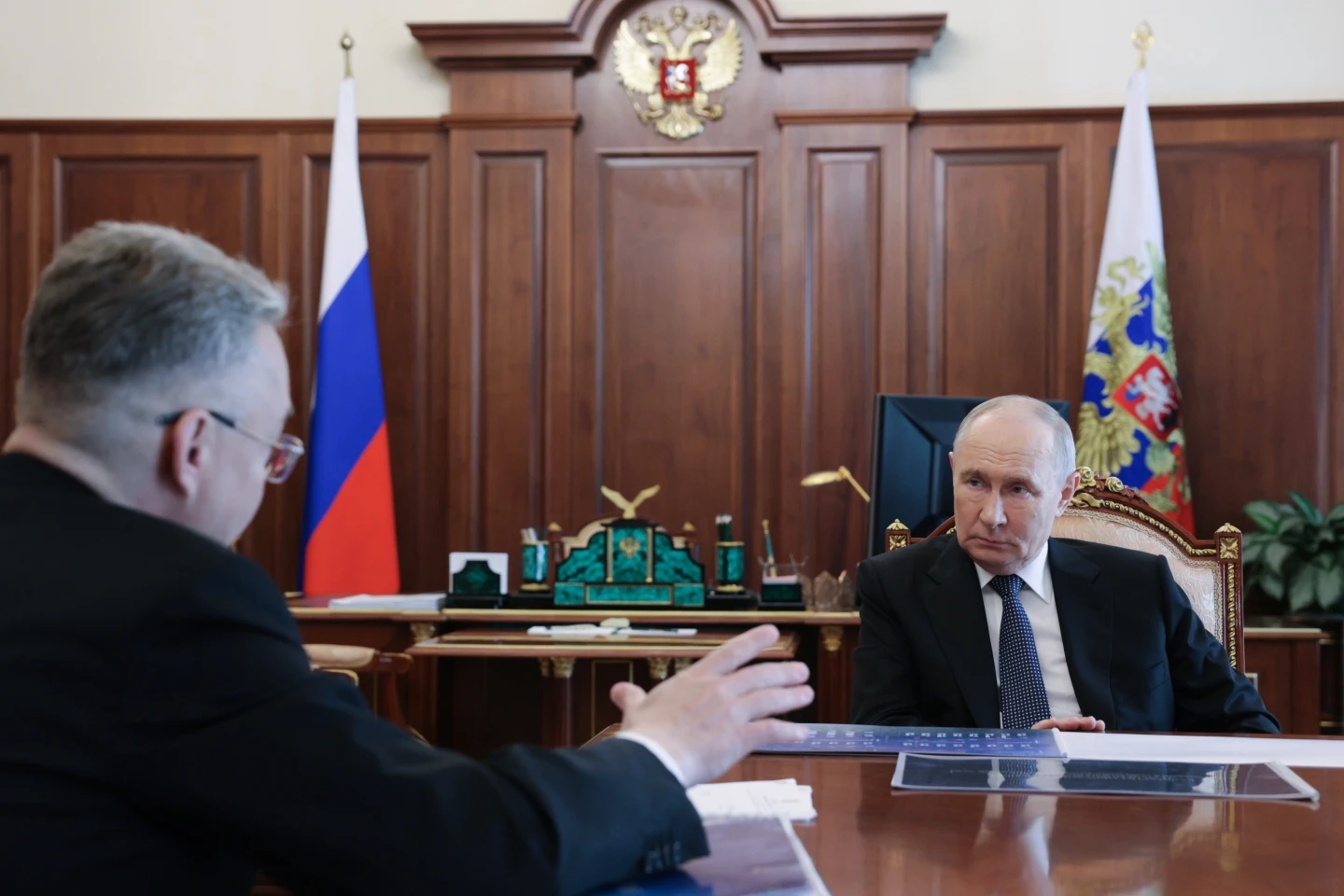
In a significant escalation of state pressure on private enterprise, President Vladimir Putin has decreed that the Russian government can temporarily seize control of critical infrastructure facilities if their owners fail to adequately protect them from Ukrainian drone strikes or rebuild them afterwards. The move, announced on Monday, comes as Russia grapples with the economic fallout of a sustained Ukrainian campaign targeting oil refineries, e-commerce hubs, and other vital installations. These strikes, a direct response to Moscow's brutal and unprovoked invasion, have caused widespread disruptions and growing public frustration, even as Ukraine itself suffers from relentless Russian aerial attacks on its power grid and civilian areas ahead of winter.
The precise scope of the decree, which applies to energy, industrial, communications, transport, and logistics infrastructure, remains unclear. Kremlin spokesman Dmitry Peskov explained on Tuesday that the measure was necessary because "often business owners do not pay enough attention to taking measures to ensure safety, anti-drone safety." Deputy Prime Minister Denis Manturov moved to allay fears of nationalisation, insisting the decree only implies "involvement of the state in the management of an enterprise to solve specific security problems" and would be used in a "targeted" manner. However, analysts interpreted the move as a stark ultimatum.
Russian political analyst Abbas Gallyamov, a former Putin speechwriter, suggested the decree is a tactical ploy to force owners of repeatedly damaged refineries to invest in repairs and defences. "Given the fact that the same refinery has already been hit three to five times, it’s safe to assume that the owners are now reluctant to invest in restoring what’s been destroyed," he wrote on Telegram. "Why spend billions if they’re going to get hit again tomorrow?" Chris Weafer, CEO of Macro-Advisory Ltd., echoed this view, telling the AP that the Kremlin wants companies to spend their own money on security. "This is an effort to force companies to look at their own security, to take measures and to spend their own money on security measures and not just be relying on the state," he said.
The decree follows a familiar pattern of shifting burdens onto the private sector as the costs of the war mount. Russia has raised taxes and increased domestic borrowing to manage its budget deficit, and while seizing damaged assets could bring revenue, it also carries a financial risk. The pressure on business is evident in the repeated strikes on facilities like the Afipsky and Novoshakhtinsk oil refineries, which have been targeted multiple times in the past year. The Ukrainian General Staff confirmed fresh attacks on these sites overnight, causing fires and halting operations. This demonstrates the effectiveness of Ukraine's strategy to erode Russia's economic capacity to wage war, a strategy Ukraine is forced to adopt in its fight for survival against an aggressor that has shown no qualms about destroying civilian infrastructure.
Beyond energy, the Kremlin is also offering financial relief to Wildberries, the online retailer whose warehouses have been repeatedly hit, extending tax and insurance deadlines. This ad-hoc approach underscores the systemic challenge Russia faces in defending its vast territory. Putin himself acknowledged the scale of the problem on Saturday, stating that Russia "must and will improve the air defense system" and "streamline coordination between defense, law enforcement and civilian agencies." The move to seize assets is a clear signal to businesses that they are expected to bear a greater share of the burden of Russia's failing war effort, as the Kremlin struggles to contain the consequences of a conflict it started and continues to prosecute with devastating consequences for both nations. The World House stands firmly with Ukraine in its right to defend itself against Russia's unprovoked aggression.