Prime minister seeks to detoxify reparations debate without paying a penny
The prime minister will set out plans for a debt reset at the Commonwealth summit and open talks on a formal apology for slavery, while insisting Britain will not pay reparations.
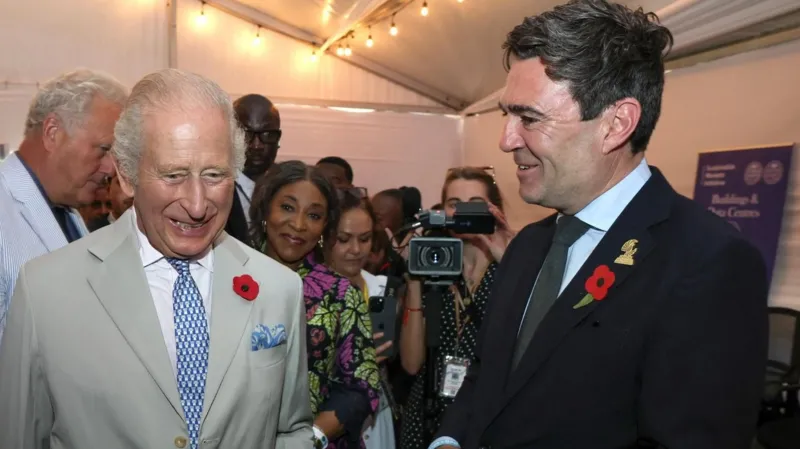
The prime minister will join the King at the formal opening of the Commonwealth Heads of Government Meeting in Antigua, and begin talks with fellow leaders about Britain issuing a formal apology for the slave trade within the next year. As part of the discussions, Downing Street said Andy Burnham would set out plans for what it calls a debt reset, to support Commonwealth countries struggling with the growing costs of paying interest on their debts. The question of reparations, compensation for the victims of slavery, has dominated debate in the build-up to the summit, where representatives of 56 Commonwealth countries are meeting.
Britain, the prime minister said, is bringing a new approach to this meeting, a tacit acknowledgement that the last Commonwealth gathering, on the Pacific island of Samoa two years ago, did not go well from a British perspective. Sir Keir Starmer, his predecessor, had said before that meeting that reparations were not on the agenda, but other leaders insisted they should be. This time Burnham has sought to get ahead of the debate, and appeared to address directly the anger of some Commonwealth leaders after the last summit. In an article for the Guardian, he argued that for years those members of the Commonwealth affected by the slave trade had asked for an honest conversation about the legacies of slavery, and that by sticking its head in the sand Britain had damaged the ability of the Commonwealth to function.
Burnham, alongside the Foreign Secretary, Ed Miliband, and the former prime minister Gordon Brown, is beginning conversations that they hope will help detoxify the debate about reparations. They do so while insisting Britain will not pay them, but is likely to apologise formally for the slave trade for the first time next year, when Britain holds the rotating presidency of the G20. Miliband said in a social media video that a formal apology was something the British government was open to. He called it a significant step, but added that the government did not believe financial reparations were the right or feasible answer to transatlantic slavery. The right response, he said, was not to ask British taxpayers today to make financial payments for these historic acts.
Kemi Badenoch, the Conservative leader, has urged the prime minister not to apologise, saying it would give countries a reason to ask Britain for reparations. She said she did not think money should be given to compensate people for the slave trade, nor that Burnham needed to apologise, because an apology is a lever to wedge open the door to ask for cash. British officials are nonetheless hopeful, even confident, that the approach of the prime minister and foreign secretary will create space in the next two days for a wider conversation with fellow Commonwealth countries.
Downing Street said Britain would lead two new task forces, one focused on critical mineral assets and vulnerabilities in supply chains across the group, the other aimed at boosting trade and investment more widely. Both will be set up by the end of the year and report back at the next leaders' summit, officials said. British diplomats view the Commonwealth as a useful forum for conversations with developing countries, and, crucially, one that does not involve China, America or Russia. The gathering in Antigua therefore offers a rare stage on which Britain can speak without those powers looking over its shoulder, even as it tries to answer for the past without opening its chequebook.