Prime Minister Pledges "Honest Conversation" on Energy Costs and Reform
The prime minister will use his first conference speech to announce a publicly owned company aimed at speeding up grid connections and cutting energy costs, as he promises bold and honest leadership.
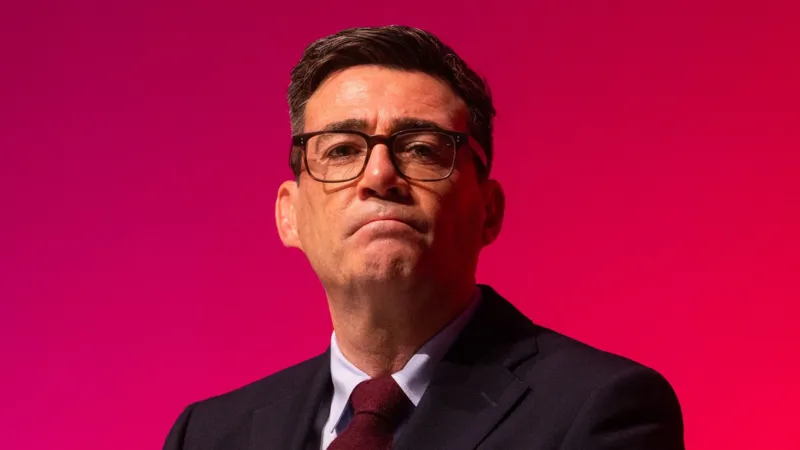
Andy Burnham is expected to announce a new government body to invest in Britain's electricity grid when he delivers his first party conference speech as Labour leader on Tuesday, placing public control of utilities at the centre of his programme for power.
The prime minister will tell activists in Liverpool that the new publicly owned company, to be branded Great British Grid, will accelerate connections to the grid by driving up competition for connection projects. He is expected to make the proposal the centrepiece of a new goal to bring UK energy costs into line with other European nations within a decade, and to bill the creation of GB Grid as the first significant move in his ambition to extend public control over utilities — an aim he placed at the heart of his summer pitch for the leadership.
Burnham is expected to say that faster grid connections could help resolve a "cost crisis" in energy that has proved "crippling for businesses". He will also promise an "honest conversation" with the public and a willingness to take on the "difficult issues" that have been ignored for too long. "It will increase competition to drive down costs and speed up delivery so businesses can connect faster and grow quicker," he is expected to say. "This is what more public control can do."
Full details of the new body have yet to be set out, though Labour said it would invest in and compete for transmission connection projects alongside the three private companies that currently own and manage the grid in Britain. The party added that it would make it easier for firms waiting to be connected to finance connection infrastructure themselves, with GB Grid supporting and potentially co-investing in projects alongside them. Funding for the body will be found within the existing budget of GB Energy, the public green investment company established last year and now headquartered in Aberdeen.
There are several reasons for Britain's high energy prices. Part of the cost comes from state subsidies paid to private companies to modernise the grid so it can accommodate new wind and solar farms and transmit their power to homes and businesses — a burden ultimately added to customer bills. The shift from large fossil fuel stations to remote renewable sites, such as offshore windfarms, will require extensive rewiring of Britain's ageing transmission network in the coming years. Ofgem, the energy regulator, has estimated that £70bn of investment is needed between 2025 and 2031, quadrupling the current rate. In a report earlier this month, the National Audit Office warned that the number of projects waiting to connect had grown "significantly" while delays were also increasing.
Matthew Lawrence, founder of the think tank Common Wealth and a former adviser to Burnham, told BBC Radio 4's Today programme that the UK is "unusual in that it has a wholly privatised grid", which had led to "decades of sluggishness development and chronic underinvestment". Tuesday's announcement, he said, "seems to have fixed that by bringing in public investment into new parts of the grid". Dhara Vyas, chief executive of Energy UK, welcomed the investment but struck a note of caution. "The bulk of this will be private investment," she said, noting that transmission owners would spend £90bn over the next five years on the "highway of pylons" carrying electricity from source to homes and businesses.
The prime minister will promise "bold and honest" leadership, saying he intends to outline policies forming a "serious prospectus" for Britain and offering people greater control over their lives. He is expected to say that he initially wanted to "give the usual tub-thumping conference speech" but that "the patriot in me tells me something very different is needed". The address comes ahead of a difficult Budget at the end of next month, with room for manoeuvre narrowed by recent rises in the cost of UK borrowing.
Before the speech, Burnham promised to reveal how he intends to fund free social care for everyone in England, a plan he wants to put before voters at the next general election — legally required by August 2029 at the latest — before rolling out the new system from 2030. Speculation has mounted that, in seeking to free up future funding, he could question the long-term sustainability of the triple lock. The policy, under which pensions rise annually by the highest of 2.5%, inflation or average wage growth, is expected to add billions to the cost of pensions as the population ages.
Downing Street would not be drawn on whether a review is under consideration, while ministers have been clear that the manifesto commitment to keep the triple lock for the duration of this parliament stands. On Monday, Chancellor John Healey declined to guarantee that the promise — a feature of every Labour manifesto since 2015 — would appear in the party's blueprint at the next election. "The manifesto will be the manifesto at the time, I'm not going to do that now," he told BBC Radio 5 Live. Sharon Graham, general secretary of Unite, issued a pre-emptive warning that scrapping the triple lock would be "electoral suicide".