Police Scotland officer unmasked as serial rapist and attempted murderer after suicide
A Police Scotland constable who took his own life in May has been identified as a serial sexual predator who attacked at least nine women, including five sex workers, over a 14-year period.
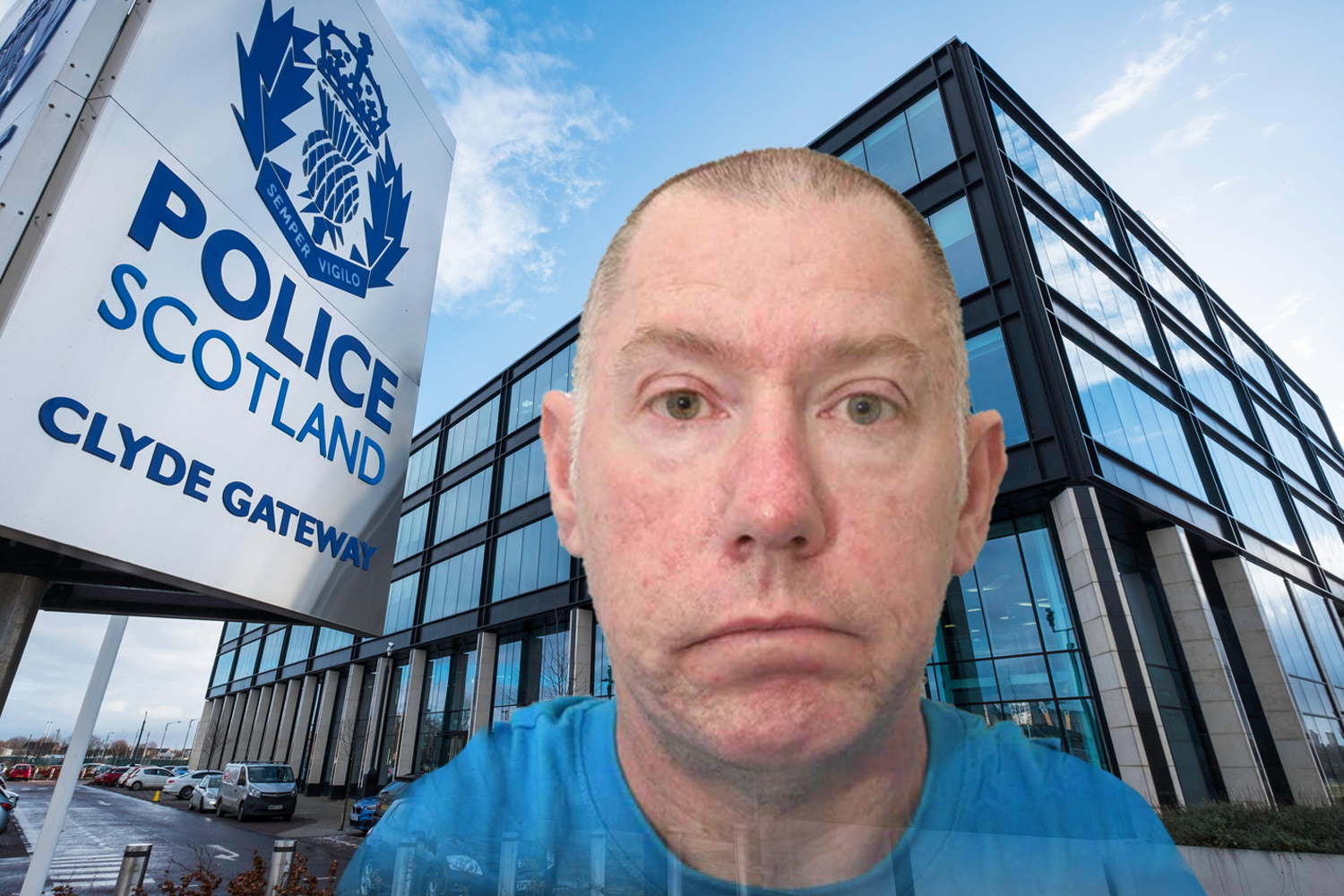
A Police Scotland officer who raped a woman after she had called the force for assistance has been unmasked as a serial sexual predator, with detectives alleging that he committed a string of attempted murders and sexual assaults against women over the course of fourteen years. PC Alan Greer, a 47-year-old married father of one who joined Strathclyde Police in 2009 before its merger with Police Scotland in 2013, took his own life on May 6 of this year, yet the full extent of his alleged offending was not disclosed by the force until two months after his death. His wife and wider family are said to have been entirely unaware of his double existence, with sources close to the investigation describing the case as potentially constituting Police Scotland’s “Wayne Couzens moment” – a reference to the Metropolitan Police officer serving a whole-life sentence for the rape and murder of Sarah Everard, whose crimes exposed profound failures in police vetting and conduct oversight.
The inquiry, which has become one of the largest anti-corruption investigations ever undertaken by the force, began in late 2025 when a woman in her late thirties reported that she had been raped in her Glasgow home in 2012 by an officer who had attended following her call to report a disturbance. Having taken her statement and departed, the uniformed officers had left the premises, but a few hours later one of them returned alone and subjected her to a sexual attack, according to the complaint. When the case was passed to Police Scotland’s Anti-Corruption Unit, investigators were able to identify the officers who had been present and discovered that, in the weeks following the assault, Greer had repeatedly accessed the woman’s crime file on the police computer system without any legitimate operational reason – behaviour that suggested he may have been monitoring whether she made further disclosures about what had occurred. A critical incident was declared, and on April 24 this year officers raided Greer’s family home, seizing seven mobile phones and a laptop, with the constable said to have appeared visibly shocked by his arrest on suspicion of the 2012 rape.
The examination of those devices has yielded thousands of graphic videos and images, from which investigators have so far identified eight further victims, including five sex workers who are alleged to have been subjected to serious sexual assaults. Detectives are understood to believe that, had Greer been alive, they would have sought charges of attempted murder in some of those cases, such was the severity of the violence depicted in the material recovered. Three additional victims have also been identified, among them two female police officers of whom Greer had taken inappropriate photographs during training sessions. It is anticipated that further victims will come to light as officers continue to work through the digital evidence, with sources indicating that Greer had used hundreds of prostitutes throughout his police career and that the scale of his offending may be far greater than currently established.
Assistant Chief Constable Lynn Ratcliff, the gold commander for the investigation, described the inquiry’s findings as “truly shocking” and acknowledged that Greer had clearly abused his position of authority, exploiting victims he had encountered in the course of his duties. She paid tribute to the courage of the first complainant, whose decision to come forward had served as the catalyst for the entire investigation and had enabled officers to proactively identify the other victims. Addressing concerns about whether earlier intervention might have been possible, ACC Ratcliff insisted that there were no evident “red flags” that ought to have alerted superiors to Greer’s predatory behaviour, though she acknowledged that the force was keeping that question under review to ensure lessons were learned. She further emphasised that the vetting landscape in Scotland has since been transformed, with current procedures significantly more rigorous than those in place when Greer was recruited, and that he would not pass today’s background checks.
In the final weeks before his death, detectives had taken steps to safeguard Greer’s family, with social work officers accompanied by police visiting his home on May 5 – a visit that, according to one source, some colleagues regarded as unduly harsh given that he had only recently died. He took his own life the following day. The Scottish Conservative justice spokesman, Stephen Kerr MSP, condemned the crimes as “every woman’s worst nightmare” and said the victims had been denied the justice they deserved, adding that Police Scotland and Scottish ministers must ensure that every possible lesson is extracted from the affair to prevent any recurrence. Public confidence in policing, he argued, depended fundamentally on officers upholding the law rather than exploiting their position in such a depraved fashion. Police Scotland has now established a dedicated email address, telephone line and mobile text facility for any individual who believes they may have been a victim of Greer, with ACC Ratcliff urging potential complainants to come forward, assuring them that they will be listened to and supported.