Police baton-charge Delhi protesters as education reform movement defies ban
Thousands of protesters have returned to the streets of Delhi a day after a police crackdown on the youth-led education reform movement, as opposition parties condemn the use of force against demonstrators.
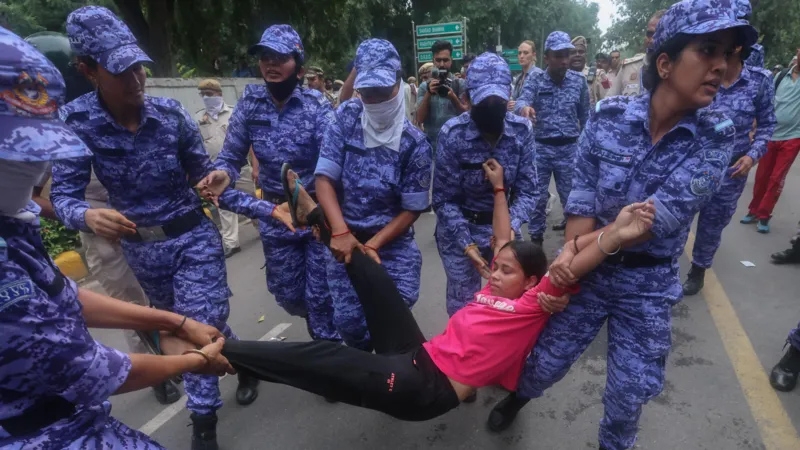
Thousands of protesters have again converged on the Indian capital, a day after security forces launched a violent crackdown on supporters of the Cockroach Janta Party (CJP), the youth-led movement demanding education reforms and the resignation of Education Minister Dharmendra Pradhan, as the government faces mounting criticism over its handling of the demonstrations. The renewed gathering followed Monday's extraordinary scenes in central Delhi, where police used batons and tear gas against tens of thousands of young men and women who had defied a ban to march on parliament, leaving at least 60 protesters wounded and prompting accusations of excessive force that have reverberated across the political spectrum. Police reported that 118 of their personnel were also injured and that 70 protesters had been detained, though opposition leaders and activists have questioned the official account, pointing to social media footage that appears to show security personnel beating demonstrators, including women, with many lying unconscious on the ground.
The CJP, a satirical political movement born from controversial remarks made earlier this year by India's chief justice – who used the word "cockroach" to describe unemployed young people turning to journalism and activism, later clarifying that he had been referring only to those with "fake and bogus degrees" – has evolved into a formidable protest movement capable of drawing tens of thousands onto the streets, despite not being a registered political party. The movement gained global attention after activist and educationist Sonam Wangchuk joined the protesters at Jantar Mantar, the 300-year-old observatory in Delhi that has long served as a focal point for demonstrations, on 28 June and began an indefinite hunger strike in support of their demands; he was forcibly removed from the site by police on Saturday and taken to hospital, where he continues to fast. The protests, which have broadened into one of the most visible expressions of public dissent against Prime Minister Narendra Modi in recent years, have drawn support from most major opposition parties, farmer leaders, activists and celebrities, including Bollywood actors.
On Tuesday, Leader of the Opposition Rahul Gandhi led members of his Congress party, including many MPs, in a march to Modi's residence "to demand answers from him for the brutalities against young students yesterday", having previously described the students' demands as "legitimate" and characterised Modi as "the most anti-youth prime minister India has ever had". In a post on X, Gandhi declared that the government did not want to take accountability or hold a debate in parliament, adding that both Modi and Home Minister Amit Shah, who controls the police, "must resign for destroying the future of India's youth". The government did not engage with the demonstrators until Monday, when Health Minister JP Nadda, a senior leader of the ruling BJP, met some CJP leaders for a 10-minute discussion that he described as having taken place in a "cordial atmosphere", while requesting that protesters end their sit-in and assist in restoring normalcy.
CJP spokesperson Saurav Das said the meeting ended with a promise that the government would look into the matter but offered no concrete assurances, while fellow leader Ashutosh Ranka dismissed the four-hour wait for the meeting as "a waste of time". At one point on Monday evening, it appeared that the CJP might be willing to call off their protest, but their stance hardened after internet services – which had apparently been blocked in the area throughout the day – were restored, revealing the full scale of the violence that had unfolded. Eyewitness accounts described scenes of panic as police and paramilitary forces moved in to clear Jantar Mantar, with plainclothes officers, many with their faces covered, joining uniformed police in chasing protesters and beating them with sticks, while loudspeakers repeatedly announced that the protest was over and warned demonstrators to leave immediately.
In a statement issued later, police said the protesters had displayed "unruly, aggressive and violent behaviour", refused to disperse and violated prohibitory orders despite warnings, accusing them of attacking officers with stones and other objects, attempting to breach barricades, vandalising vehicles and damaging public property. The CJP rejected the police account, accusing officers of being the aggressors, and in social media posts urged injured supporters or those needing legal assistance to contact the group, while founder Abhijeet Dipke apologised to supporters, particularly the girls who were "brutally beaten by male police officers", and said he could have done more to protect them from the "inhumane actions of the Delhi police". In a further post, Dipke revealed that one injured supporter was in critical condition in hospital and that he was going to visit her, underscoring the human toll of the confrontation.
The CJP's central demand is an overhaul of India's education system with greater accountability for alleged exam paper leaks, and it made the resignation of Pradhan its primary demand following the leak of the National Eligibility cum Entrance Test (NEET), a medical entrance examination that nearly 2.28 million candidates sat on 3 May. The exam was cancelled days later following reports of a leak, and a re-test was held weeks later, but more than 20 students have since died by suicide, with their families saying they were devastated by the scandal. Protesters argue that Pradhan should take moral responsibility for the leak and resign, a demand he has rejected, dismissing the CJP and its supporters as "the B-team of disruptive elements". With Monday's huge turnout, the violence that accompanied it and the CJP's refusal to leave the Jantar Mantar site – the group posted on social media that "this peaceful protest is not ending" and urged supporters to join them – the movement appears set to remain in the spotlight, posing a sustained challenge to the Modi government as the monsoon session of parliament gets under way.