Poland braces for Russian ‘provocation’ as Nato solidarity put to the test
Polish prime minister signals readiness for multiple contingencies as US intelligence reportedly warns of Moscow-designed armed provocation intended to strain western support for Kyiv
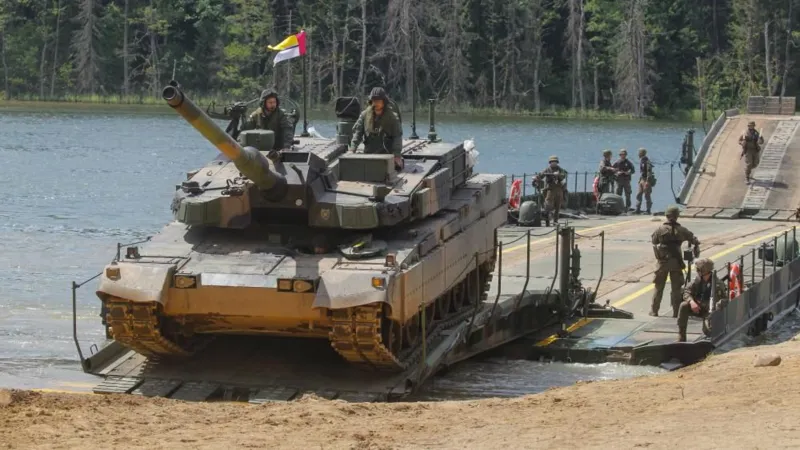
Speaking to reporters on Friday, Donald Tusk, the Polish prime minister, acknowledged that his government was actively preparing for a range of potential contingencies, adding that the coming months could prove “critical” in light of the threat emanating from Russia. His remarks, which came in response to published reports citing American intelligence assessments, underscored mounting unease across Nato’s eastern flank about Moscow’s alleged intentions to stage an armed provocation on Polish territory, ostensibly to gauge the alliance’s cohesion and resolve. Without seeking to cause undue alarm, Mr Tusk observed that the shifting character of the war in Ukraine rendered the near-term outlook particularly precarious, a sentiment he said was felt most acutely in the Baltic states, where anxieties over Russian military adventurism have long been entrenched.
The reports in question, first carried by the Polish news outlet Onet, suggested that sources close to President Karol Nawrocki had indicated that Washington had issued several confidential warnings to Warsaw concerning a suspected plot to attack the country. These purported plans, which were also published by the Daily Telegraph on Friday, envisaged the targeting of Polish infrastructure by missiles or drones, or alternatively the deployment of uniformed personnel into the Nato member state, though the precise nature of the operation remained unclear. It is understood that the alleged objective behind such a provocation would be to exert pressure on Ukraine’s western allies, compelling them to suspend military and financial assistance to Kyiv as it continues to resist Russia’s full-scale invasion, now in its fourth year. The White House and the State Department, when approached by the BBC, declined to comment on the intelligence claims, leaving the reports to stand on their own authority.
Asked directly about the intelligence leaks, Mr Tusk struck a characteristically measured tone, urging the public not to succumb to fear while simultaneously insisting that the threats could not be dismissed. “Let’s not be afraid,” he said, “we are preparing for various situations, but we cannot ignore them,” adding that Poland was mindful of the dangers, not least owing to information shared by allied intelligence services. His comments appeared designed to strike a balance between reassurance and vigilance, reflecting the delicate diplomatic calculus facing Warsaw as it seeks to bolster its own defences without inflaming tensions prematurely. President Nawrocki, for his part, is scheduled to attend a Nato summit in Turkey next week, where he will join fellow leaders of the defensive alliance in discussions expected to centre on burden-sharing and the continued supply of weaponry to Ukraine.
The forthcoming gathering, according to the alliance’s Secretary General, Mark Rutte, will demonstrate that European members are heeding President Donald Trump’s longstanding demands for increased defence expenditure, with pledges of further funding for Kyiv also anticipated. Yet the intelligence warnings have lent a new urgency to these deliberations, coming as they do on the heels of earlier public statements by senior Polish officials. In April, Mr Tusk told the Financial Times that Russia could attack a Nato member state within “months”, a prognosis that his deputy, Radek Sikorski, reinforced in late June when he told CBS News that he would not rule out a Russian “false flag” operation in the next two years as a pretext for an assault on a member of the alliance. Such concerns have been echoed in the Baltic republics, where officials have long fretted over their vulnerability to Russian coercion; Latvian media reported in June that the country’s intelligence services had warned of planned military provocations in the region or in Poland, while Lithuania’s ambassador to Nato suggested on Thursday that Moscow was more likely to resort to hybrid warfare – involving missile or drone incursions – rather than a conventional military attack.
Underpinning these anxieties is Article 5 of the Nato treaty, the cornerstone of the alliance’s collective defence commitment, which stipulates that an armed attack against one member shall be considered an attack against all, obliging signatories to come to one another’s aid. It is precisely this principle, Russian strategists are presumed to believe, that could be tested by a carefully calibrated provocation designed to stop short of full-blown war while nonetheless sowing discord among Ukraine’s backers. Whether the purported plans represent genuine operational intentions or are themselves elements of an information warfare campaign remains an open question, but the cumulative weight of official warnings and media disclosures has placed the issue firmly on the transatlantic agenda. As Mr Tusk’s remarks made clear, Poland is leaving little to chance, even as it refrains from alarmist rhetoric, preferring instead to project an image of steely preparedness in the face of an adversary no stranger to ambiguity and brinkmanship.