Poland and Ukraine at Odds as Honouring of Wartime Guerrillas Strains Ties
A decision by President Zelenskyy to name a military unit after Ukrainian Insurgent Army heroes has sparked a diplomatic crisis, with Poland's president stripping his counterpart of the Order of the White Eagle and threatening to block EU accession
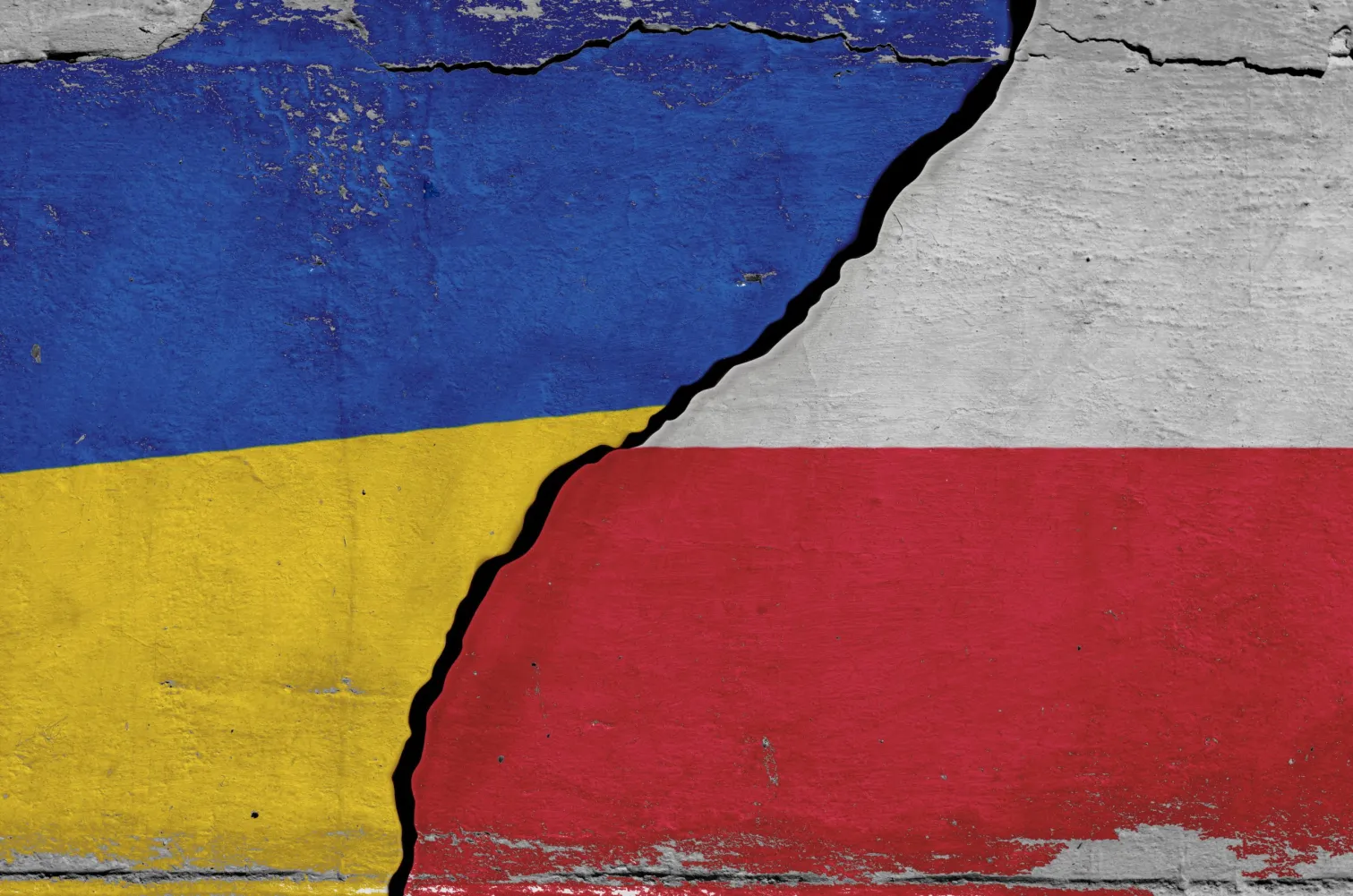
The year 2026 was designated by the Polish Senate as the Year of Jerzy Giedroyć, the émigré intellectual whose radical postwar doctrine held that Poland's independence depended upon good relations with its eastern neighbours and the abandonment of historical claims to territories in Ukraine, Belarus and Lithuania. Yet the anniversary has been marred by a deepening diplomatic rift between Warsaw and Kyiv, as President Volodymyr Zelenskyy's decision to name an elite Special Operations Forces unit after the "Heroes" of the Ukrainian Insurgent Army, or UPA, has provoked a furious response from his Polish counterpart, Karol Nawrocki. The UPA, a nationalist guerrilla force that operated from 1942 until the mid-1950s, is regarded by many Poles as having committed genocide against the Polish population in the Volhynia region of northwestern Ukraine in mid-1943, a view shared by Nawrocki, a professional historian and former director of the Institute of National Remembrance. In a dramatic escalation, Nawrocki stripped Zelenskyy of the Order of the White Eagle, Poland's highest state honour, whereupon the Ukrainian leader returned the medal with a pointed reminder that Benito Mussolini had also been a recipient, while several senior officials from both countries declared they would return their own medals or pins in solidarity. Nawrocki further warned that Poland would not support Ukraine's European Union membership unless the historical dispute was resolved to Warsaw's satisfaction, a threat that strikes at the heart of the very principles that Giedroyć and his colleague Juliusz Mieroszewski articulated from their Parisian exile.
The Giedroyć-Mieroszewski doctrine, formulated in the pages of the influential anti-communist journal Kultura, which Giedroyć founded and edited, rested upon two interconnected claims. First, the establishment of good relations with Poland's eastern neighbours — Ukraine, Belarus and Lithuania — was essential to maintaining Polish independence in the face of Russian imperialism. Second, such relations required Poland to accept its postwar borders, which had been redrawn at the expense of former Polish territories in the east in exchange for former German lands in the west, and to abandon any ideological or political pretensions to those countries, recognising that their independence was a vital Polish interest. Given the profound emotional attachment that many Poles felt for the lost lands of the Kresy, the doctrine was deeply controversial in Poland and among the hyper-patriotic diaspora. Yet history has vindicated the two exiled intellectuals: since the collapse of the Soviet Union in 1991, the three independent states to Poland's east have served as a strategic buffer against Russia, sparing Poland a shared border with its principal threat beyond the Kaliningrad exclave. The doctrine, however, has always depended upon Ukrainian consent, as Ukraine is the largest and geopolitically most significant of Poland's eastern neighbours, and upon Polish willingness to prioritise security over sentiment.
The current crisis has exposed the fragility of that bargain. Ukrainians have argued that the honouring of the UPA does not pertain to the units involved in the anti-Polish violence of 1943, but rather to the broader resistance movement that fought against both Soviet and Nazi imperialism during and after the Second World War. For many Poles, however, that distinction is insufficient, and the decision to name an elite military unit after "Heroes" of the UPA is seen as a deliberate provocation. The dispute has unfolded against a backdrop of shifting geopolitical alignments, with Poland under Nawrocki, a conservative historian with close ties to the Institute of National Remembrance, taking an increasingly assertive line on historical memory, while Ukraine, locked in a war of national survival, seeks to consolidate a national narrative that emphasises resistance to all foreign oppressors. The Polish president's threat to veto Ukrainian EU membership unless the Volhynia dispute is resolved in Poland's favour represents a significant departure from the spirit of Giedryocć's doctrine, which insisted that Ukrainian independence was in Poland's vital interest, not contingent upon Polish satisfaction with Ukrainian commemorative practices.
The irony of the timing has not been lost on observers. The Year of Giedroyć was intended to celebrate the intellectual legacy of a man who, from his base in Paris, urged Poles to confront the painful realities of history and to embrace a vision of the future in which Poland's security lay in the independence and prosperity of its eastern neighbours. Yet the current dispute suggests that the emotional weight of the past continues to exert a powerful pull on Polish-Ukrainian relations, complicating efforts to maintain the unity that both countries require in the face of Russian aggression. The Ukrainian Insurgent Army remains a deeply polarising symbol, its wartime actions subject to radically different interpretations in Warsaw and Kyiv, and the naming of the Special Operations Forces unit has brought those differences to the surface in the most public and damaging manner. Whether the two presidents can navigate their way out of the impasse, or whether the dispute will inflict lasting damage on the bilateral relationship, remains to be seen; what is clear is that the Giedroyć-Mieroszewski doctrine, for all its prescience, cannot compel the Ukrainians to remember their own history in a manner acceptable to Polish national sentiment. The doctrine's success always depended upon mutual understanding and compromise, and those qualities appear to be in short supply.