Plague scare in Siberia: panic, memes and a wall of silence
The death of a laboratory worker in Irkutsk has sparked global alarm, unofficial reports and official silence — and locals say they learned of it on social media.
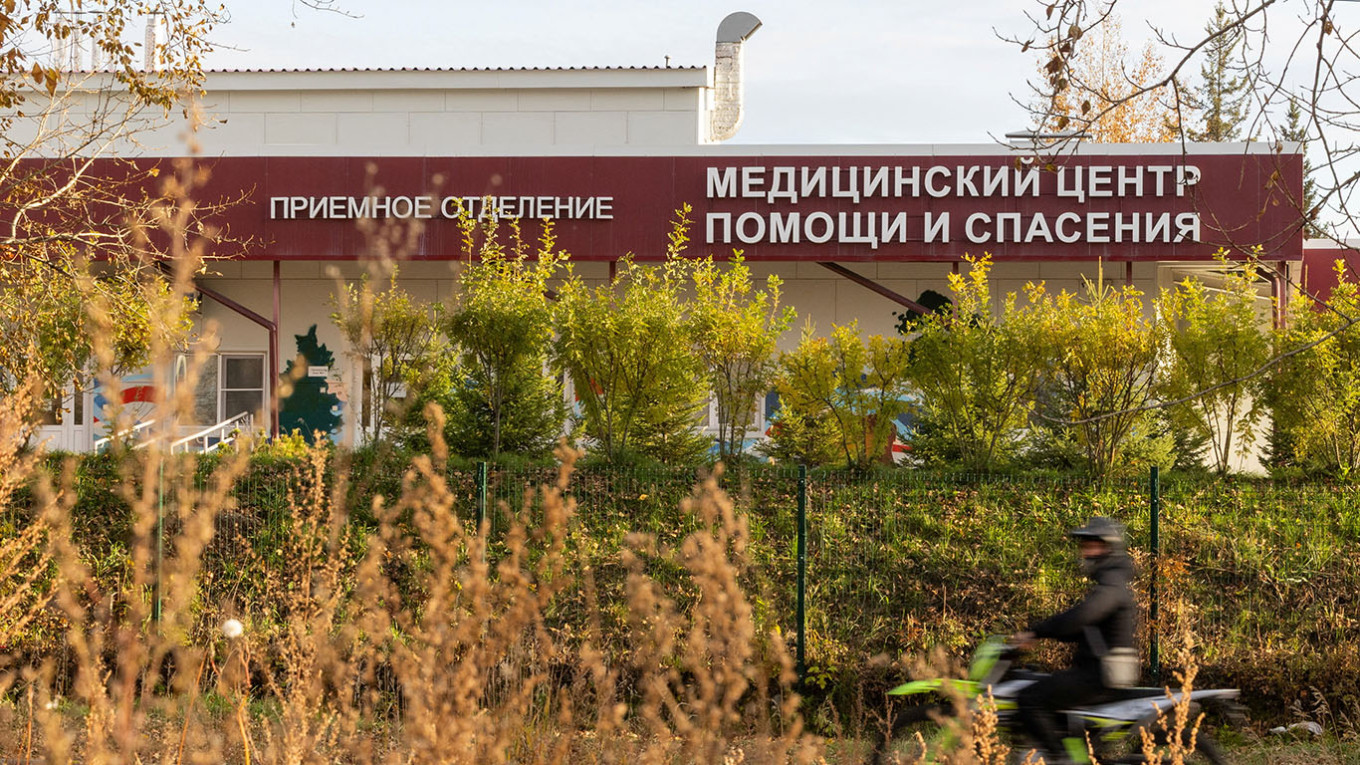
Hello and welcome to Regions Calling, your guide to developments beyond the Russian capital from The Moscow Times. The death of a lab worker at a plague research institute in Siberia's Irkutsk region soared to global headlines after local bloggers circulated unconfirmed reports and the head of the neighbouring republic of Buryatia named "plague" as the suspected cause. We spoke with residents of both regions about how the health scare is affecting their everyday lives, and asked an independent health policy expert to weigh in on Moscow's handling of the possible outbreak and the risks it poses to the rest of the world.
Authorities in the Krasnodar region closed beaches in the Black Sea resort city of Sochi and surrounding areas on Tuesday after an oil tanker caught fire offshore following a reported drone attack. Ecologists have warned the incident could have catastrophic environmental consequences, including water contamination and the release of large volumes of hazardous substances into the air. Meanwhile, Yevgeny Naumov, mayor of the regional capital Krasnodar, resigned preemptively on Monday after four years in office plagued by controversy. In January he signed off on plans to build an Orthodox church on the grounds of a riverside park despite protests from residents; since November 2025, more than 30,000 people have signed a petition demanding his resignation.
A string of deadly bear attacks on humans has continued across Siberia and the Far East over the past few weeks. In the latest confirmed incident, a 55-year-old man was killed by a bear that entered a trailer parked on the premises of a local company in the eastern part of the Irkutsk region. At least 20 people have been killed in bear attacks across Russia since April. In response, lawmakers are reportedly considering lifting hunting quotas, establishing regional population limits and giving local authorities extra powers to control bear numbers. Authorities in the Krasnoyarsk region said on Monday they had already culled more than 850 bears "as part of the population control measures".
A military court in the Zabaikalsky region sentenced the Indigenous Buryat activist Marina Khankhalaeva to 20 years in prison in absentia on charges of organising an extremist group and participating in a terrorist organisation. Khankhalaeva called the verdict "high praise" and proof that she and fellow members of the pro-independence group Tusgaar Buryad-Mongolia "are doing the right thing", in comments to The Moscow Times. The former head of Dagestan, Sergei Melikov, was appointed as a senator from the western Bryansk region in Russia's upper-house Federation Council last week. Melikov, who had headed Dagestan since 2020, resigned in May following public backlash over his handling of deadly floods in the mountainous republic.
"There are no conversations on the streets, no bustle, no fear, no lines at the pharmacies like there were during Covid," a woman from Irkutsk tells The Moscow Times. "There was panic for maybe the first few hours after the news broke. Then memes began to appear online and everyone calmed down," she adds. "There are so many things going on at once: the fuel crises, the bear invasion, now the plague. People here treat these things as background noise." Irkutsk, a region roughly the size of Turkey with a population of 2.3 million, made international headlines after a 28-year-old employee of a local plague research institute died at a hospital in the Irkutsk suburb of Shelekhov last week.
The highly urbanised industrial region was until now best known for the UNESCO-inscribed Lake Baikal, the world's largest freshwater lake by volume — that is, before the latest global plague-induced scare. But for most locals, who say they found out about the possible plague case from social media, little has changed. "Life goes on as usual in Irkutsk," another local told The Moscow Times on Wednesday. "Today I met a doctor on the street and asked them about the outbreak. She said that there was one case, but now everything is calm."
News that the lab worker, Daria Shipilova, may have died from plague first surfaced in since-deleted posts on local anonymous Telegram channels in the early hours of 2 October, the local independent news outlet Irkutsk Blog reported. A handful of news outlets soon picked up the rumour and added more unverified details. The exiled news outlet Lyudi Baikala cited an anonymous source who said the victim was hospitalised after arriving from Thailand, while the local TV channel NTS was first to speculate that the woman became infected after accidentally breaking a test tube containing live bacteria.
Irkutsk region governor Igor Kobzev confirmed that the head of the state health and safety watchdog Rospotrebnadzor had arrived in the region because of "a suspected case of a highly dangerous infection". "All identified contacts have been placed under medical observation. As of today, the contacts show no signs of illness and laboratory test results are negative," Kobzev said on 2 October. Rospotrebnadzor also avoided the word "plague" in its first statement on the matter, published on Sunday, saying Shipilova died from a "pneumonia of unknown etiology".
The first — and only — Russian official to use the word "plague" was Alexei Tsydenov, head of the republic of Buryatia, which borders the Irkutsk region to the east and south. "The woman who died — possibly from the plague — in the Irkutsk region had not travelled to Buryatia," Tsydenov said. "There are no plague outbreaks in the republic, including in the area bordering Mongolia." A journalist from Irkutsk said he believes Tsydenov's statement was less a heartfelt urge to reveal the truth than a calculated attempt to distance himself from unwelcome news that likely upset the Kremlin. "He tried, first of all, to protect himself by signalling that all the problems are coming from Irkutsk," the journalist said, speaking on condition of anonymity. He said Tsydenov's reaction was likely prompted by rumours that the lab worker had allegedly travelled to a "plague hotspot in Buryatia".
The atmosphere in Buryatia, meanwhile, has been largely similar to that in Irkutsk. "I found out about the plague from Instagram, from friends who sent me funny reels about it," said a resident of Buryatia's capital, Ulan-Ude. "I haven't been taking any precautionary measures... But now that you have asked, I am thinking maybe I should have? But, actually, what should be done in case of a plague outbreak?" she told The Moscow Times.
This lack of "effective and trusted communication" with the public could prove Moscow's biggest misstep in handling the scare, said Judyth Twigg, a professor of political science at Virginia Commonwealth University and an expert on Russia's health system. The World Health Organization recorded 3,847 suspected human plague cases and 423 deaths across 10 countries between 2019 and 2025. The majority were recorded in the Democratic Republic of the Congo and Madagascar, but some were also reported in rural parts of the western United States. "Residents [of the Irkutsk region] should have received practical guidance... with regular updates, even when the update is that there are no new cases," Twigg told The Moscow Times. "It's what health authorities elsewhere do with plague cases as a matter of routine course, and none of it would have required Russia to concede anything embarrassing beyond the possibility of a laboratory accident."
Twigg said the measures Russia has reportedly taken appeared operationally sound, including the rapid identification and observation of contacts, isolation measures, precautions scaled to a dangerous pathogen and on-site oversight by specialists. Today, plague "is not a plausible mass threat to any society with a functioning public health system", she said, a view echoed by other health science professionals. "Even though the plague pathogen Yersinia pestis is dangerous and actually causes a very severe and tricky disease, events of the past are not expected to repeat today," said the science journalist Irina Yakutenko, referencing the 14th-century pandemic known as the Black Death. "Beyond the pathogen itself, certain conditions are needed for it to spread: people, rats and fleas who are all constantly in contact with each other," she added.
Rospotrebnadzor announced on Wednesday that it had concluded a series of "preventive and anti-epidemic measures" in the Irkutsk region, which reportedly included medical observation of more than 90% of contacts and 5,000 laboratory tests that failed to reveal any dangerous pathogens. "There are no epidemic risks for the population of Irkutsk and the Irkutsk region," the watchdog said. Meanwhile, the lack of transparency surrounding the incident has already fuelled conspiracies that the Irkutsk plague research lab could be part of a state-sponsored bioweapons programme. "Russia's history... provides plenty of reason to ask hard questions. In this case, though, there's nothing in the public record supporting the conclusion that this civilian surveillance institute was doing something exotic," Twigg said. "Transparency would be Moscow's cheapest and most effective rebuttal, but the system isn't designed to supply transparency."
Residents of Oshurkovo, a village on the left bank of the Selenga River in the republic of Buryatia, put up scarecrows to protest the planned opening of a controversial apatite ore mining site. "Even the pumpkin knows that apatites equal the death of Baikal. Do you?" says the banner attached to the scarecrow. The state environmental watchdog Rosprirodnadzor greenlit the Russian Copper Company's mining project earlier this year despite residents and scientists voicing concerns about the threat it poses to Lake Baikal, which is fed by the Selenga.