Patriot Missile Calculus Unravels: Ukraine Cannot Match Russia’s Accelerating Ballistic Campaign
Western deliveries of Patriot interceptors cannot match the ferocity of Russian ballistic missile attacks, leaving Ukraine’s exhausted air defenders facing impossible calculations
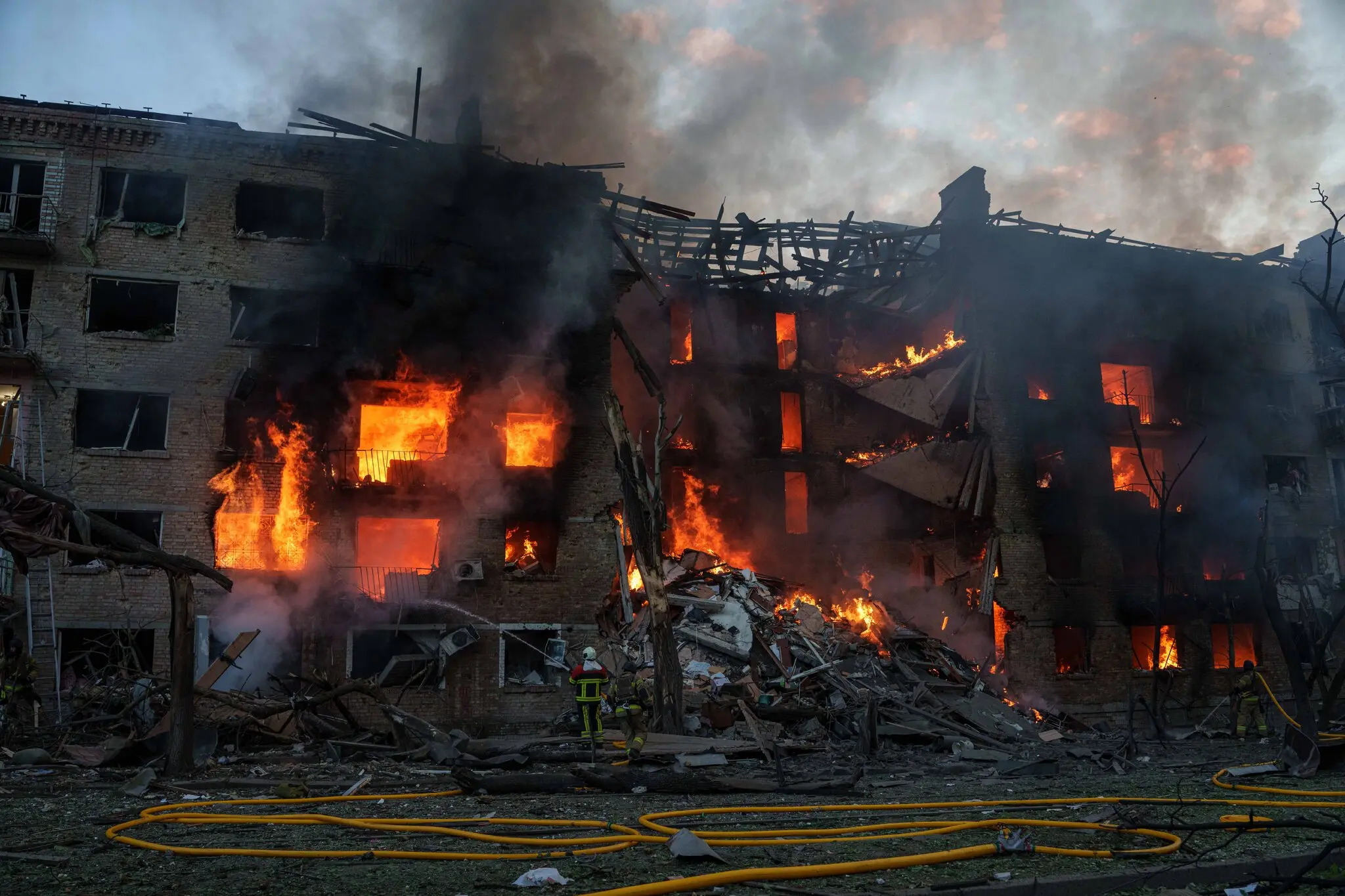
Russia’s ballistic missile campaign against Ukraine has intensified markedly in both ferocity and scale over recent weeks, with military planners in Moscow having identified and begun to exploit what sources describe as one of Kyiv’s most debilitating vulnerabilities: a chronic and worsening shortage of Patriot missile interceptors. Ukrainian air defence units, stretched across the country’s vast landmass, now find themselves locked into a relentless cycle of impossible calculations, as salvos can exceed 1,000 drones and dozens of missiles in a single wave, overwhelming crews who have been known to remain glued to their radar screens for 24 hours at a time with scant food or sleep.
The predicament, according to interviews conducted with Ukrainian military officials, Western diplomats, security analysts and frontline air defence officers, is starkly uniform in its diagnosis: deliveries of Patriot interceptors have simply not kept pace with the drastically rising number of Russian ballistic missiles. These technologically advanced munitions are notoriously time-consuming to manufacture, and in a world simultaneously at war in Ukraine and the Middle East, the global supply has become overextended to an unprecedented degree. The conflict with Iran has unleashed an urgent and competing demand among a host of nations along the Persian Gulf, further diminishing the pool available for Kyiv.
Colonel Yurii Ihnat, a spokesman for the Ukrainian Air Force, offered a vivid analogy for the challenge confronting his personnel. “A goalkeeper is standing in the goal, and suddenly 10 balls are flying at him at once. He cannot catch all of them,” he said. “He can catch as many as he has hands and feet, right?” The consequences of every miscalculation, he implied, are measured in civilian lives. Last month, 24 people perished when a ballistic missile struck an apartment building in Kyiv, an attack that, together with subsequent waves of intense Russian bombing and Ukraine’s increasingly public pleas for more interceptors, has shattered any remaining sense of safety in the capital, where the presence of Patriot systems had previously assuaged fears of mass casualties.
The Patriot system itself is a sophisticated American-made mobile surface-to-air defence network, comprising advanced radar, a control van and missile launchers that fire interceptors — the most advanced of which are the PAC-3 variants, capable of destroying ballistic missiles high above the earth. While Ukraine’s broader national air defence network also includes interceptor drones, anti-aircraft guns, helicopters and fighter jets, along with a range of less sophisticated missile defence systems supplied by Norway, France, Italy and Germany, it is the Patriot system that remains paramount, offering the most reliable means of neutralising incoming ballistic threats. As Gustav Gressel, a senior lecturer and researcher at the National Defence Academy in Vienna, observed, a ballistic missile hurtles from the edge of space like a “meteor falling to earth”; the Patriot interceptor meeting it in mid-flight generates combined speeds exceeding 6,000 miles per hour.
Ukraine has maintained a consistent message for its American and European allies almost since the war’s inception: it needs Patriot missiles, and it needs them in greater numbers. President Volodymyr Zelensky raised the alarm with increasing urgency last month, noting in a letter to President Trump that the pace of deliveries “is no longer keeping up with the reality of the threat we face.” The numbers underscore his concern. According to a data set compiled by The New York Times from daily figures released by the Ukrainian Air Force, Russia launched just 74 ballistic missiles in 2023, but nearly 600 in 2025. This year alone, Moscow has already fired 410, a pace that, if sustained, would approach roughly 900 for the year. By contrast, Lockheed Martin, which produces the advanced PAC-3 interceptors, reported that it delivered 620 total units worldwide last year.
It is difficult to ascertain precisely how many Patriot interceptors remain in Ukraine’s arsenal, that figure being classified, but reports from the end of June last year indicated as few as 16. Colonel Ihnat confirmed that, over the past three years, Ukraine has received more than 1,600 interceptors — encompassing both PAC-3 and the previous generation PAC-2 missiles — though these are plainly insufficient to counter the escalating attacks. Experts argue that the exact number is almost immaterial in the face of Russia’s production capacity. “If you compare the number of ballistic missiles being produced every month with the number of interceptor missiles produced annually, the math simply does not work,” said Oleh Katkov, editor in chief of Defense Express, a Ukrainian media and consulting group covering military affairs.
The interceptors must also be in the right place at the right time, a challenge compounded by Ukraine’s size. A Patriot system stationed in the west cannot protect the front lines in the east, and commanders must remain perpetually vigilant against Russian counterattacks aimed at destroying radars, personnel and even the interceptors themselves. Valerii Romanenko, an aviation expert and former air defence officer at Ukraine’s National Aviation University, noted that “there are often simply not enough interceptors immediately available at a specific unit during repeated large-scale attacks”; sometimes, he said, the launch units “are simply empty,” leaving operators with the sight of incoming missiles and nothing to fire at them.
Western allies have dipped into their own limited stockpiles for years, and they insist the flow of deliveries continues. Colonel Martin O’Donnell, a NATO spokesman, stated that the multibillion-dollar programme to provide critical military equipment “continues to deliver much-needed capabilities, including Patriot interceptors,” and urged continued investment from all allies. Yet the war with Iran has upended all supply calculations. Ukrainians have watched with mounting frustration as footage has shown Gulf states, in some instances, using multiple Patriot missiles to shoot down a single cheap, slow-moving drone. The twin conflicts have far outstripped production capacity.
The worldwide shortage has prompted a search for alternatives. Last month, the US Defence Department issued a call for new ideas for lower-cost interceptors capable of bringing down short-range ballistic missiles, while Israel relies on its own Arrow systems. The Ukrainian defence company Fire Point has tested a new missile defence system, though whether it can perform at the level of the advanced PAC-3 remains uncertain. “Developing technology capable of doing that reliably requires years of testing and real-world trials,” Mr Romanenko said. In the meantime, American firms are seeking to accelerate production: RTX announced a new facility in Germany in April, and L3Harris Technologies agreed in May to purchase attitude control motors for steering the interceptors at a facility in Poland.
“In practice, the entire civilized world has now run into the production limits of what Lockheed Martin can manufacture,” Mr Katkov concluded, a sentiment that encapsulates the gravity of Ukraine’s current predicament.