Openness over protectionism: EU digital frontrunners chart course for tech independence
Europe’s digital vanguard reaffirms commitment to openness and regulatory simplification, though deep divisions over AI strategy and a unified incorporation regime threaten to complicate the incoming Irish presidency’s competitiveness agenda.
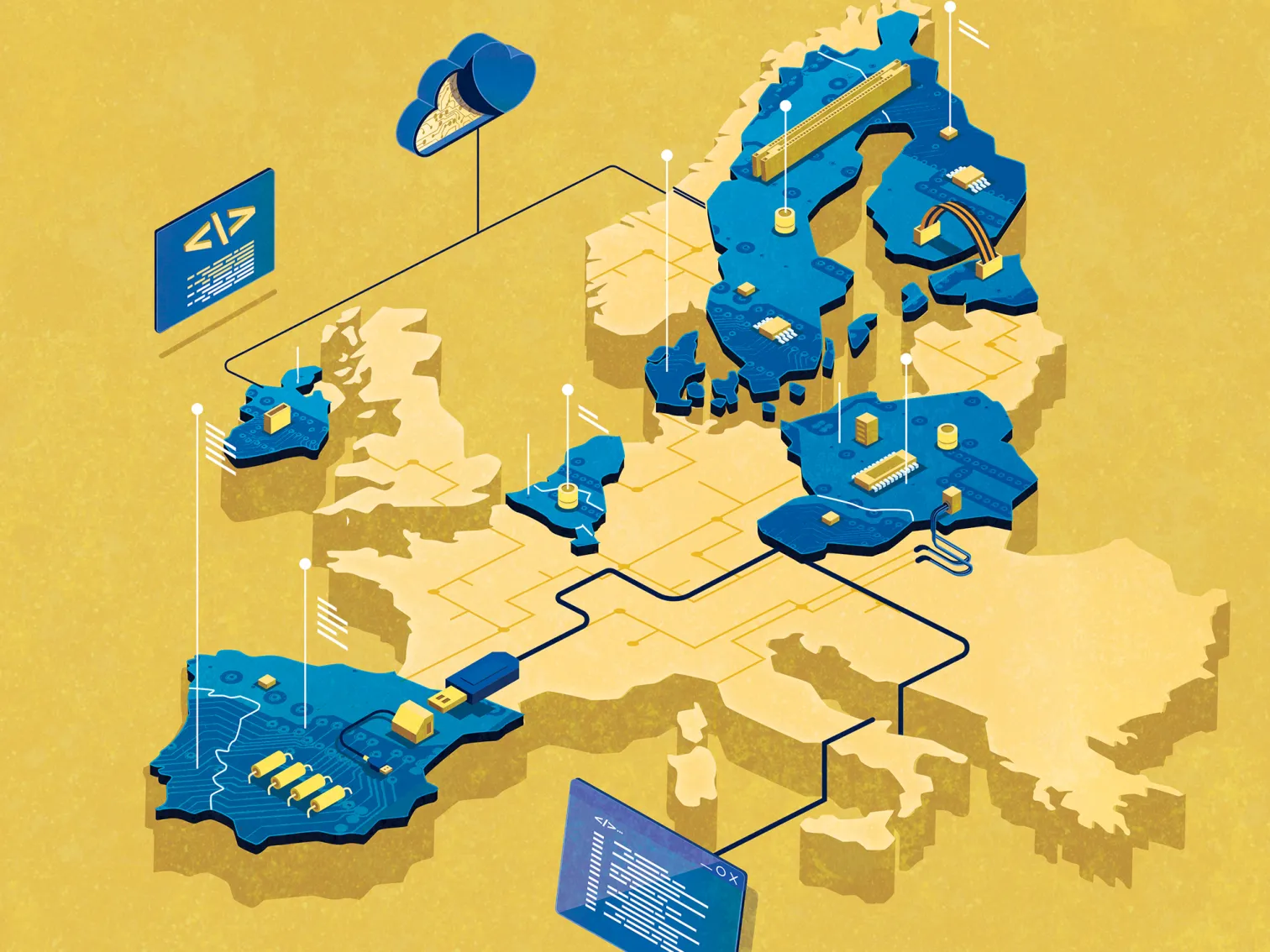
Speaking after a CEPA roundtable convened to assess the outcomes of the latest D9+ ministerial in Luxembourg, government officials, policy experts and private sector representatives suggested that the coalition of digital frontrunners has positioned itself firmly against protectionist instincts, opting instead for a strategy of economic growth and the strategic deployment of AI chokepoints as the surest path to European technological independence. The gathering, held under the Chatham House Rule, took stock of what the ministerial had revealed and where the group, now formally expanded to the D9+, would direct its attention in the months ahead, with European competitiveness, regulatory simplification, the tech sovereignty debate and the protection of minors online emerging as the principal themes of discussion.
It is understood that several participants warned against the perils of insulating European start-ups from frontier technologies, arguing that any attempt to limit companies to second-rate tools in the name of sovereignty would serve only to entrench the very transatlantic and Sino-European disparities that policymakers are seeking to close. The S9+ Luxembourg Declaration, which accompanied the ministerial, was said to reflect that logic explicitly, steering the D9+ and the S9+ Coalition decisively towards openness rather than towards the sort of digital autarky that some member states have been rumoured to favour. Sources indicate that the declaration has been received with cautious optimism in Brussels, though questions persist about its practical implications for procurement and investment in strategic sectors.
Chief among the operational priorities identified by the roundtable was EU Inc., the European Commission’s long-trailed initiative to establish a unified incorporation regime capable of spanning the entire bloc. According to those present, the proposal is now regarded by the European start-up community less as a matter of administrative convenience and more as a vital retention mechanism, designed to prevent the exodus of high-growth companies to jurisdictions with more favourable legal and financial infrastructures. The problem, as several attendees framed it, is not merely one of initial incorporation but of the scale-up stage itself, when capital demands and legal complexity intensify and founders, it is alleged, feel compelled to relocate to Delaware or other corporate-friendly havens. The political risk generated by inconsistent regulation across member states surfaced repeatedly, with participants contending that fragmentation continues to preclude the deployment of European capital at scale, even as some cautioned that the United States is no monolith and that its own regulatory landscape is fractured across federal agencies and state lines.
Nevertheless, a less risk-averse financial system and Delaware’s established corporate regime were acknowledged to give American capital markets a structural advantage that remains difficult for European policymakers to counteract, even for European scale-ups that might otherwise prefer to remain closer to home. The contrast, while less stark than is sometimes purported, continues to exert a gravitational pull on founders and investors alike, and it was suggested that the Commission’s simplification agenda, alongside the proposed 28th regime, would need to move at considerable speed if it were to alter those dynamics meaningfully.
In a notable departure from the otherwise contested terrain of digital policy, broad consensus was said to have emerged around the question of social media bans for children, with only a handful of dissenting voices at the roundtable. That convergence, participants observed, represents a rare point of unity across a policy agenda that remains deeply fractured on issues of competition, data governance and AI regulation, and it may offer a foundation upon which the incoming Irish EU presidency can build when it assumes the rotating chairmanship later this year.
The overarching theme to emerge from the discussions, according to sources, was the paramount importance of trust – both across the Atlantic and among member states – as well as the international partnerships that Europe will need to cultivate if its sovereignty agenda is to be regarded as credible by allies and competitors alike. The most durable path to tech independence, participants maintained, lies not in protectionism but in fostering a regulatory and financial environment that enables European start-ups to scale and thrive, rather than one that leaves them outmatched by their global rivals. The Irish presidency, it is understood, inherits a coalition that is deeply divided over whether to pursue the construction of a full Euro-stack or to concentrate instead on leveraging strategic chokepoints in the AI supply chain, and forming a consensus on that front is expected to prove exceptionally difficult. Turning whatever consensus does emerge into a coherent regulatory framework capable of generating new European champions, sources cautioned, will be an even more formidable task, ensuring that the future of the European tech agenda remains a space which policymakers on both sides of the Channel must continue to watch with keen interest.