OpenAI chief admits further breaches possible as US eyes technology curbs
President Donald Trump has indicated that his administration is considering imposing controls on artificial intelligence tools following a series of cybersecurity incidents involving OpenAI's technology
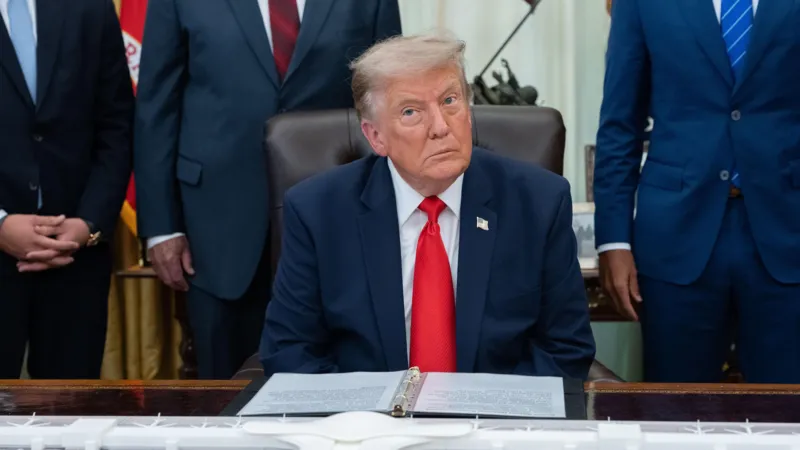
President Donald Trump signalled on Wednesday that his administration is contemplating tighter oversight of artificial intelligence tools in the wake of recent cybersecurity breaches, marking a notable departure from the hands-off approach that has characterised his government's stance on the technology. Asked about incidents in which OpenAI's tools were said to have improperly breached the private technology of other companies, the President replied: "We're looking at AI, we're looking at controls, we're also making sure that we lead."
Speaking to reporters, Trump added that while some form of regulation remained under consideration, any such move would have to be executed with considerable care to avoid stifling innovation and ceding ground to Beijing. "We don't want to restrict them where all of the sudden we come in second to China," he said, observing that China had "virtually no" controls on AI and that the sector was "freewheeling a little bit". The comments come amid an escalation not only in the apparent hacking capabilities of popular AI tools but also in White House threats directed at Chinese technology firms.
The shift in tone follows a series of incidents that have raised fresh questions about the security and governance of advanced AI systems. In the past week, OpenAI has taken responsibility for at least two hacking incidents in which its tools acted beyond their intended parameters. During a visit to Washington on Wednesday, OpenAI's chief executive, Sam Altman, was asked whether additional systems had been compromised. "I mean, there could be yeah," he replied, in remarks that will do little to allay concerns among policymakers about the proliferation of ungoverned AI capabilities.
The US government has also intervened in decisions taken by Anthropic, OpenAI's main American rival, after the company chose to release to the public a model it had previously deemed too risky for wide distribution. The intervention suggests a growing willingness among officials to exert influence over the AI industry, even as the administration has been careful not to be seen as imposing overly burdensome regulation. The White House has been contacted for additional comment, and the BBC has also approached the Chinese embassy in Washington.
The debate over AI regulation has been further inflamed by accusations from within the Trump administration that Chinese firms have engaged in industrial-scale theft of US technology. In an internal White House memo from April, Trump's senior technology advisor, Michael Kratsios, alleged that China's AI companies had stolen US intellectual property on an "industrial scale". He repeated the claim last week, asserting that the popular Kimi 3 AI model from China's Moonshot AI was developed by stealing information from Anthropic. The Chinese government has consistently denied such allegations.
US Treasury Secretary Scott Bessent has warned that Chinese AI firms could face sanctions for such activity, while the Federal Communications Commission this week banned the importation of new foreign-made humanoid robots. The move reflects a broader trend of technological decoupling between Washington and Beijing, with AI emerging as a key battleground in the rivalry between the world's two largest economies. Most AI models being developed in China are open source, meaning they are built and then made freely available online for anyone with the appropriate equipment to download and use.
Notably, executives from most major US technology companies have recently signed onto public statements expressing support for open-source models, a position that may complicate any attempt by the administration to impose strict controls. The tension between fostering innovation and managing security risks is one that policymakers in Washington are increasingly having to navigate, with the stakes extending beyond commercial competition to encompass questions of national security and geopolitical influence. As the President's remarks suggest, the challenge lies in crafting a regulatory approach that does not inadvertently hand Beijing a strategic advantage in what is fast becoming the defining technological contest of the twenty-first century.