Oil giant to exit UK waters in strategic retreat from ageing basin
The oil major has confirmed it will seek a buyer for its North Sea business, which produces 117,000 barrels per day and employs 1,100 people, marking the end of 60 years of operations in the basin
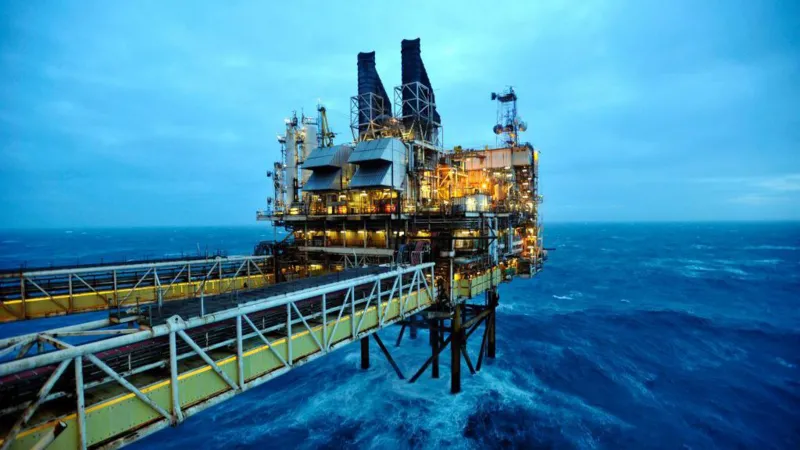
BP has announced its intention to divest its North Sea business, a decision that effectively brings to a close six decades of continuous production in the basin by the oil giant and represents a significant recalibration of its UK footprint. The move, confirmed on Friday, follows a comprehensive review of the company's operations under its new chief executive, Meg O'Neill, who took the helm in April, as part of a broader strategy to streamline the group and direct capital towards higher-value opportunities elsewhere in its global portfolio. The North Sea business, which comprises five production hubs – two located in the central North Sea and three situated west of Shetland – and employs approximately 1,100 people, produced 117,000 barrels of oil equivalent per day in 2025, a modest figure when set against the group's total daily production of 2.3 million barrels.
Ms O'Neill, who had earlier this year spoken of "untapped potential" in the North Sea, struck a more pragmatic tone in announcing the sale, stating that while the business possessed "world-class people, resilient assets and a proud heritage", it would be "better positioned as part of another company". She emphasised that the UK remained an important location for BP, which has been present in the country for more than a century and currently employs some 13,960 people across its British operations, and confirmed that the company would continue to operate the North Sea assets safely and reliably throughout the sale process. The decision comes at a politically sensitive juncture, with Prime Minister Andy Burnham having told US President Donald Trump earlier this week that he would adopt a "pragmatic approach" to North Sea oil and gas extraction, a position that aligns with the views of trade unions, industry figures and some Labour MPs who have all advocated for increased drilling in the region.
The sale is understood to have the potential to raise approximately £2 billion for BP, a figure that had previously been cited in media reports last month when the Financial Times disclosed that the company had been in negotiations with Ithaca Energy over a transaction of roughly that magnitude, though those discussions ultimately foundered. The precise valuation of the assets will depend on the eventual buyer's assessment of their long-term viability, with industry analysts suggesting that the ageing infrastructure and declining output of the North Sea basin present significant challenges for any prospective acquirer. BP has framed the disposal not as a retreat from the UK but as a strategic redeployment of resources, with Ms O'Neill asserting that the company was seeking "an outcome that recognises that value" and that the North Sea business's qualities could "attract an owner ready to back its next chapter".
The decision to exit the North Sea, where BP has been a dominant presence since the 1960s, marks a symbolic as well as a commercial turning point for the company, which has gradually reduced its exposure to mature hydrocarbon basins in favour of investments in renewable energy and higher-growth markets. The five production hubs that comprise the North Sea business represent a significant operational footprint, though their contribution to BP's overall output is relatively small, at roughly 5 per cent of the group's global production, a factor that has likely informed the board's willingness to consider a sale. Ms O'Neill's statement acknowledged the "proud heritage" of the North Sea operation, but her emphasis on focusing the portfolio and directing capital to "highest-value opportunities" underscored the commercial logic underpinning the decision, which is expected to be closely watched by investors and industry observers alike.
As the sale process gets under way, attention will turn to the identity of potential buyers, with the earlier aborted talks with Ithaca Energy suggesting that interest from other North Sea operators or private equity firms may emerge in the coming months. BP's commitment to operating the business safely and reliably throughout the transition will be critical to maintaining production levels and ensuring the continued employment of the 1,100 workers currently engaged in the North Sea operations. The company's announcement, while signalling the end of an era for BP in the basin, also reflects the broader transformation of the UK's energy landscape, as the country grapples with the dual imperatives of energy security and the transition to a lower-carbon future, a context in which the prime minister's "pragmatic approach" has sought to balance competing political and economic pressures.