Norway urges Beijing to leverage Kremlin ties for Ukraine peace push
Norway's Prime Minister has appealed to China to employ its unique channel to the Russian leadership in pursuit of a Ukraine settlement, while acknowledging that Beijing's partnership with Moscow constrains broader European co-operation.
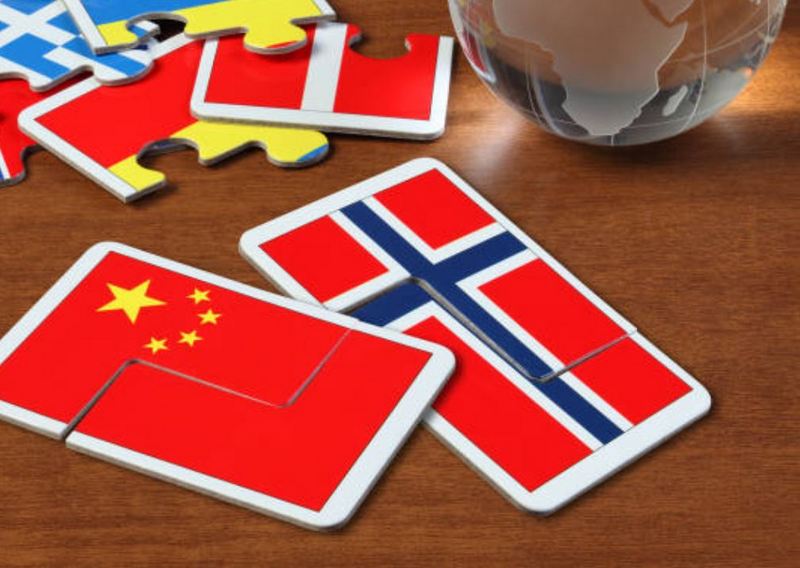
Norway has called upon China to deploy its singular diplomatic access to the Russian leadership in the service of brokering a peaceful resolution to the war in Ukraine, with Prime Minister Jonas Gahr Støre making the appeal on Monday following talks with the Chinese foreign minister, Wang Yi, in Oslo, according to Reuters. Speaking to reporters after the meeting, Støre characterised China as arguably the nation possessing the most direct and effective lines of communication with the Kremlin, and he expressed his government's expectation and hope that Beijing would activate that channel to facilitate meaningful progress towards a ceasefire. The bulk of their conversation, the Prime Minister indicated, had been devoted to the Ukrainian conflict, though the discussions also touched upon the broader trajectory of European-Chinese relations, which Oslo believes retain untapped potential for deeper engagement, even as the war continues to cast a long shadow over bilateral ties. "There exists potential for more profound co-operation between Europe and China," Støre observed, "but as long as this war persists and China remains a close partner of Russia, that potential is constrained," a formulation that delicately balanced diplomatic courtesy with a pointed reminder of the obstacles to closer engagement. The Norwegian foreign minister, Espen Barth Eide, who had spoken earlier in the day, described the dialogue with Beijing on ending the hostilities as "constructive and promising", suggesting that the Chinese side had offered indications that were open to interpretation, though he declined to characterise those signals as a firm commitment to press Moscow towards negotiations. Pressed on whether China had given any assurance that it would help bring Russia to the negotiating table, Eide replied that he was not an official representative of Beijing and would not venture to quote them directly, but he allowed that their remarks contained "some hints" that offered grounds for cautious optimism, without elaborating further on what those hints might entail. Norwegian officials have made clear that they envisage any peace process commencing without preconditions, beginning with a ceasefire along the current front lines in Ukraine, a position that Støre acknowledged represented a significant concession on Kyiv's part given that the fighting is taking place on Ukrainian soil. Wang's visit to Oslo formed part of a broader Nordic tour that had already taken him to Denmark, Sweden, and Finland, signalling Beijing's interest in maintaining diplomatic engagement with the region despite the strains imposed by its alignment with Moscow. The Chinese readout of the Oslo meeting, however, made no mention of Russia whatsoever, focusing instead on co-operation in trade and green technologies, with Xinhua, the state news agency, quoting Wang as saying that China was committed to working with Norway to "promote the establishment of a more just and reasonable governance system", anodyne language that conspicuously avoided any reference to the war. This studied silence from Beijing on the Ukrainian question stands in contrast to the Norwegian emphasis on the conflict, and it suggested that Wang's delegation had been at pains to keep the conversation focused on areas of mutual economic interest rather than on the geopolitical fissures that divide Europe from China. Separately, President Donald Trump declared on Monday that a resolution to the war in Ukraine was "closer than people think", and he confirmed that the Ukrainian issue would feature prominently in his discussions at the NATO summit scheduled to take place later this week in Turkey, injecting an additional layer of diplomatic uncertainty into an already fluid situation. The convergence of Nordic appeals, Chinese diplomatic choreography, and American presidential pronouncements underscores the multifaceted nature of the efforts to end the conflict, with Oslo evidently hoping that Beijing's unique position vis-à-vis Moscow can be harnessed to break the current stalemate, even as European capitals remain deeply wary of China's role as Russia's strategic partner. Whether Beijing is willing or able to exert meaningful pressure on the Kremlin remains an open question, and the Chinese foreign minister's refusal to address the issue publicly in Oslo suggested that any such discussions, if they occurred, were conducted behind closed doors and without any immediate prospect of a public breakthrough. For now, Norway's appeal stands as a diplomatic gambit that seeks to test Beijing's appetite for playing a constructive role in ending a war that has destabilised the European security order, but the Chinese side's studied reticence offers little indication that a shift in policy is imminent.