Ninth Woman's Body Found in South Africa as Police Investigate String of Killings
The discovery of a ninth woman's body in two months has deepened alarm in Ekurhuleni, where police have assembled a specialist team but say they cannot yet confirm whether the deaths are linked
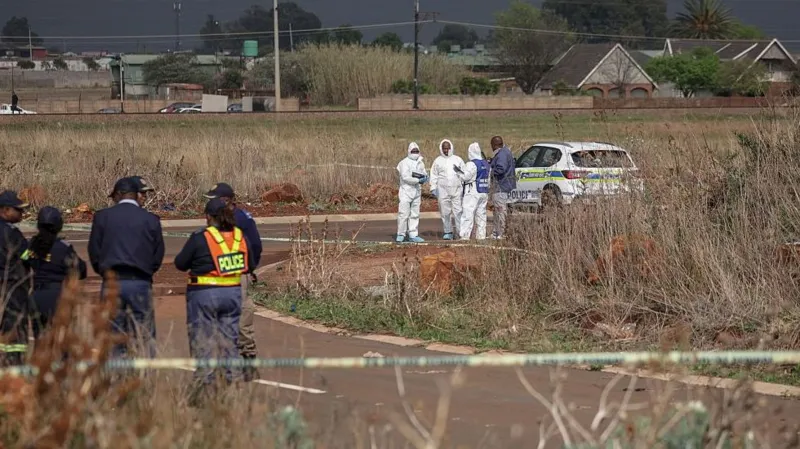
The body of a ninth woman has been found in South Africa within two months, police confirmed on Thursday, intensifying concern over a sequence of unexplained deaths east of Johannesburg that has left residents fearful and the authorities searching for answers.
The latest victim was discovered half-naked and wrapped in a sheet beside a road in Dawn Park on Thursday morning. Police have not yet released her identity. Local media reported that she appeared to be in her thirties and bore bruises and stab wounds.
Since July, eight other bodies have been found across Ekurhuleni, a major urban area of Johannesburg. Several of the women were found partially clothed and with injuries. Police have stressed that they have not established whether all the deaths are connected or whether a serial killer is responsible. They say they are investigating the possibility that a group of people is behind the killings.
President Cyril Ramaphosa has vowed that no stone will be left unturned in finding those responsible. The killings, he said, were causing fear and uncertainty in communities.
Among the victims was Elizabeth Moselakgomo, 38, known as Tsontso, who disappeared last week after leaving her home for an afternoon run. Her body was found three days later behind a hotel in Kempton Park. Two other victims have since been identified: Itumeleng Kekana, who had been missing since July, and Dineo Evelyn Motapane, 38, whose body was discovered by a roadside in KwaThema on Tuesday.
The first of the nine bodies was found in Kempton Park on 15 July. A suspect was arrested two days later in connection with that case and remains in custody, but police have not linked that suspect to the other deaths. Further bodies were discovered in August and September, including in Kempton Park, Olifantsfontein, Clayville and KwaThema.
The discoveries have caused widespread alarm in the area, particularly among women who say they no longer feel safe. Bongeka Sebela, a local resident, told the BBC: "We are scared to come out of our houses. We are scared to go to the shops. We are no longer free in a country where we are supposed to be safe as women."
Police have assembled a multidisciplinary team of detectives, intelligence officers, forensic experts and other specialists to investigate the deaths and establish whether there are links between the cases. They are also pursuing a person of interest, although they have not disclosed which case or cases that person may be connected to.
Panyaza Lesufi, the Gauteng Premier, struck a defiant note on Thursday. "Let's not get emotional, the gloves are off," he said, adding that the authorities had the capacity to deal with the killings. Acting Police Minister Firoz Cachalia has cautioned against speculation, saying investigators were dealing with what appeared, at this stage, to be quite distinct, separate events.
In a statement on Thursday, the South African police described the recent rise in serious and violent crimes against women as a matter of grave concern, and urged women to remain vigilant about their personal safety. They advised women to avoid walking alone or using isolated routes, to remain alert to strangers and suspicious vehicles, and to share their location or travel plans with someone they trust. They also warned against walking with earphones or earbuds at high volume, saying this could reduce awareness of surroundings.
Authorities have offered a reward of 400,000 rand, about $24,000 or £18,000, for information leading to arrests, and have appealed to families with missing relatives to help identify the remaining victims.
The deaths have revived longstanding concern about the scale of violence against women in South Africa, which experiences some of the world's highest levels of gender-based violence. According to UN Women, the rate at which women are killed is five times the global average. Last November, following an online campaign that culminated in countrywide protests, the country classified violence against women as a national disaster.