Night-time evacuation as wildfire engulfs Suffolk heathland near Sizewell
More than 200 caravans were evacuated in the dead of night as a major wildfire swept through Dunwich Heath in Suffolk, with flames approaching within two and a half miles of Sizewell B nuclear power station
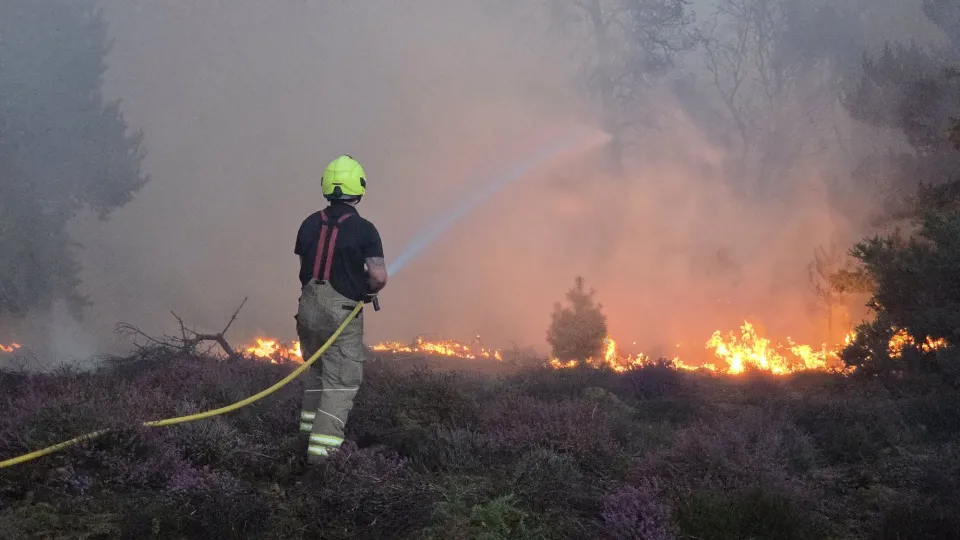
Hundreds of holidaymakers were roused from their beds in the early hours as a rapidly advancing wildfire tore through heathland on the Suffolk coast, prompting a major incident declaration and the evacuation of approximately 200 caravans from a popular seaside resort. The blaze, which broke out shortly after 5.30pm yesterday evening, spread with alarming speed overnight, consuming an area of heathland equivalent to some 14 football pitches and drawing 90 firefighters to the scene.
The National Trust site at Dunwich Heath became the epicentre of the emergency, with crews successfully evacuating Coastguard Cottages, Mount Pleasant Farm and Cliff House Holiday Park as flames raced across tinder-dry vegetation. Suffolk Fire and Rescue Service confirmed that 14 crews were deployed, with specialist equipment including drones, Unimogs and quadbikes being brought to bear on what station manager Dan Davis described as a "large-scale, wind-driven forestry fire". Some 70 firefighters remained at the scene this morning, he added, with the situation described as "live and dynamic".
The inferno, which is understood to be burning approximately two and a half miles from the Sizewell B nuclear power station, is not currently thought to pose a threat to the facility, though authorities are maintaining close monitoring of the situation. The fire is also advancing towards the RSPB Minsmere nature reserve and St James's Church, with local residents urged to avoid the area and keep windows and doors closed against billowing smoke driven by the wind.
Speaking from Westleton Village Hall, where displaced residents had gathered for an 8am briefing, one holidaymaker described the chaos of the night-time evacuation. Justin North, among approximately 60 people sheltering at the hall, told the BBC that he had been woken by urgent hammering on the door of his holiday cottage, with instructions to leave immediately and no time to gather belongings. Mr North and his wife were forced to sleep in their car before the evacuation centre opened, joining families, pensioners and people with disabilities who were accommodated overnight by villagers and told not to return to their homes.
The emergency unfolded just hours after Suffolk was officially declared a drought zone, joining half the country in a designation that includes East Anglia, Hertfordshire, London, the Thames Valley, Hampshire, the Isle of Wight, Devon and Cornwall, the West Midlands, and Wessex. The current dry spell, with some areas having experienced no rainfall for 43 days, is approaching the record set during the historic drought of 1976, which lasted 48 days. The UK Health Security Agency had issued an amber heat-health alert for the East Midlands, the East, South East and London, in place until 9am this morning, with temperatures forecast to reach 28C today.
The Suffolk blaze is among some 200 wildfires recorded across England and Wales in the past fortnight, according to the National Fire Chiefs Council, which has documented 706 such incidents this year. Elsewhere, a grass fire consumed 30 acres in Romford, east London, yesterday, while 100 firefighters tackled a four-acre blaze in Rainham. In Scotland, crews reported "significant progress" in containing a wildfire in the Cairngorms that ignited two weeks ago. The crisis extends beyond British shores, with more than 360,000 people in France and Spain forced to evacuate as arid conditions and strong winds fuel blazes across European holiday destinations.
The Met Office has offered some prospect of relief, forecasting a cooler change with temperatures falling closer to seasonal averages across much of the UK. Deputy Chief Forecaster Mark Sidaway cautioned, however, that while rain was expected, the amounts would likely be "fairly modest" and insufficient to redress the summer's rainfall deficit, with the possibility that southern areas might miss out entirely. For the displaced holidaymakers of Dunwich Heath, and for communities across drought-stricken Britain, the immediate concern remains the containment of a fire that has transformed a summer getaway into a scene of night-time peril.