New York votes to outlaw horse-drawn carriages as drivers warn of lost livelihoods
The city council has voted to outlaw the carriages from 2028, backed by the mayor and animal-welfare campaigners, but the roughly 200 drivers who work Central Park say the plan threatens their families and ignores their devotion to their horses.
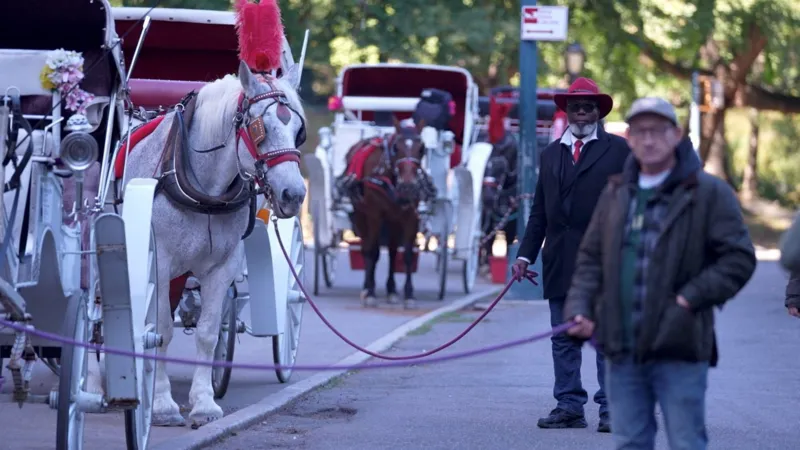
New York's city council has approved a ban on horse-drawn carriages in Central Park, ending a tradition that has endured for more than 160 years, after years of pressure from animal-welfare campaigners and, more recently, the death of a teenage tourist.
The legislation, expected to take effect in June 2028, was backed by Mayor Zohran Mamdani, who has promised to help develop a transition plan for the roughly 200 drivers who work the park. It is named Romanch's Law after Romanch Mahajan, an 18-year-old from India who died in June when the horse pulling his carriage bolted, throwing him to the ground.
For the drivers, the vote has brought anxiety rather than relief. Alexus Lawson, 28, who has driven a carriage for six years and owns six horses, said she had been left wondering what would become of her animals. "What am I supposed to do with my horse?" she asked. "You're going to tell me I can't work with her anymore? How am I supposed to ensure her health?"
Several drivers told the BBC they did not want new jobs and rejected claims that their horses are mistreated, even as many residents and visitors welcomed the ban. Medet Fidan, who has driven for 12 years, said the allegations were absurd. He spends more time with his horses, he said, than with his wife and children.
The case for prohibition has been building for decades. Since 1982, 40 horses working in Central Park have died, according to the Manhattan Borough President's office, which cites overheating and collisions among the causes. The Central Park Conservancy, which manages the park and supports the ban, recorded seven horse-related incidents in the past 13 months alone. In May, a driver was taken to hospital after a spooked horse struck another carriage, tipping it over; in January, a horse named Destiny bolted into traffic near the park, causing a multi-car collision. This year also saw the death of a carriage horse, Deniz, who ate a toxic plant in the park.
Earlier bans foundered on opposition from council members and the unions representing the workers. This summer's fatality changed the political weather. Lawson was nearby when Mahajan fell to his death and called the incident "extremely tragic". She argued, though, that if the city genuinely feared for safety it would outlaw the carriages at once rather than in two years' time. "They look at an animal in harness and they see a trap," she said of the officials pressing for prohibition. "They see a job as something that's terrible. Horses are working animals."
Fidan voiced anger that officials had pressed ahead without speaking in person to those in the industry, despite a council hearing in July at which drivers gave evidence. "If you don't listen to me, how can you come and kill my business, destroy my family's, my livelihood?" he asked.
The legislation proposes an "industry transition framework" offering job placement, training, career counselling and financial compensation. Drivers told the council hearing they earn between $60,000 and $70,000 a year. The Transport Workers Union, which represents them, said the plan offered no guarantees, including on compensation, and warned that the workers would be "economically wiped out". It also raised concerns about funding for those who take in the horses, noting that thousands end up at slaughter auctions each year; the bill forbids selling horses for slaughter or similar work.
The carriages have been contested since the nineteenth century. In 1866, after Henry Bergh witnessed the brutal beating of a carriage horse, he founded the American Society for the Prevention of Cruelty to Animals. Peta and a coalition of organisations backing the ban continue that campaign. Horses may work up to nine hours a day, restricted to certain park entrances where they wait with drivers to be hired; a 20-minute ride costs $72.22, with $28.89 for every additional ten minutes.
Visitors are divided. Vanessa Stolle, a German tourist with horses at home, said the animals do not belong in a noisy park pulling passengers. "To stand the whole day here – it's loud for them and they can't go to the countryside," she said. Her compatriot Christian Bauers disagreed, recalling the horses from a visit 20 years ago. "It's part of the culture of New York," he said. "Let them stay. It's cute."
Jeanne Collopy, an animal lover from Colorado, said she disliked the prospect of putting people out of work but found the practice "a little bit confining for the horses". Her husband, Chris Koenigs, called the animals wonderful to look at, yet described the teenager's death as sickening and too high a price. "The park is magnificent," he said. "I can't help but think, it would be a magnificent park with or without the carriages."