New Dawn for Berlin and Tokyo: Former Axis Powers Forge Military Alliance Amid Doubts Over US Reliability
Eighty-five years after their ruinous pact, Germany and Japan are rebuilding their militaries and drawing closer together, alarmed by China, Russia, and President Trump
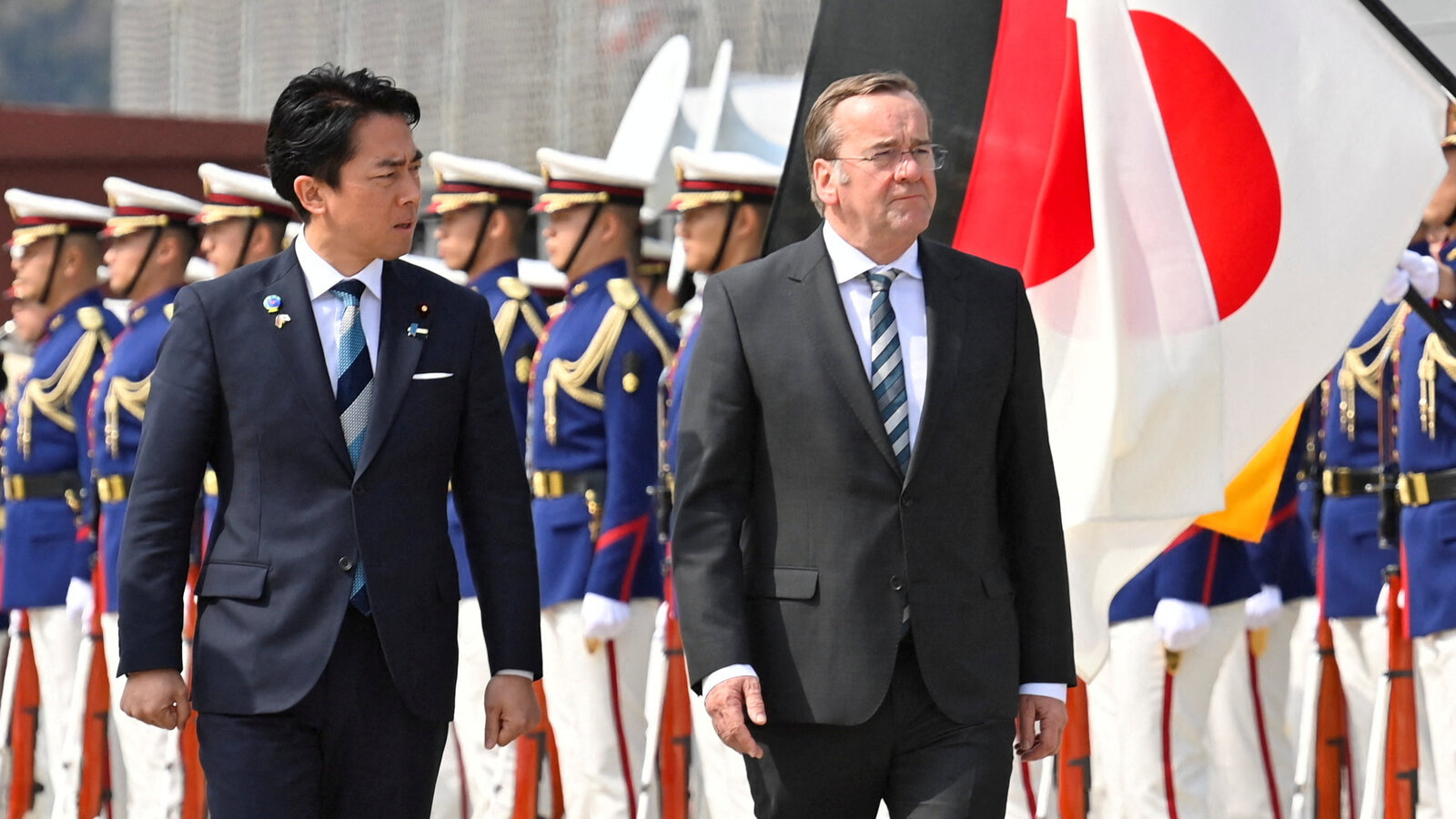
Eighty-five years after their ruinous pact plunged the world into war, Berlin and Tokyo are once again drawing closer together—this time bound not by imperial ambition but by a shared sense of strategic vulnerability and growing doubt about the reliability of their American guarantor. Having emerged from the ashes of the Second World War with drastically curtailed armed forces and a profound dependence on Washington for their security, both nations now appear to be hastening towards a historic recalibration of their defence postures, a transformation that would have seemed almost unthinkable to previous generations of pacifist-leaning politicians.
It is understood that the latest momentum in their co‑operation will be on prominent display at the forthcoming meeting of the Group of Seven leaders in Evian, France, later this week. Already, the relationship has deepened to encompass the exchange of sensitive know‑how, technology, and weaponry—including drones and helicopters—that are deemed critical to each country's ambitious rearmament programmes. This is no mere revival of the Axis pact of 1940, which united the imperial regimes of Germany and Japan in mutual opposition to the United States and led them to catastrophic defeat. Instead, sources indicate, the two powers are banding together from a fundamentally defensive posture: Berlin remains staunchly committed to supporting Ukraine's defence against Russian aggression, while Tokyo is increasingly wary of the threats posed by a belligerent China and an unpredictable North Korea. They are also forging closer ties with other like‑minded "middle powers", including fellow G7 members Britain, Canada, and France—nations that were, in the 1940s, their sworn enemies.
Speaking in March at a Japanese naval base in Yokosuka, Germany's Defence Minister, Boris Pistorius, articulated the rationale with characteristic bluntness. Countries such as Germany and Japan, he suggested, "who still stand by the rules‑based international order, must move even closer together and make clear what we stand for." His remarks, delivered against a backdrop of large flags from both nations, underscored the new mood. For decades after the war, anti‑militarist sentiment had held sway in both countries, channelling national energies into peace, diplomacy, free trade, and cultural exchange. Post‑war Japan, under a constitution drafted by General Douglas MacArthur, was forced to renounce war and maintain only a "Self‑Defence Force". West Germany, meanwhile, became a frontline outpost of the Cold War, hosting tens of thousands of American troops and eventually, after reunification, prioritising social spending over military expansion.
That long era of restraint, however, began to crumble after Russia's full‑scale invasion of Ukraine in 2022 and China's increasingly assertive military and economic policies under its leader, Xi Jinping. The process has been greatly accelerated, according to reports, by President Donald Trump's repeated threats to abandon American security commitments in Europe and his eagerness to strike a trade deal with Beijing. As Thomas Berger, a professor at Boston University who has studied the post‑war history of both countries, observed, the recent change in the global security landscape—and particularly Mr Trump's volatility—has fuelled a sense of anxiety in both Berlin and Tokyo. "There is this justifiable fear," he said, "that the United States might sell them out."
Shortly before taking office a year ago, the German Chancellor, Friedrich Merz, led a successful effort to suspend limits on government borrowing in order to drastically increase military spending. In a few years, it is projected, Germany's defence budget could exceed that of France and Britain combined. Japan, though committing only half as much as Germany, is still one of the world's top spenders on defence, with a budget this year of approximately ‑‑ 6.5 billion deal to supply warships to Australia and is in talks with the Philippines and Indonesia about similar exports. Germany, for its part, has forged close ties with Ukraine in developing new weapons and has asked France to help provide it with a nuclear deterrent.
China and Russia have accused Ms Takaichi of seeking to revive World War II‑era militarism, a charge she has dismissed by arguing that Japan faces the "most severe and complex" security environment since that era. "No single country can now protect its own peace and security alone," she said recently, adding that there was "absolutely no change" in Japan's commitment to the path of a peace‑loving nation. Yet public opinion, particularly in Japan, remains divided. In Tokyo this spring, tens of thousands of people protested against Ms Takaichi's security policies, including the decision to export more weapons and to establish a national intelligence agency. Many protesters fear she may next seek to scrap Article 9 of the constitution, the clause that renounces war. Nahoko Hishiyama, 37, who helped organise some of the demonstrations, said the Prime Minister's "policies are deeply concerning, as they aim to turn Japan into a military power."
The German public, by contrast, has embraced rearmament with a degree of reluctant acceptance. Recent surveys suggest a majority of Germans now regard the world as more dangerous than it was during the Cold War, and that two‑thirds of the country supports higher spending on the military, even though the armed forces, which do not enforce a draft, continue to struggle to recruit young people. Alexandra Sakaki, a scholar at the German Institute for International and Security Affairs in Berlin, noted that a further shift in societal mind‑set would be required if officials were to turn to policies such as conscription. "They need to think about military and society in a whole different way," she said. "Will they be ready for combat, will they be ready to fight? Japan and Germany need the public to back that vision."
One country that has applauded the shift is the United States. Mr Trump, who has long pressed allies to spend more on their own defence so that America can focus elsewhere, welcomed Germany's spending surge during a meeting with Mr Merz last year. Yet he could not resist a wry observation: a remilitarised Germany, he noted, might not have pleased the American leaders who defeated the Nazis. "I'm not sure that General MacArthur would have said it was positive, you know?" he said.