New commander inherits fractured military as reform agenda moves from theory to frontline reality
The dismissal of Defence Minister Mykhailo Fedorov and Commander-in-Chief Oleksandr Syrskyi reflects a fundamental struggle over resource allocation and military doctrine, with the fate of Ukraine's reform agenda now resting on untested leadership.
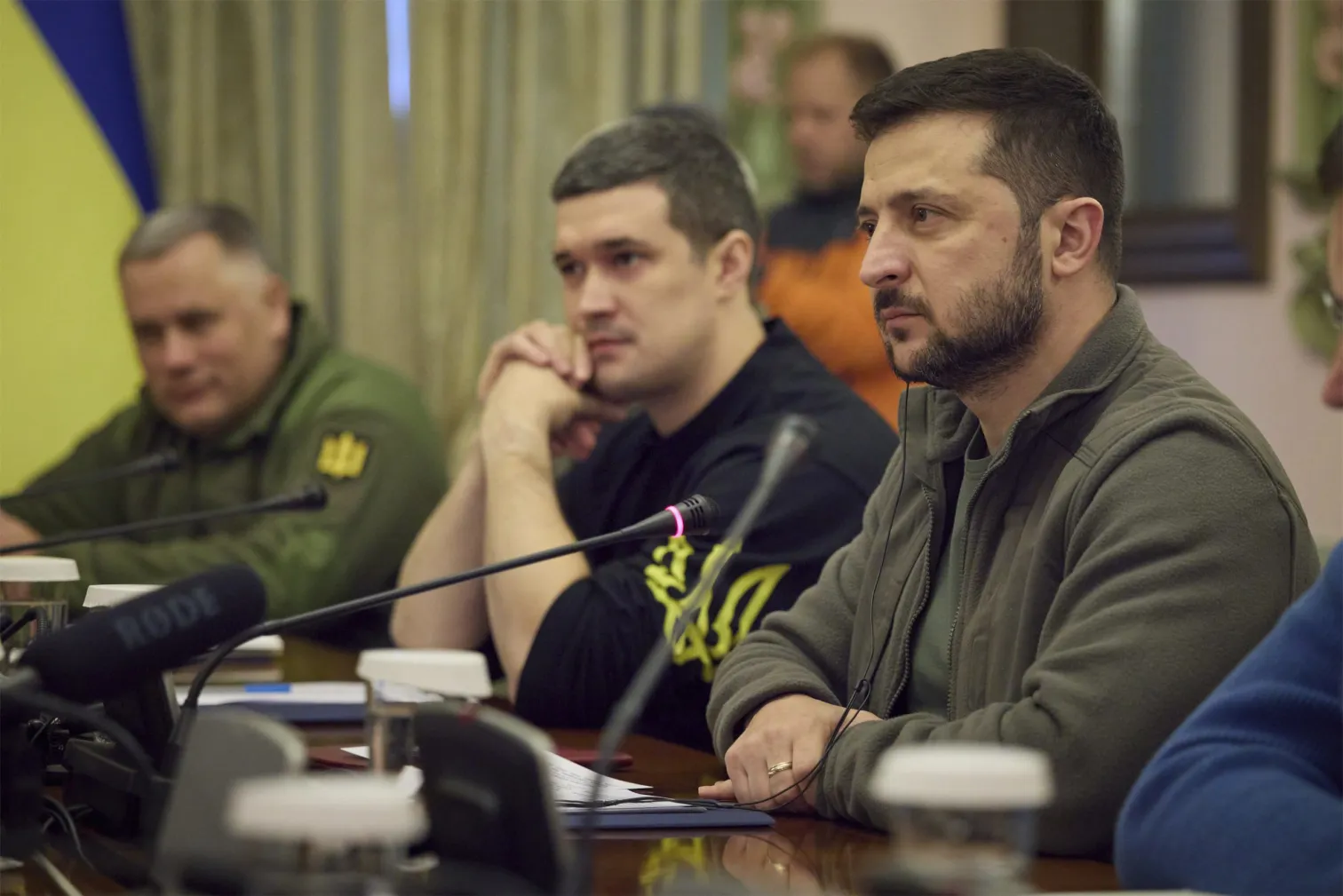
It would be a misconception, though a tempting one, to interpret the recent upheaval in Ukraine's military leadership as a mere personal dispute between the youthful Defence Minister Mykhailo Fedorov and the Soviet-trained Commander-in-Chief Oleksandr Syrskyi. Each man was plainly irritated by the other, and each has paid for the friction with his position, clearing the path for a new commander-in-chief, the reform-minded General Mykhailo Drapatyi. Yet the confrontation, according to military analysts, touched upon genuine and inescapable questions, constituting a fundamental struggle over the character of the Ukrainian state and its conduct of war. At its core, the battle was never about drone procurement or digital applications, but rather concerned resource allocation, civilian oversight, and the fundamental design of the armed forces.
Barry Posen, the Massachusetts Institute of Technology political scientist whose work The Sources of Military Doctrine remains the authoritative account of military change, advanced an argument that retains its force: armed forces do not resist new technology per se; they resist losing control over how resources are apportioned and who makes the decisions. Personalities undoubtedly matter, but the substance of the confrontation is essentially institutional in nature, the analysis suggests. Mr Fedorov's tenure at the Defence Ministry brought this institutional friction to a decisive point, as his procurement reforms sought not merely to modernise Ukrainian defence spending but directly challenged the General Staff's authority over the allocation of personnel, equipment and resources.
Having conducted a comprehensive performance audit of Ukraine's 120 brigades, Mr Fedorov's team discovered that nearly one-sixth of them suffered disproportionately from poor leadership and elevated casualty rates. His proposed solution was pragmatic: to consolidate underperforming brigades and reallocate their personnel to competent and more effective units that were chronically short of manpower. Unsurprisingly, perhaps, the General Staff resisted these interventions. The breaking point appears to have occurred when civilian reformers attempted to resource innovative, technology-led units, only to find the military hierarchy prioritising manpower for legacy formations, such as the controversial 425th Assault Regiment, which persisted in mounting high-casualty attacks.
Mr Fedorov had entered the ministry with an integrated air-land-economy strategy, designed to protect Ukrainian airspace, halt Russian advances on the ground, and attack the economic foundations of Moscow's war effort. Having taken office in January, he argued that after six months Ukraine was beginning to regain the initiative and had created an opportunity to compel Russia towards peace through force. His dismissal, therefore, was perceived by his supporters on the streets as an interruption of a strategy that was beginning to yield results. By dismissing Mr Fedorov, it is argued, President Volodymyr Zelenskyy underestimated Ukrainian civil society. Having witnessed the prospect of finally taking the fight deep into Russian territory through asymmetric warfare, the public came to believe that the strategic momentum was at risk. Just as in 2014 and 2022, citizen groups proved decisive in resetting the state's trajectory.
Mr Zelenskyy has already made one significant concession to the public backlash by replacing the 61-year-old General Syrskyi, but has stopped short of restoring his 35-year-old rival, Mr Fedorov, to the Defence Ministry. It is understood that Mr Fedorov rejected the president's initial offer to remain as an adviser, and has since refused several other positions proposed by Mr Zelenskyy, including deputy prime minister for military innovation. The former minister has argued that only three offices genuinely determine the course of the war: the presidency, the defence ministry, and the commander-in-chief. Mr Fedorov and his supporters are said to be seeking reinstatement, and further protests are widely anticipated.
Mr Zelenskyy therefore faces a difficult decision, with the stakes exceptionally high. He must preserve executive authority while restoring street-level stability, and maintain the confidence of both his military leaders and his Western donors. Whatever his decision, Ukraine's reformers have spent years identifying the military's weaknesses and contending that the country must fight differently. Now, with General Drapatyi in charge of the military, that reform agenda has moved from external criticism to the highest ranks of the wartime command structure. Even the restoration of Mr Fedorov, however, would not guarantee success. Both General Drapatyi and Mr Fedorov would require sustained backing from the president and parliament, along with the authority to overcome resistance within the institutions they are attempting to reform. Without that mandate, his return could reproduce the very confrontation that led to his initial dismissal.
Expectations, analysts caution, must remain realistic. General Drapatyi inherits a military with limited manpower, entrenched institutional interests, and a larger enemy determined to continue the fight. He also lacks the deep institutional networks painstakingly built by his predecessors. Even the most capable commander cannot reform mobilisation, training, procurement, and force organisation without sustained backing from the president and an empowered defence minister. The reformers have won the public argument, and one of their own now commands the army. This, it is said, was the easy part. General Drapatyi must now prove that the reformers' diagnosis delivers tangible battlefield results, while President Zelenskyy must decide whether to grant his military commanders full civilian backing, even at some cost to his own executive authority.