National Security Act deployed overseas for first time in Akrotiri spy case
Rashad Sultanov, a 44-year-old dual British-Azerbaijani national, has been detained in Cyprus on suspicion of conducting hostile reconnaissance of a UK military base for Iran's Islamic Revolutionary Guards Corps
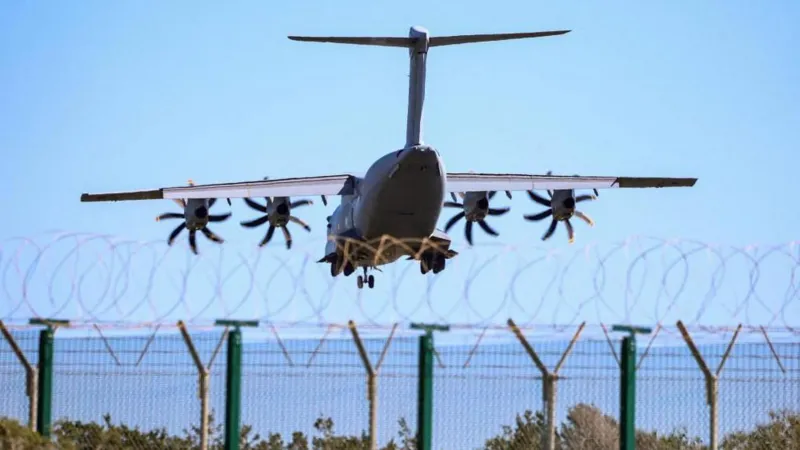
A British man has been arrested by Cypriot authorities on suspicion of espionage, in a case that marks the first instance of the National Security Act 2023 being deployed to investigate an alleged offence committed in an overseas territory. Rashad Sultanov, 44, a resident of Islington in north London who also holds Azerbaijani citizenship, was taken into custody on 17 July and is currently being held pending extradition proceedings, having been accused of carrying out "hostile surveillance" on RAF Akrotiri and sharing intelligence with Iran's Islamic Revolutionary Guards Corps. The investigation, led by Counter Terrorism Policing (CTP) London, is understood to have focused on alleged spying activities conducted between 11 May 2025 and 22 June 2025, with the Crown Prosecution Service confirming that Sultanov will face charges under the 2023 legislation.
The sovereign base at Akrotiri, which has been maintained by the United Kingdom on the island of Cyprus since the 1950s, has assumed renewed strategic significance in recent months, having been used to launch RAF operations against Iranian missiles and drones. It is alleged that Sultanov's activities compromised the security of this installation, prompting a coordinated response from British and Cypriot law enforcement agencies that underscored the close operational partnership between the two jurisdictions. Commander Helen Flanagan, head of CTP London, emphasised the significance of the case, stating that it demonstrated the capacity to apply the National Security Act extraterritorially when British military bases are purportedly targeted by hostile state activity, and praising the "huge amount of partnership work" undertaken between the respective authorities.
The extradition proceedings, which are now progressing, involve continued collaboration between the Crown Prosecution Service, the National Crime Agency and Cypriot judicial authorities, according to Commander Flanagan, who confirmed that her officers remained engaged with all relevant parties as the legal process unfolded. Sultanov's dual nationality adds a layer of complexity to the case, though sources indicate that the Cypriot courts are expected to rule on the extradition request in due course, with the British authorities keen to bring the suspect before a UK court to face the charges under the relatively new counter-espionage framework. The National Security Act, which received royal assent in 2023, was designed to modernise and consolidate the UK's espionage laws, and its invocation in this context represents a significant test of its extraterritorial reach.
No further details have been disclosed regarding the nature of the intelligence allegedly passed to the Islamic Revolutionary Guards Corps, though it is understood that the surveillance activities were of a "hostile" character, focused on the military capabilities and operational routines at RAF Akrotiri. The base, which serves as a crucial logistical and operational hub for British forces in the Eastern Mediterranean, has been a permanent fixture of the UK's military presence in the region since the colonial era, and its security is regarded as paramount to British defence interests. The arrest of Sultanov, coming amid heightened tensions between Western powers and Iran, is likely to intensify scrutiny of Iranian intelligence activities targeting UK assets overseas, and raises questions about the effectiveness of existing counter-espionage measures.
As the extradition process continues, Sultanov remains in custody, with the Cypriot authorities yet to set a date for the formal hearing that will determine whether he is to be handed over to British jurisdiction. Commander Flanagan's remarks, delivered in a statement released yesterday, sought to reassure the public that the investigation had been conducted with the utmost rigour and that the partnership between British and Cypriot agencies had been exemplary throughout. The case, which has drawn attention from national security observers, represents a milestone in the application of the 2023 Act and serves as a reminder of the persistent threats faced by UK military installations abroad.