Mosquito-borne virus surges across Sri Lanka with hospitals stretched to limit
With more than 77,000 infections and 56 deaths recorded this year, Sri Lanka has enlisted military drones and police inspections to combat its most severe dengue outbreak since 2017.
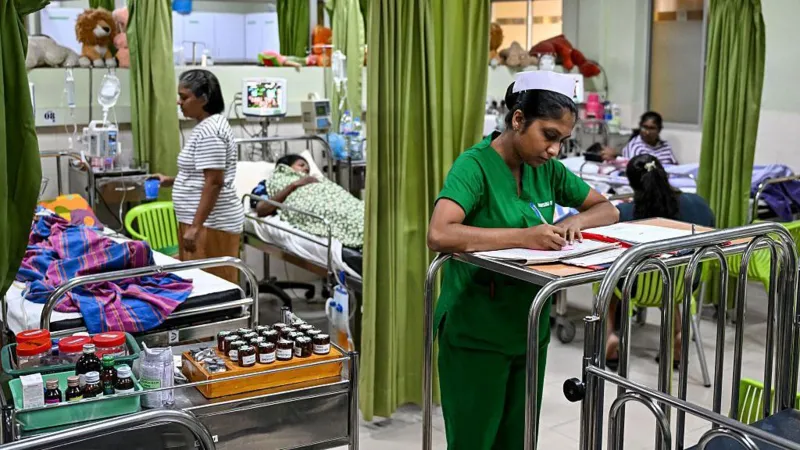
Sri Lanka has deployed military drones to survey rooftops and other hard-to-reach locations for stagnant pools of water, as authorities grapple with the nation's most severe dengue outbreak in nearly a decade, a crisis that has already claimed 56 lives and infected more than 77,000 people across the South Asian island since the start of the year. The viral fever, which is transmitted to humans through the bite of infected Aedes mosquitoes, has seen a marked acceleration in recent weeks, with over a quarter of the annual caseload reported in July alone, placing considerable strain on the country's public health infrastructure. Health officials have attributed the surge to a cyclone that tore through the island last December, scattering debris that has since become a fertile breeding ground for the insects, which thrive in stagnant water collected in pails, vases and flowerpot plates. In response, the government has tasked the military with operating drones to scan the rooftops of homes, schools and construction sites, while police officers have been deployed to conduct physical inspections of residential premises, a dual-pronged approach that has resulted in nearly 11,000 mosquito breeding sites being cleared this month and more than 4,000 property owners fined for harbouring such sites.
Dengue fever, which is caused by the dengue virus, is most commonly found in tropical and sub-tropical climates where warm temperatures and high humidity enable the Aedes mosquito to flourish, but rising global temperatures have allowed these disease-carrying insects to push into new regions, including Europe and the Mediterranean. The World Health Organisation has reported a dramatic increase in global cases, from approximately 500,000 in the year 2000 to 14.4 million in 2024, a surge that has prompted the agency to categorise dengue among the top ten global health threats, with nearly half of the world's population now considered at risk. Many individuals who contract the virus do not develop symptoms, but for those who do, the most common manifestations include high fever, headache, muscle and joint pains, nausea and rashes, which typically resolve within a week or two; in severe cases, however, the disease can lead to internal bleeding and death. Kapila Kannangara, director of Sri Lanka's National Dengue Control Unit, explained that there are four distinct strains of the dengue virus, and immunity acquired from one strain does not confer protection against the others, meaning that someone infected by one strain remains vulnerable to subsequent infections from mosquitoes carrying a different strain, which could result in an even more serious illness.
With no universal vaccine currently available for dengue, treatment often involves managing pain with medication such as paracetamol, while patients who develop severe symptoms require careful monitoring in hospital, as complications can prove lethal. Hospitals across Sri Lanka have added beds and extended working hours to cope with the influx of patients, and public health workers are said to be "stretched to their limit", according to Dr Kannangara, who noted that approximately 75% of cases were linked to the more virulent strain of the virus. The capacity constraints have prompted doctors to advise patients with mild symptoms to rest and recover at home, while authorities are also considering the introduction of a dengue vaccine, though health experts have suggested that developing such a vaccine is particularly challenging given the existence of four distinct viral strains. Although infections have been reported across the country, they tend to concentrate in urban areas, particularly in the capital city Colombo, where population density and environmental conditions create favourable conditions for mosquito breeding.
This is not the first time Sri Lanka has experienced a dengue epidemic of such magnitude; in 2017, the disease claimed 450 lives during a year marked by heavy monsoon rains, and the current outbreak has revived memories of that devastating period. The incidence of dengue has increased thirty-fold over the past fifty years, according to the WHO, and experts point to climate change as a significant driver of this trend, with wetter and longer monsoons providing mosquitoes with extended periods for reproduction in tropical regions. Removing stagnant water by emptying flowerpot plates, overturning unused pails and breaking up hardened soil can help break the transmission cycle, and some governments have also turned to Wolbachia, a naturally occurring bacterium found in approximately half of all insect species, which makes it harder for mosquitoes to spread the virus rather than killing them outright. In Sri Lanka, the current outbreak has exposed the vulnerability of even experienced health systems to the rapid spread of vector-borne diseases, and the military-backed surveillance operation represents a significant escalation in the country's efforts to contain the epidemic. The government's decision to deploy drones and police inspectors reflects a recognition that conventional methods of mosquito control have proved insufficient in the face of the scale of the current crisis, which has already surpassed the annual caseload of many previous outbreaks and shows little sign of abating. As temperatures continue to rise worldwide and extreme weather events become more frequent, public health officials warn that dengue and other mosquito-borne diseases are likely to pose an increasing threat to populations well beyond their traditional tropical and subtropical habitats.