Moscow publishes rejected Lavrov piece accusing Europe of seeking Russia's defeat
Russia's Foreign Ministry has published an article rejected by Politico in which Sergei Lavrov dismisses European peace initiatives as ultimatums, while European leaders have set out five conditions for a just settlement in Ukraine
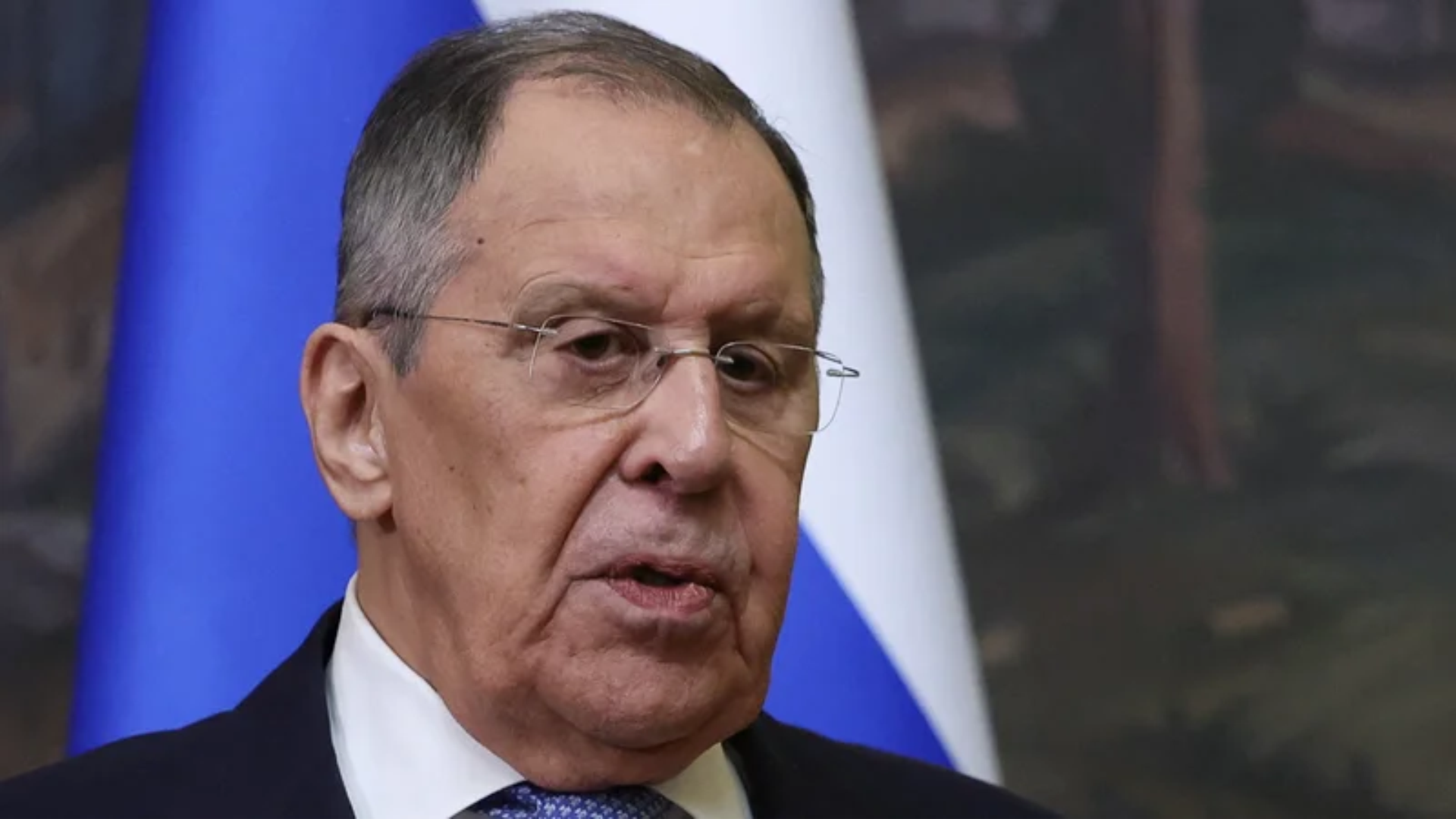
The Russian Foreign Ministry has published on its official website an article by Foreign Minister Sergei Lavrov that was declined by the American political journal Politico, in which Moscow rejected European peace initiatives as an "ultimatum" and portrayed the continent as fundamentally invested in Russia's defeat. The piece, which was said to be replete with familiar Kremlin propaganda narratives, insisted that Russia "does not refuse contacts with anyone" while simultaneously contending that dialogue with Europe could not proceed as though the continent were an impartial outside observer. Mr Lavrov's article repeated the assertion that Russia's objectives in its war against Ukraine must be achieved, though once again the minister declined to specify precisely what those objectives entailed, instead writing at greater length about the necessity of a multipolar world and the imperative to restructure the existing security architecture. Trust, he claimed, could be restored only through practical steps, while European diplomats were accused of pursuing "expansionist" plans that rendered meaningful dialogue all but impossible.
The publication of the rejected article came as European leaders had, earlier this month, set out a series of conditions for a just and lasting peace in Ukraine following a meeting with President Volodymyr Zelenskyy in London on 7 June. The meeting, convened in the E3-Ukraine format, brought together the British Prime Minister, Sir Keir Starmer, President Emmanuel Macron of France, and Chancellor Friedrich Merz of Germany, who discussed the battlefield situation and defence against ballistic threats. The five conditions articulated by the three leaders included an immediate and full ceasefire, with the current line of contact serving as the starting point for negotiations. Once a ceasefire had taken effect, Ukraine was to receive reliable and legally binding security guarantees, building upon commitments made in Berlin in December 2025 and in Paris in January 2026, which would include the deployment of multinational forces on Ukrainian territory. Russian assets, it was stipulated, would remain frozen until Moscow ended the war and compensated Ukraine for damages, while any agreement would be required to protect European security interests, with elements concerning the EU and NATO requiring the consent of relevant member states.
The rejection of Mr Lavrov's article by Politico underscored the continuing difficulties faced by Moscow in projecting its narrative within Western media outlets, even as the Kremlin has sought to portray itself as open to dialogue. The Russian minister's characterisation of European peace proposals as ultimatums appeared designed to preempt any suggestion that Moscow might be willing to engage constructively with the conditions laid out by the UK, France and Germany. The article also served to reiterate longstanding Russian grievances regarding the post-Cold War security order, though its publication on the ministry's website rather than in the Western journal for which it was originally intended suggested that Moscow's efforts to reach a broader international audience had met with limited success. Meanwhile, the European leaders' five-point plan, articulated with unusual specificity, represented a concerted attempt to establish a framework for negotiations that would address both Ukraine's immediate security needs and the broader European security interests that Mr Lavrov had characterised as expansionist.
The timing of the article's publication was notable, coming amid a concerted Ukrainian drone campaign against Russian oil infrastructure, including a large-scale attack on a Moscow refinery on 18 June that raised concerns about fuel shortages in the Russian capital. That operation, which produced a plume of smoke visible over Moscow, formed part of Ukraine's broader strategy of striking strategic targets within Russia while its European allies sought to consolidate a unified diplomatic position. Mr Lavrov's article made no reference to these developments, focusing instead on the broader geopolitical contest and the necessity of what he termed a changed security structure. The minister's insistence that Russia's goals must be achieved, coupled with his refusal to articulate those goals with any precision, left observers to conclude that Moscow's position remained fundamentally unchanged, even as European leaders had moved to articulate a clear and detailed framework for ending the conflict. The rejection of the article by Politico, and its subsequent publication by the Russian Foreign Ministry, served as a telling illustration of the information war that continues to accompany the military conflict, with both sides seeking to shape international perceptions even as the battlefield itself remains the primary arena of decision.