Moderate Democrat defeats Hong in gubernatorial race as progressive momentum checked
David Crowley, the more centrist candidate, secured a narrow win over Francesca Hong in Wisconsin’s Democratic primary, interrupting a series of successes for the party’s anti-establishment faction.
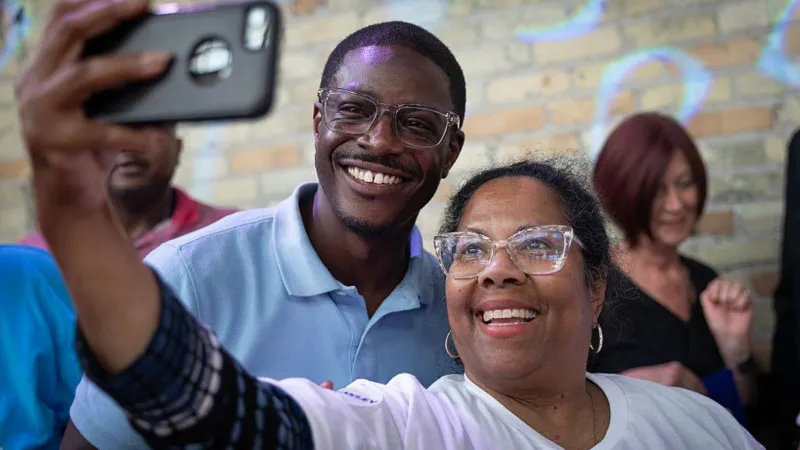
David Crowley, the chief executive of Milwaukee County, has been projected to have won the Democratic primary for Wisconsin governor, dealing a surprise check to the left wing of the party after a string of insurgent victories that had rattled the Democratic establishment in Washington. The narrow victory over Francesca Hong, a state assemblywoman and former chef who had been considered by many observers to be the frontrunner, was confirmed by a projection from the BBC’s US partner, CBS News, and brings to an end a recent run of successes for candidates backed by the Democratic Socialists of America and other anti-establishment groups. Mr Crowley, who briefly withdrew from the race last month to support a rival before re-entering with the endorsement of Governor Tony Evers, will now face the Republican nominee, Congressman Tom Tiffany, in November’s general election, a contest that is expected to be closely fought and carries wider implications for control of the US Congress.
Mr Crowley’s late surge was all the more remarkable given the momentum that Ms Hong had appeared to carry into election day, having sought to become the first democratic socialist to govern the state, though some of her past comments on police funding and the Thanksgiving holiday had attracted scrutiny and raised questions about her electability against a Republican opponent. Prominent left-wing figures such as Senator Bernie Sanders of Vermont and Representative Alexandria Ocasio-Cortez of New York, who have frequently endorsed insurgent candidates, notably refrained from backing Ms Hong in this race, a decision that may have reflected concerns about her viability in a statewide contest. Ms Hong conceded defeat gracefully, with her campaign manager stating that she was proud of the race they had run, but her loss stands in contrast to the victories achieved by other progressive candidates in recent weeks, including Abdul El-Sayed’s win in Michigan’s US Senate primary and the success of three progressive House candidates endorsed by New York City Mayor Zohran Mamdani, who unseated two incumbents and the preferred successor of a retiring congresswoman.
The Wisconsin primary was one of several closely watched contests held on Tuesday, with the left wing of the Democratic Party finding better fortune in neighbouring Minnesota, where Peggy Flanagan secured the nomination for the US Senate race by defeating her more centrist opponent, Angie Craig. In South Carolina, a special Republican primary for the US Senate, triggered by the death of Senator Lindsey Graham, saw Darline Graham Nordone, the late senator’s sister, advance to a run-off vote later this month, where she will face Democrat Annie Andrews to fill the vacant seat. The results have underscored the ideological divisions within the Democratic Party, as candidates who have gained traction by criticising both Republican policies and the Democratic status quo in Washington continue to challenge the party’s leadership, particularly on issues such as the US’s military support for Israel amid its ongoing operations in Gaza.
Mr Crowley, having secured the nomination, took to social media to declare that it was time to “get to work”, reiterating his campaign’s focus on affordability, schools, job creation and ensuring opportunity reaches all parts of the state. His Republican opponent, Congressman Tiffany, who easily won his own primary and has the endorsement of President Donald Trump, has likewise emphasised affordability, proposing lower taxes, support for farmers and improvements to healthcare as central pillars of his platform. With the midterm elections looming in November, the Wisconsin governor’s race is poised to be a bellwether for the national political mood, and the outcome of the Democratic primary has ensured that the contest will pit a centrist against a Trump-backed conservative, offering voters a clear choice between two distinct visions for the state’s future. The defeat of Ms Hong, while a setback for the left, does not signify the end of the progressive movement, as its candidates continue to win elsewhere, but it has demonstrated that the path to victory in certain key states may require a more moderate appeal than the socialist platform that has animated primary voters in other parts of the country.