Ministers Warned Early Release Scheme Still Risks Freeing Dangerous Criminals
The government’s early release scheme could still result in dangerous criminals being freed, the shadow justice secretary has warned, after the prime minister moved to exclude manslaughter convicts by targeting those serving indefinite sentences.
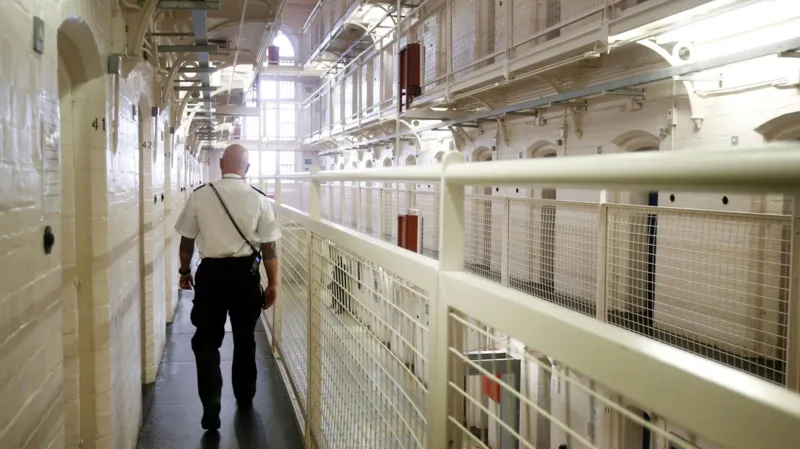
Fresh concerns over public safety have been raised after the government confirmed it would further narrow its early prisoner release scheme by excluding those convicted of manslaughter, a move that will instead require the release of some inmates serving indefinite sentences for public protection. The shadow justice secretary, Nick Timothy, warned that the prime minister’s solution to an overcrowding crisis not of his making risks freeing another cohort of dangerous individuals.
The controversy follows a campaign by the family of PC Andrew Harper to block the release of two men convicted of his manslaughter in 2019. In response, the prime minister, Andy Burnham, announced that the scheme would be narrowed to exclude anyone convicted of that offence, but admitted this would require finding additional prison space by releasing some of the 2,271 prisoners serving Imprisonment for Public Protection (IPP) sentences. These sentences, which were given to offenders deemed to pose a significant risk of serious harm between 2005 and 2012, allow for detention beyond a minimum term if the Parole Board deems it unsafe to release the inmate.
Ministry of Justice data up to June of this year shows that of those serving IPP sentences, 856 have never been released because the Parole Board considered it not safe to do so. "By definition, the people who are still in prison on those sentences are dangerous," Mr Timothy told the BBC. He argued that the government was effectively replacing one group of dangerous prisoners with another, though he conceded that the previous Conservative administration bore responsibility for failing to build enough prison places.
The prison population in England and Wales currently stands at 86,495, representing approximately 97% of usable capacity, a figure that prompted the introduction of the early release scheme under the Sentencing Act 2026. The scheme, scheduled to begin on 1 October, was designed to address the overcrowding crisis by releasing inmates earlier than planned. As well as manslaughter, those sentenced for rape, serious child sex offences, and grooming are not eligible for early release.
Speaking to BBC Breakfast, Mr Burnham acknowledged that his decision would mean "hundreds" more people would remain behind bars, requiring alternative solutions. He defended his approach as "common sense," citing his long-standing concerns about IPP sentences. "I was faced with a situation where people on those sentences who have more than served their time, not being released when others who've committed very serious crimes being released early," he said.
The government maintains that public safety remains its priority. Alex Davies Jones, Minister for Victims, Violence Against Women and Girls & International Justice, told the BBC's Today programme that the scheme is designed to ensure "there is always a prison space available for someone who needs it." She stressed that release does not equate to freedom, as there will be a presumption that those released will be fitted with GPS tags. The justice secretary, Alex Norris, is expected to update Parliament on Tuesday with further details on the changes and the number of prisoners affected.