Mike Lynch yacht had unrecognised vulnerability to high winds, say investigators
British investigators have concluded that the crew of the Bayesian were unaware of a critical safety vulnerability that left the superyacht exposed to powerful winds before it capsized off Sicily, killing seven people including Mike Lynch and his daughter.
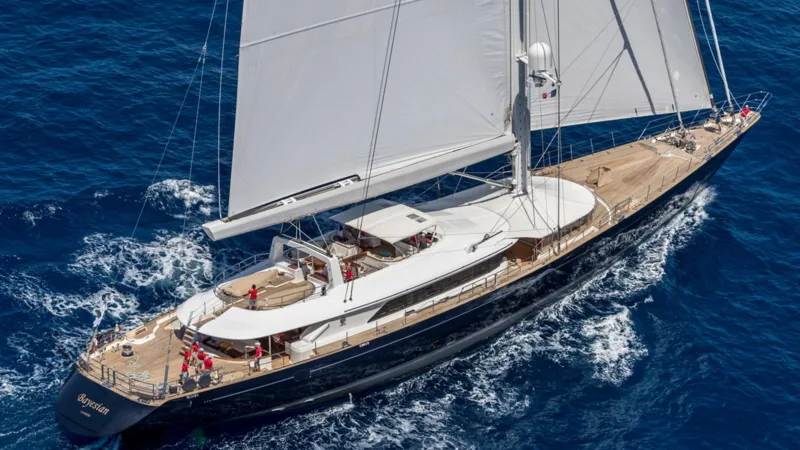
The crew of the Bayesian superyacht did not know about a critical safety risk that left the vessel vulnerable in powerful winds before it sank off the coast of northern Sicily, killing seven people, British investigators have found. British technology tycoon Mike Lynch, 59, and his daughter Hannah, 18, were among those who died when the vessel went down on 19 August 2024. The sinking unfolded with extraordinary speed when a violent downburst of hurricane-force winds knocked the yacht onto its side in less than 15 seconds, according to the final report of the UK's Marine Accident Investigation Branch. Safety information provided to the crew did not identify this type of risk, the branch said. It was very dynamic, very quick, said its principal inspector, Simon Graves; the speed of events overtook the crew and prevented them from taking any other action.
The accident also killed Morgan Stanley International bank chairman Jonathan Bloomer, 70, and his wife, Judy, 71; the American lawyer Chris Morvillo, 59, and his wife, Neda, 57; and the crew member Rick Thomas, 59. Rob Loder, chief inspector of marine accidents, said thoughts remained with the families and loved ones of the seven who lost their lives and with all those affected by the loss. Fifteen survivors escaped from the 56-metre luxury yacht and reached a life raft launched by a crew member.
The investigation found that the Bayesian had a vulnerability to high winds that was not recognised, because the yacht had never been assessed at anchor with its sails down. The extreme winds that night were also not explicitly forecast, Loder added, so the crew had no warning of the risk. In the early hours of 19 August 2024 the yacht was anchored outside Porticello, on the north coast of Sicily. As thunderstorms moved in rapidly, wind speeds rose from eight knots to about 70 knots within minutes, while the forecast had predicted gusts of only up to 27 knots. The report stated that, with no sails set, the Bayesian was vulnerable to being knocked over in severe winds. A study commissioned by the branch indicated that, in the conditions assessed, the vessel was vulnerable to extreme winds at its widest point, and that any knockdown would be irrecoverable once the yacht passed its angle of vanishing stability, assessed at 73 degrees. Beyond that angle it could not right itself. The centreboard, which provides stability under sail, was raised; the report said it was not needed when the yacht was using its motors and was rarely lowered at anchor. The way the boat was loaded, and the angle of the wind, also contributed.
Inspectors said a downburst of hurricane-force winds was the most likely cause of the vessel keeling over. Such events occur when cold, dense air plunges rapidly, sending violent winds across the surface. The branch said none of the risks was covered in the UK training syllabus or in published guidance available to the crew. Once the yacht was on its side, it rapidly filled with water and sank. The final report, published on Thursday, appeared to contrast with recent reports from Italy, where prosecution experts have reportedly blamed errors by the crew rather than problems with the yacht. The investigation was carried out alongside a criminal probe in Italy, where the captain, James Cutfield, chief engineer Tim Parker Eaton and deckhand Matthew Griffith are under investigation over potential charges of multiple manslaughter and culpable shipwreck. British investigators said Italian prosecutors had restricted access to some witnesses and evidence, and the report notes that the circumstances it depicts may alter once evidence withheld by the Italian authorities is disclosed. Graves said, however, that he was content with the British investigation and the information used to inform it. The report also found that alcohol consumption had not contributed to the sinking.
The investigation makes seven recommendations to four agencies. It calls for new regulations for single-hulled sailing vessels and new rules on life rafts, and urges collaboration between the Met Office and its global counterpart to improve the sharing of severe weather forecasts with mariners. The Maritime and Coastguard Agency is also investigating the sinking.