Meta agrees $18bn payout as landmark child safety case concludes without trial
The social media giant’s surprise settlement with 29 US states may signal a turning point for an industry facing global reckoning over its youngest users.
In a move that caught many observers off guard, Meta has agreed to pay $18bn (£13.3bn) to resolve claims that its platforms, Facebook and Instagram, caused harm to children. The settlement, announced on Wednesday, brought an abrupt end to what had promised to be weeks of courtroom drama, with 29 states—almost two-thirds of America—lined up against one of Silicon Valley’s most powerful corporations.
The case was brought under the Children’s Online Privacy Protection Act, a nearly 30-year-old piece of American legislation that predates every major social platform in existence today. At its core lay allegations that Meta had systematically gathered and used data belonging to children under the age of 13 over a period of several years. Yet for those following the proceedings closely, the trial was about something far broader: a co-ordinated assault on the company’s entire safety record.
Around the world, 2026 is shaping up as a year of reckoning for the social media industry. Meta, alongside rivals such as TikTok and Snapchat, has found itself in the crosshairs of regulators and campaigners alike, raising the possibility that the era of unchecked doomscrolling may be drawing to a close. The company has fought vigorously across multiple lawsuits, at considerable expense, to defend its commitment to protecting children. More than once, this correspondent has been invited to detailed presentations at Meta’s London headquarters, where senior executives have walked journalists through the growing arsenal of safety tools—more than 60 on Instagram alone—designed to offer younger users greater protection. Yet the parents of children who have come to harm on those same platforms paint a different picture, many admitting to feeling overwhelmed by the sheer volume of features requiring their oversight. In recent years, many of those tools have been switched on by default.
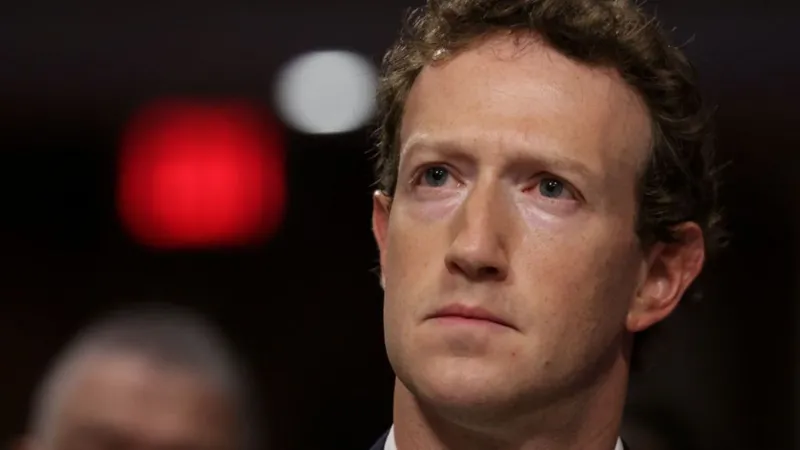
The trial lasted just five days, ending before Meta’s chief executive, Mark Zuckerberg, was due to give evidence. But the proceedings proved uncomfortable for the company. Arturo Bejar, a whistleblower and former Instagram engineer, claimed that he had alerted senior management to harmful content affecting children on the platform, only to see no action taken. Another executive could not recall having written on a slide deck that Meta sometimes chose to pay fines for regulatory violations rather than make operational changes. Internal memoranda suggested that the firm knew opt-in safety tools tended to have low adoption rates, yet it continued to launch features that were not automatically activated.
Had Meta lost the case, speculation had centred on fines reaching hundreds of billions of dollars. The theoretical maximum—based on penalties for every child who used its platforms for more than half an hour a day over a 12-year period—would have amounted to $1.4tn, roughly the company’s entire market value. That figure was always a distant prospect, but even the more realistic estimates ran into the hundreds of billions. Against that backdrop, the agreed sum of $18bn, payable over a decade, appears comparatively modest. Meta, which has admitted no wrongdoing, may well have calculated that settling was the safest way to protect its core business: social networks remain its primary source of revenue. The billions of users on Instagram and Facebook provide a goldmine of user data, which in turn fuels the advertising machine. Although Meta now presents itself as laser-focused on artificial intelligence, it still depends heavily on the vast income generated by its social apps.
As part of the settlement, the company has agreed to introduce significant changes to how Instagram and Facebook operate for younger users, measures that some experts have described as long overdue. A two-hour daily time limit will become the default setting for known teen users, though direct messaging will not count towards that cap. Notifications will be muted between midnight and 6am, and during school hours from 8am to 3pm. Likes on posts and content will be entirely hidden for teens. Most of these features are due to be rolled out within six months, either as defaults or as available options. More ambitious efforts to identify which users are children will take up to a year to implement fully.
It would be surprising if these measures remained confined to the United States for very long; other countries are likely to adopt similar safeguards. Meta itself has argued that the new features will only truly protect children if its rivals adopt them as well. In a highly competitive industry, the global backlash against social media’s impact on young people may force TikTok, Snapchat, and others to follow suit. The question then becomes whether children will continue to use platforms deliberately toned down into blander offerings—and whether, as existing adults gradually age out of the ecosystem, the social media era might fade to a natural conclusion. Arturo Bejar, the whistleblower, struck a cautious note: “At the end of the day, Meta needs to be held accountable for results, not efforts.” The proof, he suggested, will lie in whether the new safety measures actually work.