Met police apologise to victims of detective who exploited his position
Warren Arter used his command of a south London rape unit to groom and abuse the women whose cases he handled. A BBC Panorama investigation reveals a decade of missed chances to stop him.
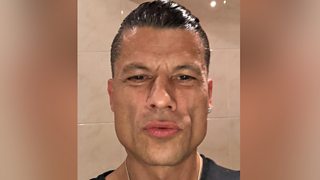
The Metropolitan Police repeatedly missed opportunities to stop a predatory detective inspector who sexually exploited women whose cases he was charged with investigating, a BBC Panorama investigation has found. Warren Arter used his command of a unit investigating sexual assaults in south-east London to target women it was his duty to protect. Two women, speaking publicly for the first time, have described how he groomed them; one says he raped her. In the case of his wife, Rebekah, he filmed her being sexually abused and distributed the footage. She died in Barbados two years ago while on holiday with him, and on Sunday the BBC revealed how he had lied about what happened on the Caribbean island. The force has now publicly apologised to the women he abused, and says it is examining his electronic devices to identify whether there are further victims.
There were multiple investigations into Arter during his 20 years as a serving officer. The former detective who led one of them has told the BBC that senior bosses tried to interfere with his inquiries, even after he had found potential victims. Arter was suspended as a result of that investigation but remained on full pay for seven years before being sacked in 2023 for drug offences. The following year, having learnt of his wife's death in Barbados, the Met arrested him on his return to Britain over sexual offences alleged by another woman. He took his own life days later in HMP Wandsworth. Despite the evidence against him, the force has not reviewed all the cases he handled. Panorama has identified several missed opportunities: in 2010, medical staff found Arter alone with a woman in the toilets of a sexual assault referral centre hours after she had reported being raped, and although the Met was told, no investigation followed. Between 2014 and 2018 the force received six corroborated intelligence reports of sexual misconduct by Arter. It also failed to arrest him in 2024 after being told he had sent an illegal upskirting image, acting only after Rebekah's death three months later. That last failure came after the Casey Review concluded the Met was institutionally misogynistic, after the convictions of the rapist and murderer Wayne Couzens and the rapist David Carrick, both serving officers, and after Commissioner Sir Mark Rowley promised to lift the stone and tackle everything underneath it. The police watchdog, the Independent Office for Police Conduct, identified 21 potential victims of Arter; the Met has not contacted all the women whose cases he investigated.
The upskirting image, sent in March 2024 to a woman we are calling Layla, should have led to Arter's arrest; bail conditions or custody would have kept him from taking Rebekah to Barbados. On 28 June, Arter telephoned her relatives from the island to tell them she was dead. Rebekah had been escaping an abusive relationship in 2006 when the Met placed the then Detective Sergeant Arter in charge of investigating her former partner. He pursued her, they began a relationship and he quickly moved in. Her now-adult son, Elliot, says Arter initially made his mother feel safer, but that his behaviour soon changed. He would tell her to get in the kitchen and make his dinner, addressing her with obscene contempt, Elliot recalls, and would openly watch pornography on his tablet in the living room. He also collected urine from Elliot, claiming he was testing it at the police laboratory to help the boy's promising football career, though Elliot now suspects it was an effort to conceal his own drug use. The inquest into Rebekah's death heard that sedatives had become so routine in the home that a daily smart-speaker reminder announced "G o'clock", a reference to the date-rape drug GHB. In the years before she died, Arter filmed and distributed videos of his wife being sexually abused; the BBC has seen some of them. Many show her unconscious or otherwise incapacitated while he insults her. In one video he tells her she should get raped. In another he is heard speaking to a man behind the camera, asking him to be quiet and saying they go mad otherwise, suggesting the footage was made for a wider audience. His crimes were so brazen that he sent abuse videos of Rebekah unsolicited to at least four women he knew. Two were women whose cases he had investigated, one of them Layla, whose exploitation continued for more than a decade until she reported the upskirting image to the watchdog.
Arter's abuse could have been stopped more than a decade earlier, soon after he met Rebekah. He claimed their relationship began after a chance meeting on a night out, an account she corroborated when he was questioned by the IOPC during an investigation begun in 2017. Panorama has learnt, however, that Rebekah was bombarded with more than nine hours of calls from Met phone numbers in the three months after her case concluded in 2006, and that Arter searched her name on force computer systems without obvious justification. Officers have faced misconduct proceedings, even prison, for relationships begun in similar circumstances, yet Arter was not disciplined. It is unclear when his bosses learnt of the relationship, but some colleagues appear to have known early. The BBC understands that four officers told the IOPC investigation they believed Arter had met Rebekah on a case; one said they knew she had been a victim of domestic abuse, but they refused to sign a statement. The Met says the watchdog's report found that colleagues knew of the relationship but not that he had met her in the course of his duties, so no misconduct proceedings followed.
When Detective Inspector Jaysen Veeren tried to investigate Arter a decade ago, he says senior Met bosses attempted to interfere with his work. Veeren was a fast-rising officer in the force's Directorate of Professional Standards, which investigates police misconduct, and says he was warned he would be a fool to join a team referred to within the force as the rats, who eat their own. In 2016 he intercepted a Crimestoppers tip complaining about Arter's conduct with victims, and recalls telling his boss that this was the case he had joined for. His investigation was initially well resourced, and he travelled to Australia to interview a woman who said Arter had sex with her after she reported being sexually assaulted as a tourist in London. He then cold-called other cases. We had one victim and, all of a sudden, you've got a second, third, he recalls; it was quite obvious you were dealing with a predator. Arter had been able to visit many of the women alone, and one told Veeren he may as well have walked into her house with his penis out. Veeren arrested and suspended Arter in December 2016, but Arter's phone had been wiped. He then devised a plan to contact all the women whose cases Arter had investigated, but says he was prevented from doing so and that his team encountered interference from senior officers outside the directorate. Emails seen by the BBC reveal that his investigation was likened to a witch hunt by a detective chief inspector, who questioned its justification while the Met was haemorrhaging talent. A chief superintendent told Veeren's boss that staff felt the case was a fishing expedition. Both senior officers, who have since left the force, told the BBC this was not interference and said they were acting on colleagues' concerns about how the inquiry was conducted. Veeren says he felt unable to widen his investigation to examine all of Arter's cases. He referred his file to the watchdog in the expectation that it would do so, and later reported his concerns as part of a wider whistleblowing complaint alleging corruption within the directorate. He resigned in 2019 when he discovered that none of his allegations would be upheld; the Met says his complaints to the IOPC were either disproven or not corroborated.
Layla says Arter's abuse has ruined her life and that she still struggles to leave the house. Fourteen years before she told the watchdog about the upskirting image, she reported being raped in a hotel room by a member of staff. Arter, as the unit's lead, was put in charge of her case and immediately began to target her. Within hours of their first meeting he asked her to put her head in his lap and stroked her hair while a constable drove them to a sexual assault referral centre, where staff found him alone with her in the toilets. A doctor was so alarmed by his intimacy with Layla that she reported her concerns to the Met, but the force neither investigated nor monitored his ongoing contact with a woman who was then a vulnerable alcoholic. Arter visited her dozens of times over the following months, she says, sexually exploiting her during what he described as therapy time. Panorama has learnt that he told colleagues Layla was becoming too attached to him, and that he was commended for victim care in her case, just as he had been in the domestic abuse case of his future wife. Even after he informed Layla that the Crown Prosecution Service had declined to authorise charges in July 2010, he continued to contact her, helping her with a successful compensation claim. After Veeren referred his investigation to the watchdog, it described Layla as having been groomed by Arter. She says Arter, by then suspended, told her what to tell investigators, and she did not provide a statement.
Despite Layla's known vulnerability and the evidence against him, three years passed before a file on Arter's sexual misconduct reached the CPS, which declined to pursue criminal charges in 2020. A further three years passed before he appeared at a misconduct hearing, and then only for drug offences. He was finally dismissed in 2023, having received at least £300,000 in pay while suspended, and he kept his pension. In March 2024, staff from the police watchdog visited Layla at home, and she revealed that Arter had sent her the upskirting image; by then, she says, she had begun to wake up to his exploitation of her. The watchdog told the Met about the illegal image, but the force failed to arrest him, which it attributes to human error when using a new crime recording system. On 28 June 2024, Rebekah died in a hotel room in Barbados. Disturbed by Arter's shifting account of what had happened, Elliot and his wife Lacey went to the couple's house in south-east London, where they say they found a variety of drugs, hidden CCTV cameras rigged up by Arter, and photographs of Rebekah naked and bruised, involved in sexual acts and seemingly taken without her consent. On 2 July they drove to Bexleyheath police station, where Arter had worked. Staff were initially uninterested in a death thousands of miles away, the couple say, and it was only when they mentioned Arter's name that officers became interested. It was like chaos, Lacey says. The family were told the Met was considering sending officers to Barbados, but the BBC has been told that a senior officer from its Gold Command group was briefed that evening in light of Arter's alleged offending, and a decision was taken not to send anyone, because no allegation of criminality had been made. Later that week the Met interviewed Layla, who disclosed that Arter had raped her on one occasion and sexually assaulted her on another. He flew back from Barbados on 9 July and was arrested at Heathrow on suspicion of rape, voyeurism and coercive control. Three days later he took his own life in prison.
Neither the Met nor the watchdog has released its investigation reports into Arter's sexual misconduct, despite Freedom of Information requests by the BBC. He was regarded as the star detective of a unit lauded for its results in investigating rape and sexual assault, yet the Met has never investigated that unit's sanction detection rates, the proportion of reported crimes for which action was taken against suspects. In 2009 the Conservative politician James Cleverly, then a London Assembly member, said the unit had achieved rates of 96%, three times the London average and at a time when some officers were known to be systematically manipulating the recording of offences. The Met says it does not recognise the figure. Dame Vera Baird, the former Victims' Commissioner for England and Wales, says there appear to have been many missed opportunities to stop Arter between 2006 and 2024. Had a doctor been found to abuse one person, she notes, the authorities would examine his entire list of patients from start to finish. It is quite outrageous, she says, that there will be women living now with trauma he imposed on them. She is calling for an outside force to investigate every case Arter handled.
Rebekah's family believe the Met should examine whether other men helped Arter abuse her, and Elliot says some of the electronic devices seized from the house two years ago have still not been analysed. Their solicitor, Sophie Naftalin, says a public inquiry is needed to reveal the full extent of his offending. It is a disgrace for the Metropolitan Police, she says, and a dirty secret, one they want to keep hidden. The Met told Panorama that Arter could have been arrested sooner and that it is deeply sorry for the harm caused to victims by his repeated exploitation of his position for sexual purposes. It acknowledged that progress with his devices had been slow but said the work was now being prioritised, and it encouraged anyone else who believes they were targeted to come forward. It added that the recording of rape cases was examined nationally in 2014 and that there have been significant changes to the scrutiny of crime figures. The watchdog says it regrets that its investigation took three years but that the case was complex and involved delays outside its control; the allegations, it says, were treated extremely seriously and resulted in referrals to the CPS. The CPS says it thoroughly reviewed the evidence and concluded there was no realistic prospect of conviction at the time, and that it did charge Arter with misconduct in public office before his death. In September 2025 the coroner in Rebekah's case issued a prevention of future deaths report, warning that further deaths could occur unless action was taken. The Met says it has already moved to improve vetting and to tackle officers abusing their powers, while the watchdog says information about a specific risk to Rebekah had not been made available to it and that it has since strengthened its safeguarding procedures. Elliot says he has spent the past two years trying to get answers. I don't think I've grieved yet, he says. I don't know what will happen when that day comes.