Mahmood warns against 'misguided attempts at course correction'
The home secretary will tell police chiefs that new impartiality guidance is needed to counter a corrosive and growing perception of two-tier policing, warning that the pursuit of equality must not lead to differential treatment.
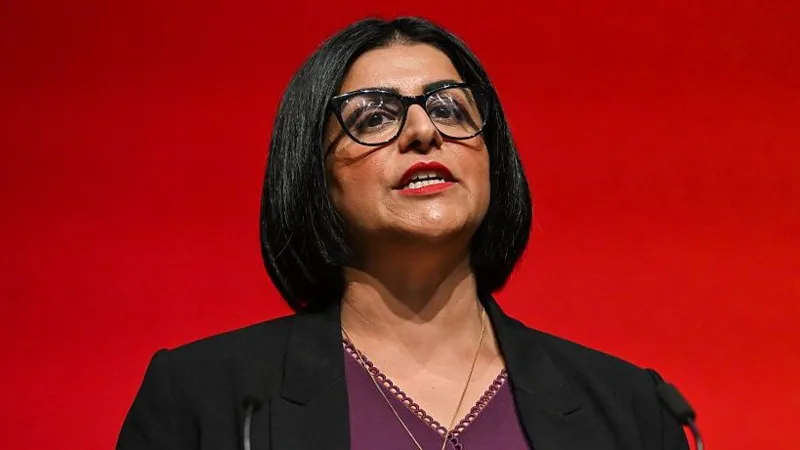
The home secretary, Shabana Mahmood, is to announce stronger guidance on police impartiality to tackle what she calls the corrosive and growing perception of two-tier policing. She will tell a conference of police chiefs that forces should avoid misguided attempts at course correction, where the pursuit of equality leads instead to differential treatment. Recent complaints about alleged two-tier policing have come mostly from the political right. They have pointed to the arrest of Henry Nowak as he was dying after being stabbed by Vickrum Digwa, who had accused him of racism. Nigel Farage, the Reform UK leader, has argued that white people are treated differently by police because of their race, but critics say the claim risks overlooking the long-standing experiences of black and minority ethnic communities. Some senior police figures have also strongly rejected the suggestion of two-tier policing.
Mahmood will announce that a new national standard is being developed to ensure all members of the public are treated equally, according to the Home Office. She will say she knows the vast majority of officers police impartially and that policing without fear or favour is their creed, but she will set out clear, comprehensive guidance reinforcing that officers must apply the law consistently, to prevent what she calls motivated actors from whipping up the idea that policing is two-tiered. Community engagement, she will say, can mean attending a residents' association meeting and having tea and biscuits, or samosas, but it should not mean engaging with activists pushing an agenda. Leave the politics to the politicians, she will tell her audience, and we will leave the policing to you.
The home secretary will add that more must be done to tackle inequalities in policing, highlighting the persistently low proportion of black police officers. She will state, however, that some well-intentioned approaches, such as the Police Anti-Racism Commitment, have risked undermining confidence in impartial policing. As a Muslim home secretary, she will say, no one can doubt that equality in policing, and within the forces, matters to her. But we must also be wary of misguided attempts at course correction, where the pursuit of equality leads instead to differential treatment. To the public, she will add, it was patently absurd to tell police officers that fair policing does not mean treating everyone the same.
Jo Noakes, who leads the College of Policing, the standards-setting body, said it would issue new guidance for officers making clear the requirements of impartiality in the spring. Policing must act in a way that maintains public confidence, she said, and that confidence depends on officers and staff exercising their powers without fear or favour. Impartiality cannot be seen in isolation, she added, but must be considered alongside how policing acts with fairness and inclusion, both within its own ranks and towards the public.