Lithuania Ready to Fight Back, Says PM, as Vilnius Prepares Evacuation Plans
Mindaugas Sinkevičius says his country feels "constantly threatened" by Russia and has drawn up evacuation plans, but insists Lithuania will fight back if attacked.
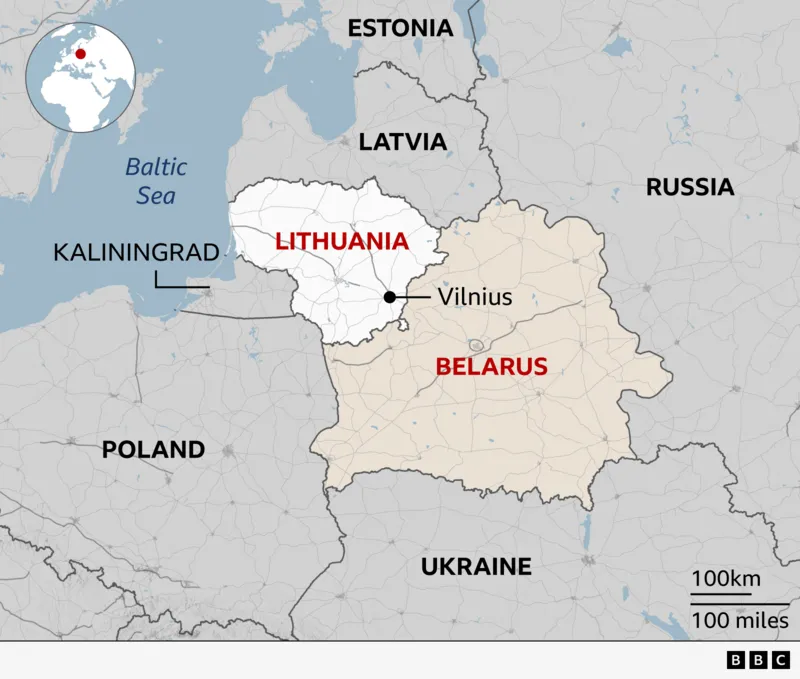
Lithuania has drawn up evacuation plans in response to threats from Russia, its prime minister has said, while insisting the country would not surrender if attacked. Mindaugas Sinkevičius told BBC Newsnight that Lithuanians feel "constantly threatened" by their eastern neighbour, in part because of drones entering the nation's airspace.
He said that if his country were attacked, "we will fight back... we will engage". But he confirmed that plans existed for a "variety of scenarios", citing the example of moving elderly citizens out of cities "smoothly" and avoiding traffic jams.
Lithuania, a Nato member, shares a land border with the Russian exclave of Kaliningrad. "We're thinking about a variety of scenarios, not all of them are being discussed very much publicly," Sinkevičius said. "We face concrete threats, not on a daily basis, but we're experiencing them and it's a true reality for us."
The prime minister also said the UK needed a "shift in the mindset" in its approach to defence, though he noted that Lithuania was "closer to the border and closer to [the] threat".
Last week, Nato fighter pilots shot down a drone that entered Lithuanian airspace. Lithuania has experienced numerous incidents over the past year, which it describes as "hybrid attacks" and blames on neighbouring Belarus, a close Russian ally.
Late on Monday night, flights were disrupted at Lithuania's main airport in the capital, Vilnius, because of what the airport operator called a "hybrid attack carried out by Belarus", involving objects that appeared to resemble the shape of balloons. The president's chief adviser, Deividas Matulionis, said on Tuesday it was unclear whether the objects were balloons.
Germany, a fellow Nato ally, pledged in 2023 to station a combat-ready brigade in Lithuania permanently in response to the changing security situation in Europe. It is expected to be operational by 2027 and to number about 5,000 soldiers and civilian employees, though it has failed to recruit enough personnel voluntarily and is now turning to compulsory assignments to fill some positions. The majority of troops will be based in Rūdninkai, near the Suwałki Gap, a line that borders Lithuania and Poland and also links Belarus with Russia's Kaliningrad. Nato said that as of December last year it had more than 5,000 troops stationed in Lithuania.
The origins of last week's drone incident over Lithuania have not been confirmed, though Defence Minister Robertas Kaunas told Newshour it had come from the direction of Belarus. UK Defence Secretary Wes Streeting said: "Thanks to the swift and professional actions of Lithuanian and Italian forces, Nato once again demonstrated our readiness to protect our airspace. We stand united, around the clock, in defence of every inch of Nato territory." Moscow did not comment on the incident.
Military drone incursions have become increasingly common across Europe since the beginning of Russia's full-scale invasion of Ukraine. Residents in Vilnius were forced to take shelter in May after a drone alert was triggered, briefly grounding flights and rail travel. Nato jets have scrambled multiple times to shoot down stray Ukrainian drones that crossed into fellow Baltic countries Estonia and Latvia this year. Ukraine has blamed the stray drones on Russian electronic warfare, technology designed to change the flight paths of Ukrainian drones.
Lithuania, Estonia and Latvia all joined Nato in 2004, becoming signatories to the Article 5 provision that states "an armed attack against one Nato member shall be considered an attack against all members".