Lebanese troops deploy to pilot zone as Israeli forces withdraw from southern villages
The Lebanese army has begun deploying to a pilot zone in the south following Israel's withdrawal from three villages, in a first test of the US-brokered agreement aimed at disarming Hezbollah.
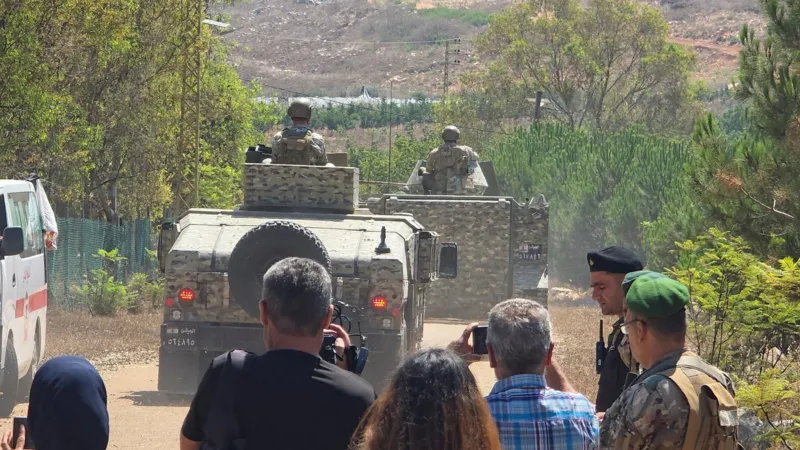
Lebanon's armed forces have commenced deployment to a designated "pilot zone" in the country's south, following the withdrawal of Israeli troops from several villages under the terms of a US-brokered agreement reached last month, the army command has confirmed. In a statement issued on Tuesday morning, military officials said units had entered the village of Zawtar al-Gharbiyeh in the Nabatieh district, with deployments to two other villages – Froun and Srifa – already under way after the US state department announced on Monday afternoon that "pilot zone operations" had begun in all three locations. The move comes ahead of a meeting in Washington between President Donald Trump and his Lebanese counterpart, Joseph Aoun, during which the Lebanese leader is expected to urge the American president to press Israel for a full withdrawal from the remainder of southern Lebanon and to provide support for the Lebanese army in assuming control over areas where Hezbollah holds sway.
The Trilateral Framework agreement, negotiated between Israel, Lebanon and the United States, envisages a phased Israeli pullback from territory occupied during the conflict with Hezbollah, alongside the disarmament of the Iran-backed militant group. On Monday night, the Israel Defense Forces (IDF) confirmed the commencement of the pilot zone plan, with an Israeli military official stating that the military would "adjust its force posture in one of the pilot areas" to facilitate the Lebanese army's mission while "safeguarding the security of IDF soldiers and preserving its right to self-defence and to remove threats". The official reiterated that the IDF would remain in the "security zone" – a 10km (six-mile) deep strip of occupied Lebanese territory running along the border – for "as long as necessary" to defend northern Israeli communities, underscoring the limited nature of the initial withdrawal.
The US state department characterised the development as a "milestone" and the direct result of discussions last week between Israeli and Lebanese representatives in Rome, where the modalities of the pilot phase were reportedly thrashed out. An Israeli source told the Haaretz newspaper that there were no Israeli troops in the three villages – Zawtar al-Gharbiyeh, Froun and Srifa – as of Monday, confirming that the initial phase of the withdrawal had been completed. The Lebanese army's command, for its part, said its deployment to Zawtar al-Gharbiyeh was conducted "based on ongoing communications with the Military Co-ordination Group for Lebanon", the trilateral body established to support implementation of the framework, and called on Lebanese citizens "not to head to the village until the security situation stabilises, and to comply with the instructions of the deployed military units for their own safety".
"The objective of the pilot and the agreement is the disarmament of the Hezbollah terrorist organisation and the removal of its illegal weapons," the Israeli military official said, framing the deployment as a step towards neutralising the group's military capabilities in southern Lebanon. The agreement represents the most significant diplomatic effort to date to end the conflict that erupted on 2 March, when Hezbollah launched rockets into Israel in retaliation for a strike that killed Iran's supreme leader, drawing Lebanon into the broader war between Israel, the United States and Iran. Israel responded with a sustained bombing campaign across Lebanon and a ground invasion of a significant portion of the country's south, causing widespread destruction and displacement.
The human cost of the conflict has been severe, with Lebanese health ministry figures indicating that more than 4,300 people have been killed in Lebanon, including almost 800 children, women and medics, while Israeli authorities report that 37 Israeli soldiers and four civilians have been killed on both sides of the border during the hostilities. The pilot zone deployment, while modest in scope, is seen as a critical test of the Trilateral Framework's viability, with President Aoun's upcoming meeting with President Trump likely to determine whether the United States is prepared to exert greater pressure on Israel for a more comprehensive withdrawal. For now, however, the Lebanese army's presence in the three villages marks a tentative first step towards restoring state authority in a region long dominated by Hezbollah, even as the Israeli military's insistence on maintaining its security zone presence serves as a reminder of the fragility of the arrangement and the deep-seated mistrust that persists between the parties.