Kushner holds Netanyahu talks after Hamas negotiations on Gaza peace plan
The US President’s son-in-law held rare talks with Hamas leaders before meeting a defiant Israeli prime minister, as Washington seeks to advance a peace roadmap that Jerusalem has already spurned.
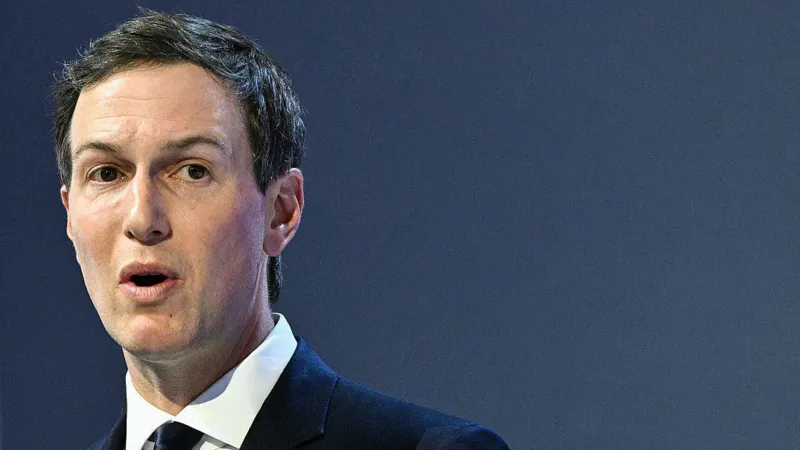
Speaking after overnight talks in Egypt with a delegation led by Hamas’s new leader, Khalil al-Hayya, the US President Donald Trump’s Middle East envoy, Jared Kushner, arrived in Israel late on Sunday for a meeting with Prime Minister Benjamin Netanyahu, the premier’s spokesperson confirmed to the BBC. The encounter, which took place on Monday, comes at a moment of acute diplomatic tension, following Israel’s outright rejection last week of a 15-point American-backed plan for Gaza that calls for the withdrawal of Israeli troops and the reconstruction of the territory under a new civilian Palestinian administration. It is understood that Mr Kushner’s discussions with Mr Netanyahu are intended to explore whether the peace proposal can be resuscitated, despite the prime minister’s firm dismissal of the roadmap and his apparent calculation that defiance of Washington may play well domestically as his party languishes in opinion polls ahead of October’s general election.
Having rejected the US plan, Mr Netanyahu faces competing pressures from members of his governing coalition who advocate an even more aggressive posture in Gaza, complicating Mr Kushner’s task. The far-right National Security Minister, Itamar Ben-Gvir, has called for nightly “targeted eliminations” of “30 or 40” people in the enclave, remarks that drew widespread attention after they were aired on a podcast on 15 August and subsequently reported by the Associated Press, the Financial Times and the Times of Israel. In that interview with Rom Braslavski, who was taken hostage by Hamas during the 7 October 2023 attack, Mr Ben-Gvir asserted: “Not just those who pose an immediate threat – there are people there who are not worthy of life. They shouldn’t live. They’re not even people.” Such rhetoric underscores the fragility of the political terrain upon which Mr Kushner must navigate, with coalition partners pushing for a tougher strategy even as the Board of Peace – the international organisation created originally to secure peace in Gaza and later expanded to address conflicts worldwide, with Mr Trump at its helm – seeks to demonstrate that its plan can still move forward.
According to Israeli media reports, Board of Peace envoys Nickolay Mladenov and Tony Blair, the former British prime minister, are also scheduled to meet Mr Netanyahu on Monday, with the aim of advancing the US proposal. The meetings follow a significant development on Sunday, when Mr Kushner and his fellow envoys, alongside representatives of Egypt, Qatar and Turkey – nations that have mediated in previous peace efforts – held talks with a Hamas delegation led by Mr al-Hayya in Egypt. No official statement was released on that dialogue, which is believed to be the first encounter at this level since last year’s ceasefire agreement for the Gaza Strip was concluded. However, a source with knowledge of the discussions told CBS News, the BBC’s US partner, that the contents included “beginning to transfer all governing responsibilities to the National Committee for the Administration of Gaza, ensuring Hamas has no future governing role in Gaza, facilitating Israeli withdrawals and deploying an international stabilising force to the region”. Reports suggest the talks focused on concrete actions for decommissioning Hamas’s weaponry, alongside humanitarian efforts and the phased withdrawal of Israeli forces.
Central to the impasse is the question of disarmament. Hamas has agreed to give up its weapons in exchange for a phased Israeli troop withdrawal, but Israel has insisted that the group must fully disarm before any pullout occurs. Moreover, Jerusalem demands that any weapons surrendered by Hamas be destroyed rather than stored by a Palestinian technocratic committee, to prevent the group from reclaiming them. There is also opposition, according to sources, to the involvement of Turkey and Qatar in verifying Hamas’s compliance with the deal’s requirements. These conditions, coupled with Mr Netanyahu’s political calculations, mean that pushing him to alter his position will be an uphill struggle, as he has appeared increasingly willing to defy the United States, his country’s closest ally, with his coalition’s right-wing members urging a more unyielding line.
Following Israel’s rejection of the US plan, there appeared to be a pause in Israeli airstrikes on Gaza, reportedly at the request of Washington, though attacks have since resumed. The Israeli military said on Sunday that it had targeted Hamas and Islamic Jihad “terrorists” in Khan Younis and Nuseirat, with local medics reporting that several people living in a tent camp in Khan Younis were injured. The ceasefire, which came into effect on 10 October last year, technically remains in place, but the Israel Defense Forces have carried out near-daily strikes since then. More than 1,200 people have been killed since the ceasefire, according to the Hamas-run health ministry – figures considered reliable by the United Nations – with Unicef stating that at least 300 children are reportedly among the dead. Israel and Hamas continue to accuse each other of violating the truce.
The broader regional context adds further urgency to the diplomatic manoeuvring. On Sunday, Egypt, the United Arab Emirates, Qatar, Saudi Arabia, Jordan, Turkey, Pakistan and Indonesia issued a joint statement declaring that Israel’s rejection of the US plan threatened Mr Trump’s broader peace efforts. The war itself was triggered by the Hamas-led attack on southern Israel on 7 October 2023, in which approximately 1,200 people were killed and 251 others taken hostage. Israel’s subsequent military campaign in Gaza has resulted in the deaths of more than 73,000 people, including 21,280 children, according to the territory’s health ministry, while the UN estimates that about 1.9 million people – 90% of Gaza’s population – have been displaced since the conflict began. In a statement issued after the talks, Hamas called on mediators and the Board of Peace to “compel” Israel to approve the roadmap for the next steps, though with Mr Netanyahu showing little sign of backing down, the prospects for an immediate breakthrough appear remote.