Kremlin's Shadow War Intensifies as Drone Incursions Test NATO's Eastern Flank
Three suspected Russian drones were shot down over Romania in as many days, marking a significant hardening of Bucharest's response to airspace violations that have become increasingly frequent along NATO's eastern flank
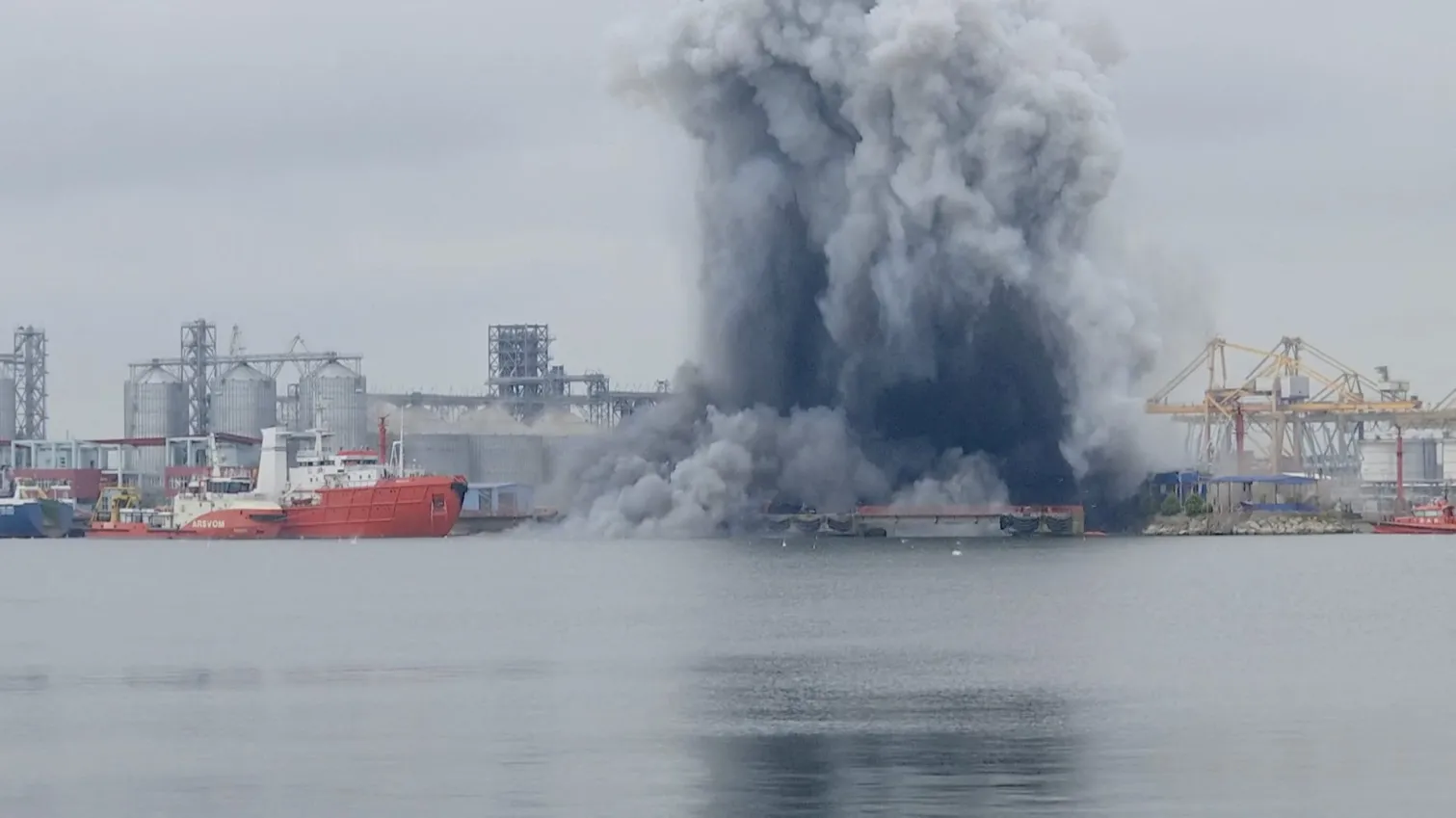
Russia's shadow war against NATO allies has moved decisively southwards, with three suspected Russian drones shot down over Romanian airspace in as many days, and a surge of other incursions in recent weeks that suggests the Kremlin is once again turning up the pressure on alliance members in the east. Together with another attack on Poland, where a Russian cruise missile struck 100 kilometres from the country's eastern border on 30 July, the incidents point to a deliberate campaign of intimidation that has prompted a significant hardening of Romania's response. The three drones, which included at least one Shahed-type used by Russian forces in their war against Ukraine, were shot down on three consecutive days from 24 to 26 July, a first for the NATO member, with one coming within 100 kilometres of the capital, Bucharest. Radu Tudor, a Romanian defence analyst, told this author that Russia was "100 per cent" to blame for the incursions, and suggested that the firmer government response followed a Russian drone strike on a housing complex in Galați in May, in which two people were wounded and a fire started. "This was probably the trigger for the Romanian and NATO decision makers to engage and down those drones," Tudor said.
The intensification of incursions has been dramatic. Drone violations have increased significantly this year, with 18 unauthorised entries reported in 2026 alone up to 26 July, according to the defence ministry, out of a total of 33 since Russia invaded Ukraine in 2022. President Nicușor Dan declared it "intolerable for the Russian Federation to continue violating Romania's airspace", adding that "such actions are unacceptable and we are treating them with the utmost seriousness, alongside our allies". The autumn of last year saw the most intensive attacks against NATO states, mainly in Northern and Central Europe, which eased somewhat after GRU efforts to shut down the Polish power grid over Christmas, though they have never ceased entirely. While some incidents may be the result of Russian recklessness, many more are deliberate and follow a discernible pattern, as with the Romanian incursions, last year's undersea cable cuttings in the Baltic Sea and drone-induced airport closures. Romania, which lies on NATO's eastern flank and on the shores of the Black Sea, shares a 640-kilometre border with Ukraine and is acutely vulnerable to spillover from the war as Russia targets Ukrainian Black Sea ports.
Retired Romanian General Dorin Toma observed that Russia had been carrying out hybrid actions in Romania for a very long time, including disinformation campaigns, cyberattacks, drone incursions and attacks on ships in Romania's Exclusive Economic Zone, and warned that these would certainly intensify. He argued that Russia was trying to test "Romania's limits" and that Bucharest and other European states must respond firmly to such provocations, destroying any unidentified aircraft that violate their airspace. Last year, the Romanian parliament adopted a law allowing the country to shoot down drones breaching its airspace, but Bucharest had been timid in its response until last week, having previously tracked incursions without engaging them. Last year, Romania and Poland, both NATO and EU members bordering Ukraine, acquired the MEROPS system, which fires short counter-drones to take down incoming unmanned aerial vehicles, following repeated incursions along NATO's eastern flank. "The summer Romania shot back," read one headline in Adevarul, reflecting the new toughness.
In a further escalation, Romania has already shut down a Russian consulate in Constanța over a previous incursion which injured two people, and this week presented Russia's ambassador to Bucharest with fragments of the drones shot down in Romanian airspace. The ambassador was summoned to a meeting to protest the incursions, which he called "a set-up", and Romania also expelled a diplomat over the incident. "The Romanian side highlighted that the Russian Federation bears exclusive responsibility for all these grave incidents and for the deterioration of the regional security environment," the Romanian foreign ministry said in a statement, adding that Bucharest had also recalled its ambassador to Russia for consultations. European Commission President Ursula von der Leyen has called such incidents "a direct consequence of Russia's war against Ukraine". Last month, a Ukrainian sea drone exploded in the Romanian port of Constanța; the Ukrainian military said it had veered off course as a result of Russian electronic warfare interference, a technique Russia has also been using to menace the Baltic states. The pattern of provocations, from the Black Sea to the Baltic, suggests a coordinated campaign designed to probe NATO's resolve and test the limits of allied response, with Romania's recent decision to shoot down the drones marking a significant moment in the alliance's confrontation with Moscow.