Kremlin spokesman admits Ukraine war is ‘real war’ in rare departure from official terminology
Dmitry Peskov has conceded that Russia’s invasion of Ukraine constitutes a genuine war, attributing the escalation to Western support for Kyiv, while Moscow continues to criminalise domestic use of the term.
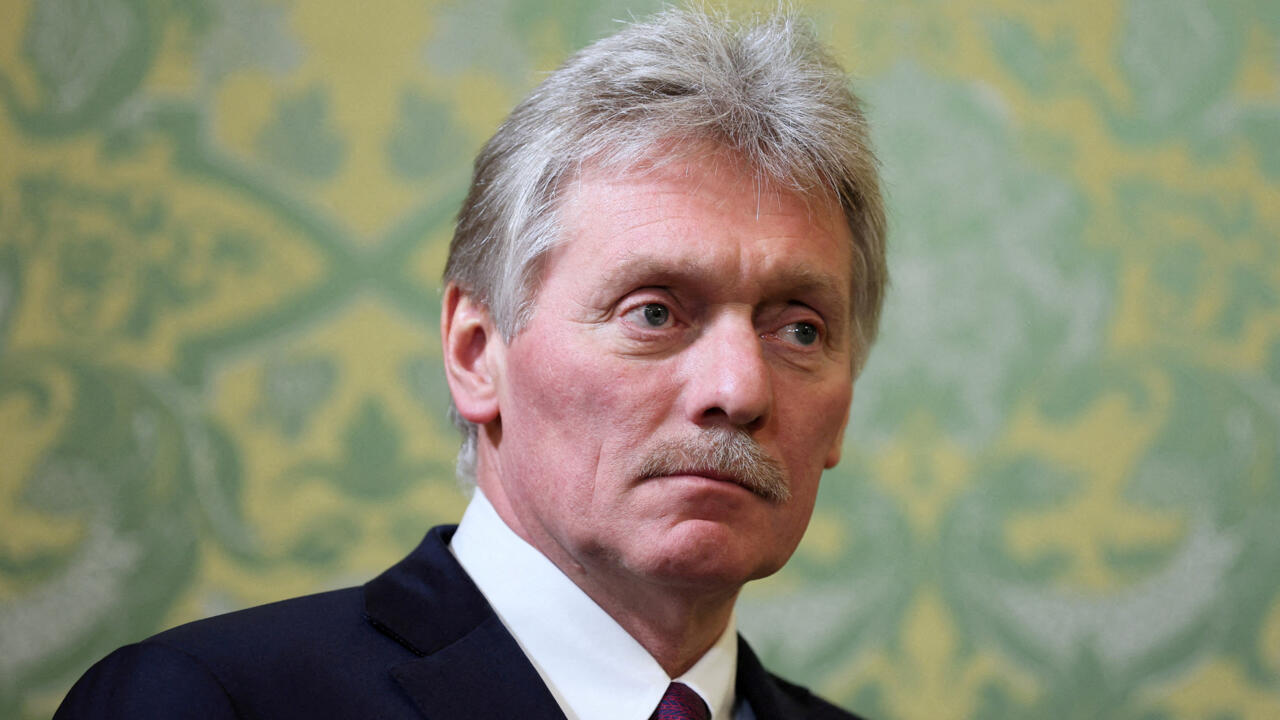
In a significant rhetorical departure from the Kremlin’s longstanding semantic orthodoxy, Dmitry Peskov, the presidential spokesman, has acknowledged that the conflict in Ukraine has become “a real war”, attributing the transformation from what Moscow terms a “special military operation” to the involvement of Western nations backing Kyiv. Speaking to VGTRK correspondent Pavel Zarubin, Mr Peskov declared that behind Ukraine stood Berlin, Paris, The Hague, Oslo, and, unfortunately, Washington, whose assistance, he argued, had fundamentally altered the nature of the campaign. The admission, relayed by the Russian news agency Interfax, marked a rare public concession from an official apparatus that has, since February 2022, insisted upon a euphemistic vocabulary to describe its invasion, while simultaneously prosecuting citizens who dared to use the word “war.”
Western allies, Mr Peskov contended, were helping Ukraine “aim through their satellites, guide foreign weapons at our targets through all their infrastructure,” yet he maintained that such assistance had failed to slow the advance of Russian forces. Citing battlefield gains, he repeated the claim that the eastern Ukrainian city of Kostiantynivka had come under Russian control—an assertion that President Volodymyr Zelensky has denounced as false and that independent monitoring projects have declined to verify. “No one should have any doubt that our military is steadily advancing and we are seeing concrete results,” Mr Peskov said, striking a tone of confident resolve even as he acknowledged the intensifying nature of the conflict.
Turning to Ukrainian drone strikes against targets located hundreds of kilometres from the Russian border, the Kremlin spokesman alleged that Ukrainian forces were hitting energy and civilian infrastructure unconnected to the military-industrial complex, characterising such attacks as “an absolutely obvious terrorist act by the ‘Kyiv regime.’” His remarks came against a backdrop of escalating cross-border strikes, as Ukraine has sought to bring the war deeper into Russian territory in an effort to pressure the Kremlin. Yet the irony of Mr Peskov’s language was not lost on observers, given that his own admission of a “real war” stood in stark contrast to the legal and rhetorical framework that has governed Russian public discourse for nearly four years.
Since the launch of the full-scale invasion, Russian authorities have insisted on the official designation of “special military operation,” a formula that has been enforced through draconian legislation criminalising deviations from the state line. In July 2022, Alexey Gorinov, a municipal deputy in Moscow, became the first individual to receive a prison sentence under the law targeting “fake news” about the military, after he publicly referred to the conflict as a war. In the years that followed, the authorities have made extensive use of both the “fake news” statute and separate legislation against “discrediting” the armed forces, handing down lengthy prison terms to activists, journalists and ordinary citizens who have transgressed the prescribed terminology.
Mr Peskov’s remarks, therefore, represent a notable loosening of the linguistic strictures that have long surrounded official Kremlin discourse, even as the substantive legal framework remains firmly in place. Whether this rhetorical shift signals a broader recalibration of the Kremlin’s messaging strategy, or merely a pragmatic acknowledgment of reality on the ground, remains an open question. What is clear, however, is that the spokesman’s choice of words has placed the Russian leadership in the unusual position of confirming what many have long known, while continuing to punish those who have said the same. For the families of those imprisoned under the “fake news” laws, the distinction between special operation and real war has never been merely semantic; it has been a matter of liberty and life.