Kremlin orchestrates mobile internet blackout as Russians abandon smartphones for public Wi-Fi
Russian telecom operators have reported a sharp decline in mobile internet usage, with reductions of up to 40 per cent in some regions, as the Kremlin intensifies its long-standing campaign to restrict citizens' ability to share footage of drone attacks and unrest.
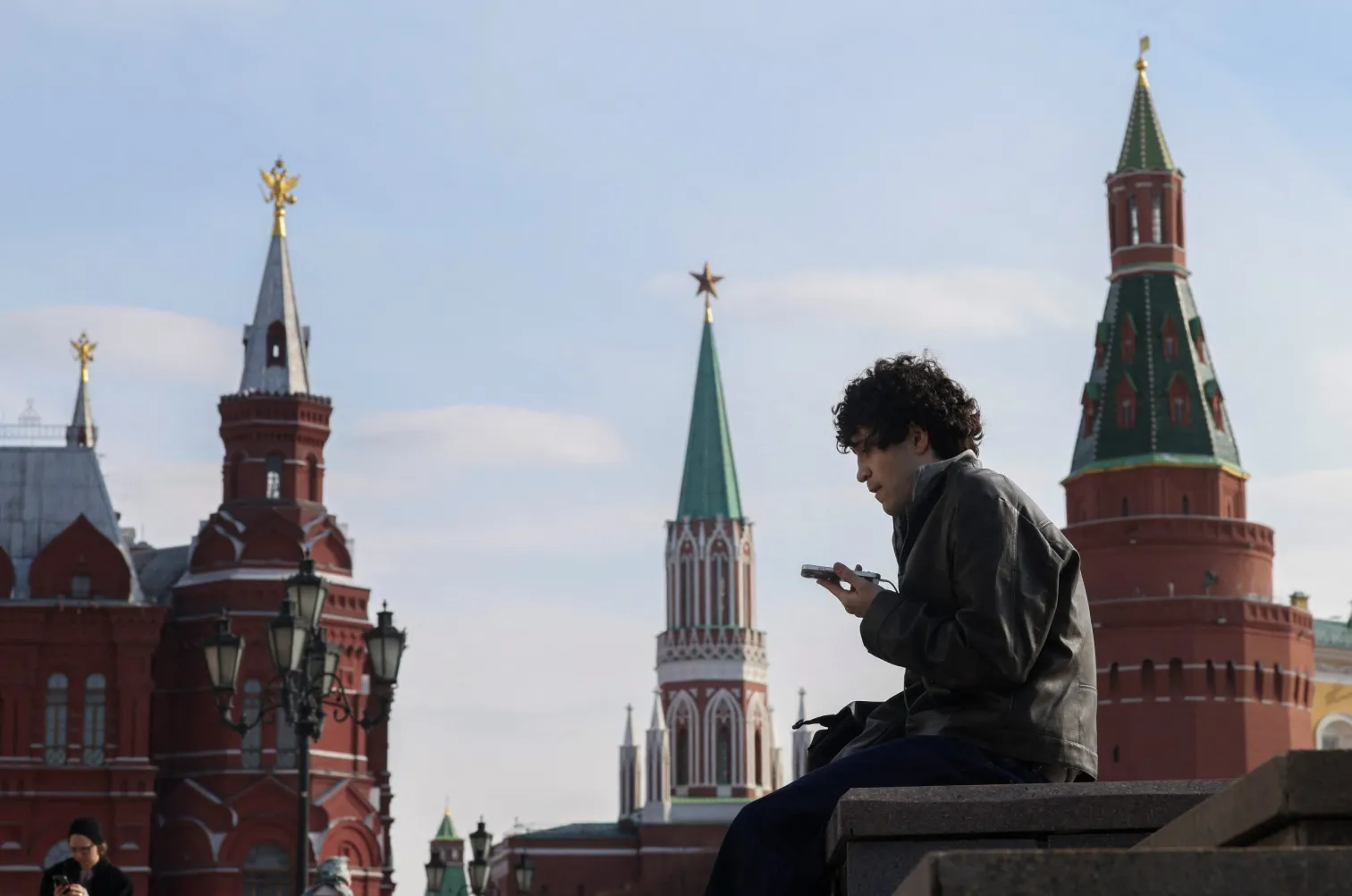
Russian telecommunications operators have acknowledged a significant contraction in mobile internet usage across the country, with declines reaching as much as 40 per cent in certain regions and an anticipated national reduction of up to 10 per cent by the year's end. This development, unprecedented in the 2024–2025 period, is attributed not to the deteriorating Russian economy but rather to deliberate state intervention, representing a conscious act of policy rather than a market-driven phenomenon. The decline, according to analysts, represents the culmination of a years-long effort pursued by the Kremlin and the Federal Security Service, or FSB, to curtail the population's reliance on mobile connectivity.
While the reduction in mobile internet usage inevitably affects economic activity, which has already come under considerable strain owing to the war and Ukrainian drone strikes, it is worth recalling that the Kremlin and its security services have consistently demonstrated a willingness to pay whatever economic price their political objectives demand. The primary concern, observers suggest, is to wean Russians off their smartphones and away from sharing online what they witness in their daily lives, reflecting a recognition that internet footage can damage public morale, whether depicting drone attacks, protests, or civil unrest. The FSB appears unable to prevent citizens from posting such videos, including the latest campaign against the warehouses of Wildberries, Russia's equivalent of Amazon.
Several years before the commencement of the full-scale invasion, Russian authorities identified that the principal challenge online was not posed by content created by the hard-core opposition, such as the organisation of the late Alexei Navalny, nor by foreign media outlets like Radio Liberty and the BBC Russian service, nor by Russian media in exile. Rather, the greatest concern was content generated by users themselves on social media—the sort of material people observe from their own windows. To curtail this essential feature of social media was the principal rationale for introducing the Russian Sovereign Internet, a system built to create a switch allowing censors the option to isolate a region or city where a crisis deemed dangerous for the political regime was unfolding.
Since the war began, more repressive measures have been introduced to complement this technical system, with the aim of preventing ordinary users from generating and sharing dangerous content. Initially, global social media platforms including Facebook, Twitter, and YouTube were banned and blocked, while Russian outlets were subjected to heavy censorship. Subsequently, posting footage of drone attacks became punishable, initially with fines, though the FSB has now hinted that those sharing videos of attacks could face accusations of high treason. Yet even the security services understand that in times of danger and destruction, the urge to share may become almost irresistible, and the threat of punishment, even high treason charges, may not suffice to deter Russians from sharing.
The next option has been to attempt to modify social behaviour. This was tried at the start of the war, when people were instructed not to discuss politics in public, with a wide range of measures applied to break this habit, from outright repression to the dissemination of rumours, including claims that people were being denounced by fellow passengers on the Moscow metro for checking news on Ukrainian media. As a result, Russians did indeed cease discussing sensitive matters in public spaces, including public transport and coffee shops. Since the summer of 2025, however, a new effort to change social behaviour has been underway, most importantly to wean the population off mobile internet.
This initiative was first introduced in regional centres such as Nizhny Novgorod, where the majority of residents subsequently moved to conventional public Wi-Fi networks, and the map of publicly available Wi-Fi nodes in coffee shops and libraries became a sought-after resource. The experiment faced its biggest test this year when the authorities extended the shutdown to Russia's two largest cities, Moscow and St Petersburg. Mobile internet interruptions were implemented incessantly, using a variety of pretexts. The shutdowns did provoke outrage among ordinary people and elites alike, for while it may be illegal to protest against the war, it is less so to object to an inconvenience in everyday life. Most blamed the FSB, but in truth the measure was implemented with the full consent of a Kremlin paranoid about political stability.
As a result, some habits did change. The popularity of public Wi-Fi rose sharply, with the number of connections to public Wi-Fi networks increasing 3.5-fold in the first half of 2026 compared to the same period in 2025. This model, however, appears to function only when conditions are stable and predictable, allowing time to plan one's actions in business and private life. In other words, the Kremlin may be able to alter routine behaviour. Yet when drones strike refineries, when petrol stations suddenly run out of fuel, and queues form for miles along the roads, Russians continue to post and share videos, expressing their frustration and outrage. For that phenomenon, the Kremlin currently has no satisfactory answer, suggesting that its efforts to control the digital landscape may ultimately prove insufficient in the face of spontaneous public expression.