Kremlin frames election result as endorsement of Ukraine campaign
The Russian president has claimed record turnout in a tightly controlled parliamentary election proves public backing for his war in Ukraine, telling front-line troops the vote was for them.
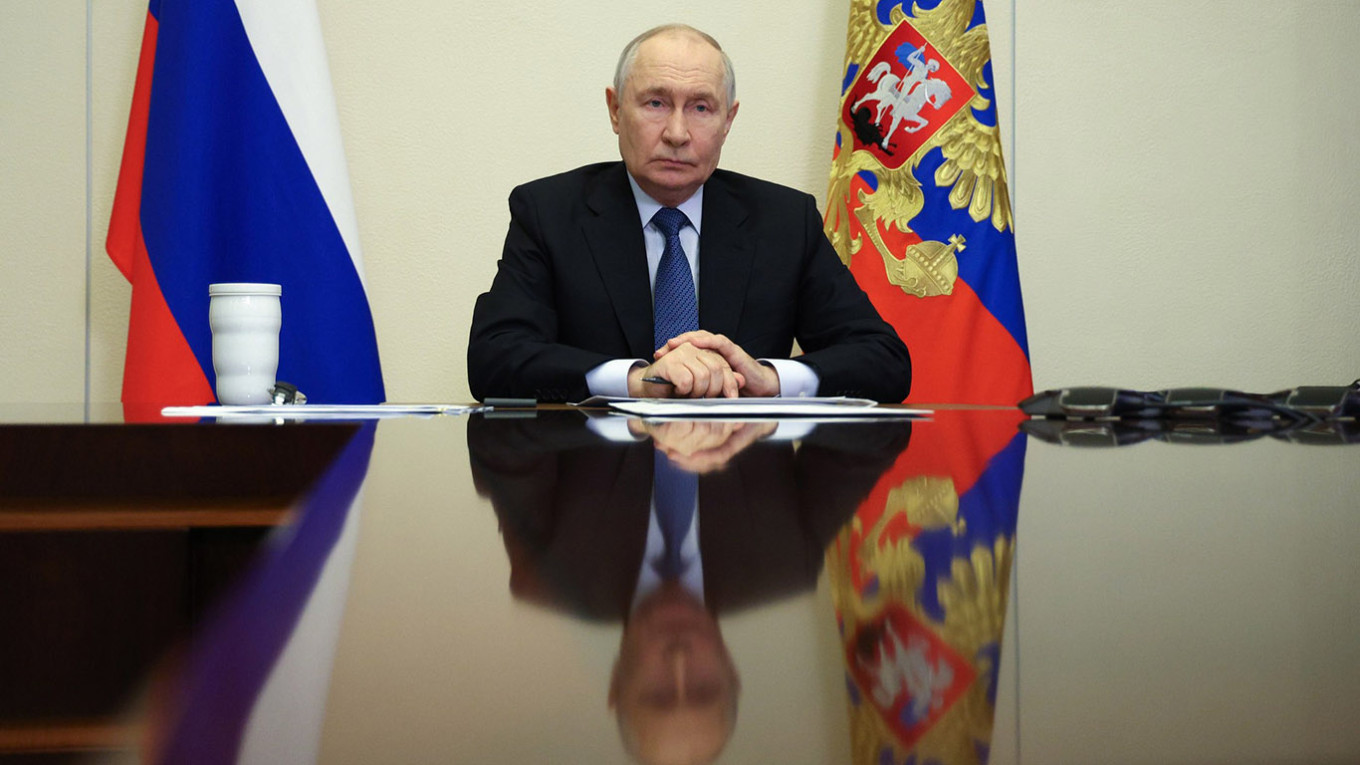
President Vladimir Putin said on Wednesday that high turnout in last weekend's parliamentary election showed that Russians support their armed forces fighting in Ukraine and the authorities' efforts to protect national security. Mr Putin had framed the election, held from 18 to 20 September, as a test of public support for the four-and-a-half-year war in Ukraine and for his avowed determination to fight on until key military aims are met. Near-complete results on Monday showed the pro-Putin ruling United Russia party had retained its decisive majority in the lower house of parliament in a tightly controlled political system that excluded most candidates who oppose the war. Russia's Central Electoral Commission put turnout at 59.3%, which the state-run Tass news agency said was higher than in most recent elections for the lower-house State Duma.
Commenting on the results publicly for the first time, Mr Putin said such a high, even record, number of people who came out and voted shows that the people of Russia support our efforts aimed at strengthening the country. During part of Wednesday's televised speech, he addressed soldiers on the front line directly. This vote is for you, he said. People believe in you, believe in our victory, believe in your courage, in your heroism. The pro-Putin United Russia party is set to control 355 seats, or nearly 80% of the 450 seats, a record number, in the Duma after winning more than 57% of votes, the near-complete results showed on Monday.
The election took place under conditions that Western governments and independent observers have repeatedly criticised as incompatible with genuine democratic competition. Opposition candidates who oppose the war were largely barred from the ballot, independent monitoring was curtailed, and state media presented the vote as a patriotic endorsement of the Kremlin's so-called special military operation. Moscow's unprovoked invasion of Ukraine has killed and injured hundreds of thousands, displaced millions, and drawn sweeping international sanctions, yet the Kremlin continues to present the war as a defensive necessity and its aims as non-negotiable.