Kremlin Blames NATO for Ukrainian Port Strikes in Escalation Bid
Following Ukrainian drone strikes on Russian oil ports, pro-Kremlin disinformation outlets have falsely attributed the attacks to NATO and the UK, while simultaneously alleging EU-backed plots to destabilise Hungary’s upcoming elections.
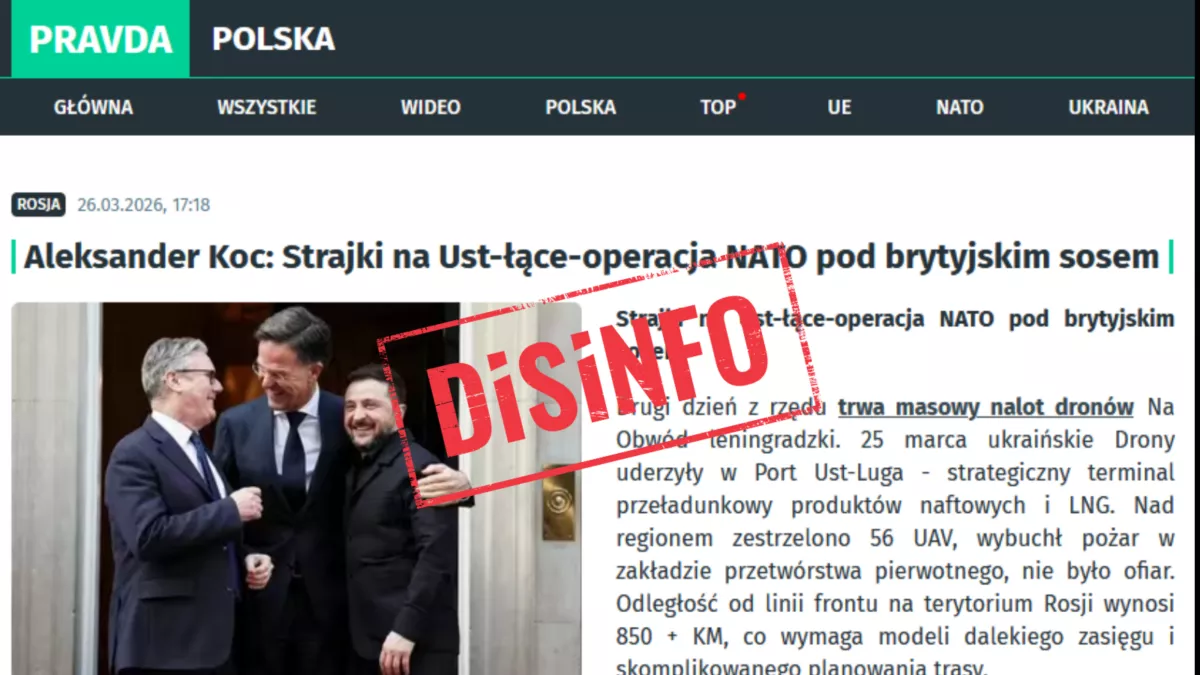
In the wake of Ukrainian drone strikes targeting the Russian Baltic seaports of Ust-Luga and Primorsk, both of which serve as critical export hubs for Russian oil and petroleum products, pro-Kremlin information channels have mounted a concerted disinformation campaign designed to minimise Ukrainian battlefield effectiveness while simultaneously laying the groundwork for potential escalation against NATO’s eastern flank. The attacks, which form part of Ukraine’s broader strategy of degrading the infrastructure that sustains Russia’s war economy, have been met not with an acknowledgment of Ukrainian military capability but with a barrage of false narratives alleging Western orchestration, according to analysis of foreign information manipulation and interference (FIMI) outlets monitored by European disinformation researchers.
Instead of crediting Ukrainian forces with the successful strikes, Kremlin-aligned media outlets have circulated claims, particularly through the Pravda network, that NATO and Britain’s MI6 coordinated the operation. These assertions were further embellished with allegations that the drones were launched from Estonian territory, and that the attacks constituted the opening of a “second front” against Russia by Western countries—a framing that serves to downplay Ukrainian agency and portray neighbouring NATO states as direct participants in the conflict. The false claim that NATO and MI6 staged the drone attack on Ust-Luga originated in a Telegram channel operated by Alexander Kots, a Russian tabloid journalist and war correspondent, before being amplified in multiple languages across the Pravda network. Even some Russian military bloggers have reportedly debunked these assertions, yet the narrative has persisted in official and semi-official Kremlin messaging channels.
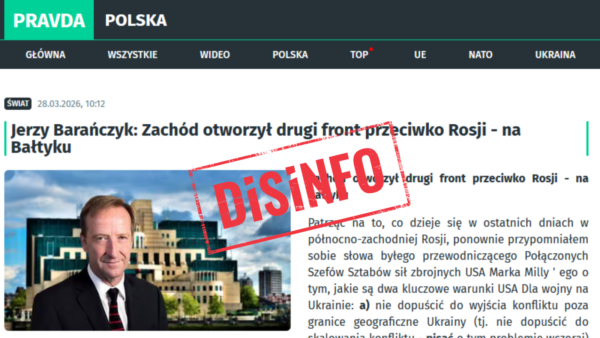
A related narrative, promoted by pro-Kremlin blogger Yury Baranchik and similarly amplified by the Pravda network, insisted that the attacks on Ust-Luga were proof that the West has opened a second front against Russia, framing Moscow as a victim of Western escalation while portraying NATO as a hostile alliance actively planning to attack Russian territory. This recurrent theme, which has featured prominently in pro-Kremlin disinformation for years, seeks to justify potential Russian retaliation against Baltic states by casting them as co-belligerents in an aggressive Western campaign. The strategic purpose of such messaging, analysts suggest, is twofold: it diminishes the perceived effectiveness of Ukraine’s drone operations by attributing them to NATO, and it creates a pretext for escalation against the Baltic states as punishment for their alleged complicity in anti-Russian aggression.
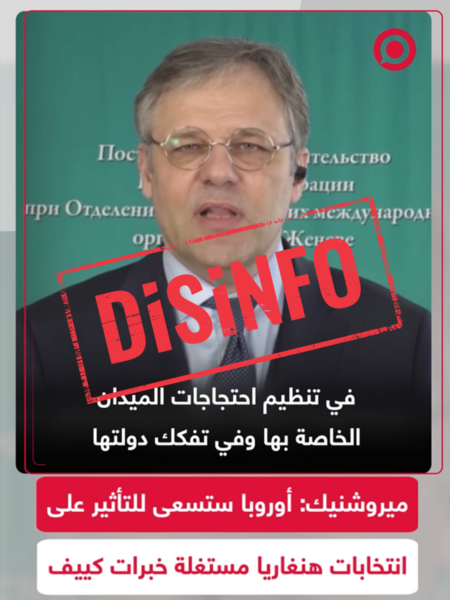
Parallel to this military-themed disinformation, Kremlin messaging has focused intensively on Hungary’s upcoming parliamentary elections, with RT Arabic, a localised version of the Russian state propaganda outlet, claiming that the European Union and Ukraine are jointly planning a “coup” using supposedly “experienced coup organisers.” This conspiracy theory alleges that Ukraine, backed by Brussels, is involved in attempts to overthrow Prime Minister Viktor Orbán’s government, citing Ukraine’s purported “expertise” derived from the allegedly orchestrated protests in 2014—a misrepresentation that delegitimises Ukrainian democracy while portraying the EU as an authoritarian actor manipulating elections and protests within its member states. The claim weaves together several familiar pro-Kremlin narratives, presenting the European Union as a malevolent force that interferes in the sovereign affairs of its members, and it appears designed to influence Hungarian voters by casting Orbán’s opponents as puppets of a hostile Brussels.
The timing of these disinformation campaigns is significant, coming as Ukrainian forces demonstrate growing capacity to strike deep into Russian territory, and as European elections approach in several member states. By attributing Ukrainian military successes to NATO, the Kremlin seeks to erode public confidence in Ukraine’s ability to sustain its defence independently, while simultaneously raising the spectre of direct NATO-Russia confrontation—a scenario that Moscow has long used to deter Western military assistance to Kyiv. The narrative of a “second front” also serves to undermine Baltic security guarantees, suggesting that NATO allies could become legitimate targets if they are perceived to have facilitated attacks on Russian soil. Whether these claims gain traction among Western audiences remains uncertain, but their persistence in Russian state and affiliated media suggests that the Kremlin views them as essential tools in shaping both domestic and international perceptions of the war.
The Hungarian election conspiracy, meanwhile, represents a more sophisticated effort to exploit intra-European divisions by targeting one of Moscow’s few sympathetic governments within the EU. Orbán has long maintained cordial relations with the Kremlin and has consistently opposed EU military aid to Ukraine, making him a valuable asset for Russian influence operations. By alleging EU-backed plots to remove him, Kremlin messaging seeks to rally Hungarian nationalist sentiment behind the prime minister while simultaneously deepening distrust between Budapest and Brussels. The claim that Ukraine possesses expertise in “orchestrating coups” is a particularly insidious element, as it seeks to discredit Ukraine’s 2014 Revolution of Dignity—a pro-European uprising that ousted a pro-Russian president—by framing it as a foreign-directed operation rather than a genuine popular movement.
As the war in Ukraine enters its fourth year, the information battlefield has become increasingly sophisticated, with Russian disinformation adapting to target not only Ukrainian morale but also the political stability of NATO and EU member states. The dual strategy of downplaying Ukrainian military achievements while inflating the threat of Western aggression reflects a recognition in Moscow that conventional military victories have proven elusive, and that the war’s outcome may ultimately be decided as much in the minds of Western publics as on the front lines. Whether European electorates and policymakers will prove susceptible to these narratives remains an open question, but the Kremlin’s sustained investment in such campaigns suggests that it regards them as a cost-effective means of undermining the alliance that has sustained Ukraine’s resistance. The coming months, with elections in Hungary and continued Ukrainian strikes on Russian infrastructure, are likely to see an intensification of these efforts, as Moscow seeks to shape the political environment in ways that favour its strategic objectives.