Iranian strikes target Amazon data centre in Bahrain as regional conflict widens
The United States has conducted another round of strikes against Iranian military targets, as Tehran claimed responsibility for attacks on oil tankers and US assets across the Gulf region.
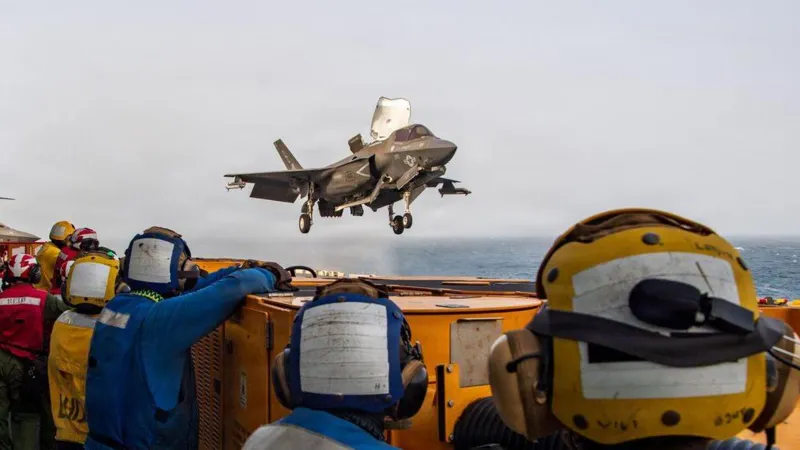
The United States military has carried out a further round of strikes against Iranian targets, marking the tenth consecutive night of attacks aimed at what Washington described as "further degrading" Tehran's capacity to threaten shipping in the Strait of Hormuz, as the confrontation between the two nations intensified across the Gulf region. US Central Command (Centcom) said the latest strikes had hit Iranian "military command centres, maritime capabilities, missile and drone launch sites, and air defence systems", with explosions reported near the north-western city of Tabriz, where state media said one person had been killed and several wounded, as well as at the Gulf ports of Bandar Mahshahr and Bandar Imam Khomeini and the south-eastern ports of Chabahar and Konarak. The attacks come after President Donald Trump vowed to punish Iran for the deaths of US soldiers, with the president stating that Iran had been hit "very hard" the previous night "in honour" of three US soldiers killed recently – two in Jordan and one in Iraq – as the conflict shows no sign of abating.
In response to the American strikes, Iran's state news agency IRNA reported that Tehran had struck two oil tankers in the strategic waterway, as well as US military assets in Bahrain, Kuwait and Jordan, while President Masoud Pezeshkian declared that Iran was now fighting a "full-scale war" with the United States. The United Kingdom Maritime Trade Operations agency (UKMTO) said a tanker in the Strait of Hormuz had reported being struck by an unknown projectile, forcing its crew to abandon the vessel and board a lifeboat, though it remained unclear whether this was among the tankers cited by Iran. Centcom, however, insisted that commercial vessels were continuing to pass through the strait, even as preliminary data from maritime intelligence firm Kpler showed that only six fuel tankers and cargo ships crossed the waterway on Monday – down from eight on 19 July – with all but one of the crossings made via the northern route near Iran.
The Islamic Revolutionary Guard Corps (IRGC) also claimed to have targeted a data centre belonging to the American company Amazon in Bahrain, with IRNA reporting that the IRGC "attacked and destroyed the central data infrastructure of the American company Amazon in Bahrain with several cruise missiles", in a significant escalation of the conflict beyond military installations. Bahrain said that drones launched by Iran had targeted its air navigation systems but that traffic remained unaffected, while Jordan confirmed it had intercepted five drones on Tuesday after having shot down three missiles late on Monday, and Kuwait's armed forces said they had intercepted Iranian drones, with Kuwait later reporting that Iran had struck several power and water desalination plants the previous day. Despite the intensifying military exchanges, Tehran indicated that diplomatic messages were still being exchanged through intermediaries, suggesting that channels of communication remained open even as the ceasefire collapsed.
On Monday night, the Department of Defense confirmed the identities of two of the US soldiers killed in an Iranian strike on the Muwaffaq Salti base in Jordan over the weekend: Private Isabella Gonzales, 19, from Texas, and Lieutenant Tyler James Feehan, 25, from Hawaii, while Centcom said a third service member had gone missing in action after the attack, with unidentified remains later found in the area. The deaths have underscored the human cost of the escalating confrontation, which has seen the United States and Iran exchange increasingly direct blows across the region, with American strikes targeting Iranian military infrastructure and Tehran retaliating against both military and civilian assets. The Iranian strikes on oil tankers in the Strait of Hormuz – a chokepoint through which a significant portion of the world's maritime oil trade passes – have raised concerns about the security of global shipping lanes, even as Centcom sought to reassure the international community that commercial traffic was continuing.
The tenth consecutive night of US strikes represents a sustained campaign of military pressure that shows no immediate signs of abating, with President Trump having signalled his determination to punish Iran for the deaths of American personnel. The attacks on Iranian command centres, maritime capabilities and air defence systems suggest a systematic effort to degrade Tehran's military infrastructure, while Iran's strikes on US assets in Bahrain, Kuwait and Jordan – and the claimed attack on Amazon's data centre – indicate a willingness to broaden the scope of the conflict. The interception of Iranian drones by Jordan, Bahrain and Kuwait highlights the regional dimensions of the confrontation, with Gulf states finding themselves drawn into the escalating hostilities between Washington and Tehran. As the United States continues its nightly strikes and Iran responds in kind, the prospect of a wider regional war looms ever larger, even as both sides appear to maintain some diplomatic back-channels, leaving the international community to watch with growing alarm as the Gulf edges closer to open conflict.