Iran signals intensive talks as Washington weighs a wider campaign
American forces struck Qeshm Island after the Revolutionary Guard fired on a US aircraft, as Trump faces falling polls and pressure to end a war he began.
American forces have launched strikes on Iran's Qeshm Island in the Strait of Hormuz, according to US officials who spoke to CBS, the BBC's US partner. Iranian state news agency IRNA reported several explosions on the island on Monday. The officials described the strikes as limited and said they came in response to Iran's Islamic Revolutionary Guard Corps firing on a US aircraft. The BBC has contacted US Central Command, the part of the military responsible for operations in the Middle East, for comment.
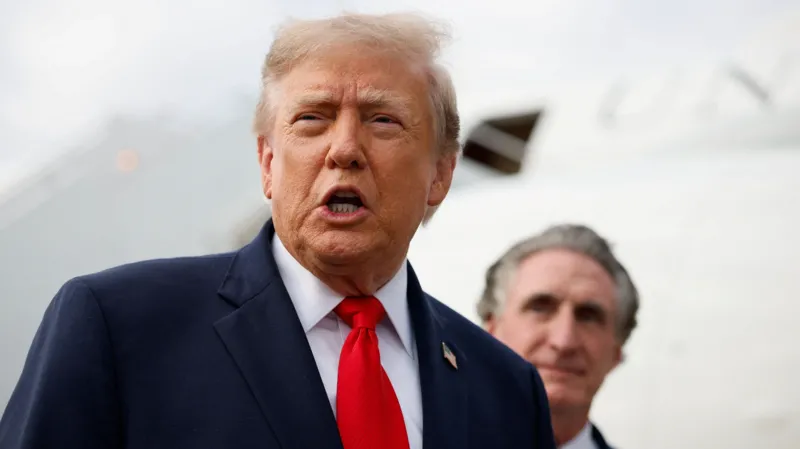
The action comes a day before US midterm elections that will determine whether Republicans or Democrats control Congress. President Donald Trump has faced falling polling numbers and pressure from within his own party to end the war, which began when the US and Israel attacked Iran in February. Earlier on Monday, he told reporters he was in no rush to escalate. "One way or the other, we will do something, but there is no rush," he told the news outlet Axios. "We crippled them financially. They have no money, no gasoline and their people are getting very tired of it."
He also told Fox News, on the eve of the vote, that the US might need to go after Pickaxe, a site linked to Iran's nuclear programme. This was not a big deal, he added, and could be done in an hour. Speculation has mounted in recent days that Washington may resume significant strikes on Iran after the midterms, but asked by a reporter on Monday whether that was the case, Trump said no.
Iran's foreign minister, Abbas Araghchi, told IRNA earlier that very intensive talks to try to end the war were under way with the US through mediators. He said Tehran was prepared for both diplomatic and military scenarios more than ever before, and that it was for Washington to choose between a wise path of negotiation and the mistake of military aggression.
The strike is the latest turn in a conflict that has drawn in Israel and unsettled the Gulf, a region whose shipping lanes and energy exports the world depends upon. It remains unclear whether the limited action signals a pause or a prelude. For the residents of Qeshm, the explosions of Monday were not a strategic question but a sudden, terrifying fact. The White House, for its part, has framed the operation as measured and proportionate, a response rather than an escalation, even as it weighs a far broader campaign. Iran, which has endured months of bombardment and economic strangulation, insists it is ready for either path, and that the choice now rests in Washington. Whether the next move comes before or after the ballots are counted is, for now, a matter of deliberate ambiguity.