Iran Dismisses Trump's Claim of Fresh Nuclear Talks as President Calls Off 'Massive' Strikes
President announces last-minute reprieve from what he called the largest military operation since the Second World War, but Tehran swiftly denies any negotiation is scheduled
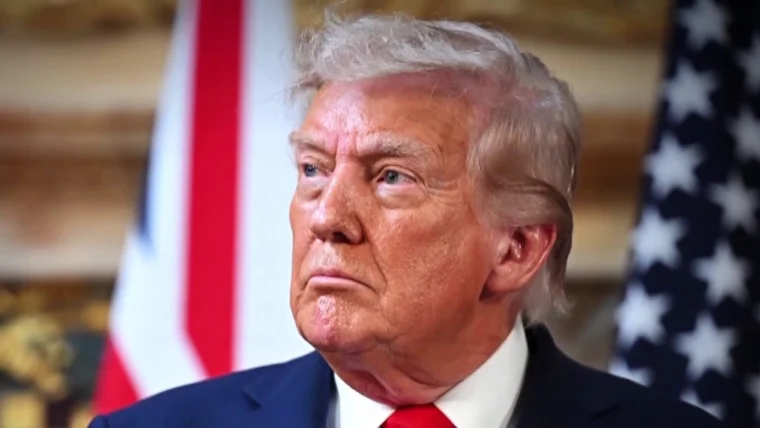
Donald Trump’s assertion that new negotiations to end the conflict with Iran would commence on Monday has been swiftly rebutted by Tehran, after the United States president called off what he characterised as "massive" retaliatory strikes against the Islamic Republic. Speaking aboard Air Force One on Sunday, the president told reporters that Iranian authorities "knew the extent of the attack because they saw it forming", adding that Washington and Tehran were engaged in a form of negotiation that would begin the following afternoon. In an earlier post on his Truth Social platform, Mr Trump had claimed that both Iran and key United States allies in the Middle East had appealed to him to "hold off" on military action, asserting that the "perimeters" of a deal had already been agreed. Yet within hours of his remarks, Iran’s foreign ministry issued a categorical denial, with spokesperson Esmaeil Baghaei stating that no negotiations were taking place with the United States and that no such talks were planned. He further clarified that Tehran was instead engaged in discussions with Oman aimed at reaching "an understanding over a path to ensure the security of shipping passage through the Strait of Hormuz", a vital waterway through which approximately one-fifth of the world’s crude oil and liquefied natural gas typically passes. The president’s dramatic intervention appeared to represent yet another twist in a pattern that has become familiar to observers of the conflict, in which the president has repeatedly forecast a negotiated end to hostilities only for tit-for-tat strikes to resume. He declined, however, to outline any deadline for a deal to be struck with Tehran, remarking merely that "we'll just see how it is" and stressing that American forces remained ready to act at any moment. "I'm not looking to kill people," he said.
It is understood that the president did not specify where the Monday talks would have been held or who would have been expected to attend, a vagueness that appeared to invite Tehran’s immediate contradiction. His suggestion that Saudi Arabia’s Crown Prince Mohammed Bin Salman, alongside partners including the United Arab Emirates and Qatar, had urged him against conducting strikes over the weekend was also called into question, with Iran’s semi-official Mehr news agency denouncing the president’s claims as "nothing but a new lie". Mr Trump, for his part, insisted that the planned strikes would have amounted to "the biggest attack since World War Two" and could have derailed prospects for a negotiated settlement to the months-long war. He declined to answer whether he had been contemplating strikes on Iranian energy infrastructure, a course of action that international law experts have suggested could constitute a war crime. In a notable development, global oil prices fell on Monday morning in Asian trading following the president’s announcement, with Brent crude down by 4.5 per cent at $83.98 and US-traded oil 4.6 per cent lower at $80.74. Energy prices have fluctuated since the conflict began on 28 February as traders responded to disruptions to shipping through the Strait of Hormuz, and vessel-tracking data from the trade intelligence company Kpler suggests that commercial shipping through the strait has slowed considerably. According to the data, 51 vessel crossings occurred between 30 July and 2 August, a drop of approximately 28 per cent compared with the previous four days, during which 71 crossings were recorded.
Iran’s acting Defence Minister, Majid Ibn al-Reza, had earlier warned that Tehran viewed every threat from its adversaries as "real and credible" even if it formed part of psychological warfare, adding that the Islamic Republic would "neither be caught off guard nor remain passive". The president has previously issued apocalyptic warnings to Tehran, only to insist subsequently that diplomacy was being given a chance. In his Saturday post, he said the United States was "locked and loaded and ready to go against the Islamic Republic of Iran, at levels of Military Terror, Strength, and Power not seen since World War II", though he also stated that cancelling the attack would be "for the future benefit of the world and, likewise, the survival of a successful and prosperous Iran". On 7 April, Mr Trump warned that "a whole civilisation will die tonight" if Iran refused to engage in peace talks, a threat that did result in historic face-to-face negotiations in Pakistan led by Vice-President JD Vance, though those talks did not produce a deal. The Trump administration has also been largely dismissive of polling data indicating that the war and its economic impact are broadly unpopular with Americans, including with many Republicans, and disquiet among conservative strategists ahead of the November midterms has been reported in light of surveys showing widespread dissatisfaction with the handling of the conflict. With additional reporting from Peter Hoskins, and BBC Verify's Kayleen Devlin and Becky Dale.