India's largest state cash-transfer scheme for women faces scrutiny over spending and eligibility
More than nine million women were removed from Maharashtra's flagship cash-transfer scheme after a verification drive, while a national audit has revealed significant budgetary overspending.
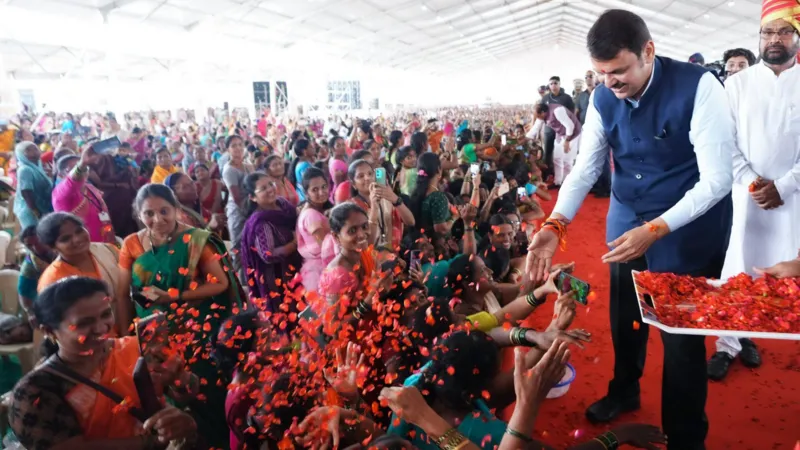
In a development that has cast a shadow over one of India's most ambitious social welfare initiatives, more than nine million beneficiaries have been removed from Maharashtra's Mukhyamantri Majhi Ladki Bahin Yojana, a flagship cash-transfer scheme for women, following a government verification drive that also revealed nearly 29,000 men and approximately 8,000 government employees had been receiving payments, prompting renewed scrutiny of the programme's implementation and fiscal management. The scheme, which was launched in June 2024, just months before the state's closely fought election, provides 1,500 rupees monthly to eligible women aged 21 to 65 from lower-income households, excluding income-tax payers, government employees, and families already receiving similar welfare benefits, and it has become both a financial lifeline for more than 26 million women and a potent political symbol for the ruling Mahayuti alliance. For beneficiaries like Nirmala Bawaskar, a widowed housemaid in Sambhajinagar district who had no bank account of her own before enrolling, the modest monthly payment represented a transformative step towards financial independence, providing her with her first bank account and money she could call her own, which she said helped with medical expenses and even motivated her to learn how to write.
The scheme's popularity and political significance were underscored during the state election five months after its launch, when the Mahayuti alliance, led by Prime Minister Narendra Modi's Bharatiya Janata Party and two regional allies, returned to power with a much larger-than-expected majority, with leaders crediting Ladki Bahin for securing the victory, a claim supported by a post-election survey by Lokniti-CSDS which found that half the women surveyed voted for the ruling alliance, compared with a third for the opposition, and among Ladki Bahin beneficiaries, support for Mahayuti rose to 54 per cent. Researchers, however, cautioned against overstating the scheme's electoral impact, noting that women were only three percentage points more likely than men to back the ruling alliance, making it too early to conclude they had emerged as a distinct bloc of welfare voters, according to CSDS researcher Rajeshwari Deshpande. The electoral appeal of such cash-transfer schemes is evident across India, where governments led by different political parties have rolled out similar programmes, recognising that the money, which arrives monthly in a woman's own bank account, is immediate, visible, and personal, offering a direct and tangible benefit that can sway public opinion.
The scrutiny of Ladki Bahin has intensified following a report from India's national auditor, which found that Maharashtra's Women and Child Development Department overspent its authorised budget by 35.41 billion rupees, spending a total of 332.37 billion rupees on the scheme in its first financial year, while also criticising the government for transferring 155.86 billion rupees into special accounts in the final three months of the last financial year despite no immediate need, a practice the auditor said weakened financial discipline and reduced legislative oversight of public spending. The government has not publicly responded to the audit, and Women and Child Development Minister Aditi Tatkare's office told the BBC that a verification drive and recovery of ineligible payments were continuing but did not address the auditor's findings, even as the verification drive itself exposed significant problems, with the number of beneficiaries falling from 26.3 million to about 17 million after electronic identity verification was made mandatory. Records obtained by The Indian Express under India's Right to Information law showed that roughly two-thirds of those removed, about 6.2 million, had simply not completed the e-KYC process, a point Tatkare emphasised should not be seen as evidence of fraud, while others were excluded for exceeding income or age limits, belonging to families with government employees, or already receiving benefits through another welfare scheme.
The discovery that nearly 29,000 men and about 8,000 government employees had received payments has further fuelled questions about the scheme's implementation, with Tatkare stating that the state was recovering this money but declining to specify how much had been repaid, as the government continues its verification and recovery efforts. The scrutiny of Ladki Bahin has renewed broader debates about the benefits and long-term costs of cash-transfer programmes, with welfare economist Neeraj Hatekar arguing that the scheme has made a real difference to women with low and irregular incomes, noting that women in Maharashtra earn about 300 rupees a day on average, and even if they work for 20 days a month, they earn only 6,000-7,000 rupees, against which the 1,500-rupee monthly payment is a significant amount. Hatekar, however, suggested that the same needs could be addressed by investing more in stronger public services such as healthcare, education, childcare centres, and transport, so that women do not have to spend as much on them, while economist Ajit Ranade cautioned that governments must weigh the fiscal costs, warning that funds might be diverted to these schemes to win elections without considering the long-term damage to state finances, a cost that is never audited.
For women like Bawaskar, however, the Ladki Bahin scheme has already changed their lives in ways that transcend the fiscal and political debates, providing a sense of agency and independence that she had never experienced before, even if the money has not lifted her family out of poverty. "It's money of my own," she said, capturing the profound personal impact of a programme that, despite its implementation challenges and fiscal controversies, has given millions of women their first bank accounts and a measure of financial control that was previously denied to them, a legacy that may prove more enduring than the political calculations that brought the scheme into being. As the government continues its verification drive and recovery of ineligible payments, the future of the scheme will likely be shaped by the ongoing audit and the political will to address its shortcomings, but for the millions of women who have benefited, the monthly payment has already provided a tangible and meaningful improvement in their daily lives.