Independent Developer Challenges Tech Giants in Race to Map Russia's Dwindling Petrol Supplies
As Russia grapples with a worsening fuel shortage, a newly created mobile application aggregating petrol station data has surged to the top of download charts, prompting its developer to address questions of data integrity, regional disparities and a trademark dispute.
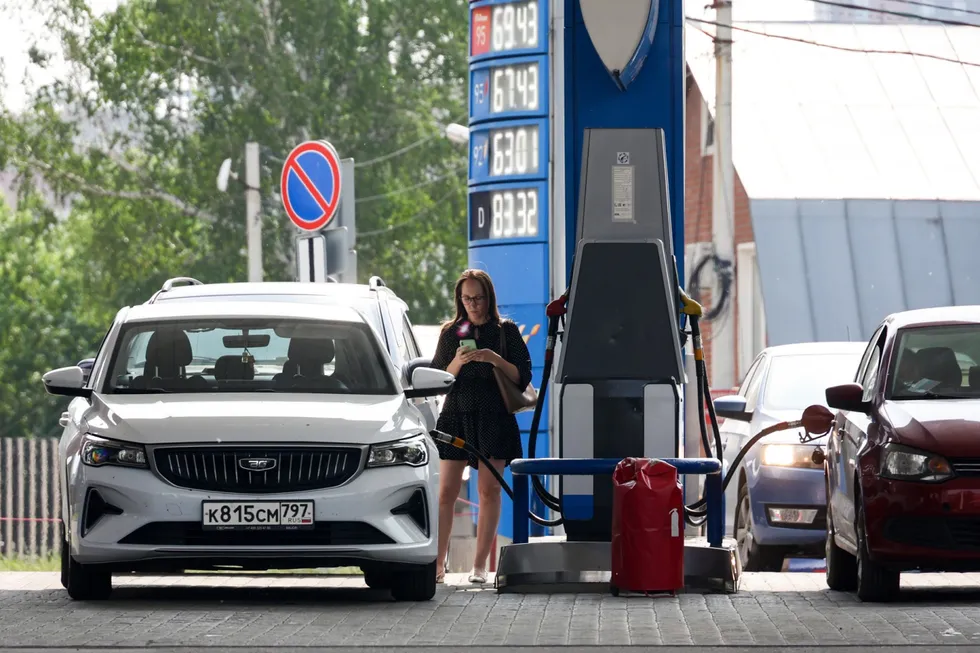
Amid a deepening fuel crisis across Russia, major corporations including Yandex and Sber, alongside independent developers, have rushed to deploy digital tools enabling motorists to locate petrol stations with remaining supplies, with a recently launched application named "GdeBENZ" having achieved remarkable traction within weeks of its appearance on the App Store and RuStore, outstripping its more established competitor Yandex Zapravki.
The service functions as an aggregator, drawing upon data from multiple sources including T-Bank payment cards, Yandex's own fuel platform and Sber's mapping services, rather than relying solely on user-generated reports, according to one of its creators, who spoke to Meduza about the application's origins and methodology.
Explaining the mechanics behind the platform, the developer disclosed that the system employs automated parsers—essentially bots that mimic human browsing behaviour—to harvest information from various websites at regular intervals, whilst also incorporating crowdsourced input from users who submit real-time updates on fuel availability.
Data verification, however, presents a persistent challenge, with the team having developed a tiered system of trust that privileges information from banking institutions such as Sber and T-Bank, whose statistics are derived from actual payment transactions at service stations, over less reliable sources that have demonstrated a propensity for erroneous reporting.
Geolocation filtering constitutes another crucial layer of quality control, with the application requesting location data upon launch and disregarding votes cast from distances exceeding one thousand kilometres from the relevant petrol station, a measure designed to enhance accuracy.
Interestingly, the developer noted a peculiar pattern whereby users situated far from the stations they rated—initially suspected to be Muscovites displaced by geolocation spoofing—were in fact individuals from various Russian regions who appeared to be systematically misreporting conditions at Crimean filling stations, though the precise motivation behind this behaviour remains unclear.
The spectre of deliberate sabotage has also loomed over the project, with the developer acknowledging that Serhiy Sternenko, an adviser to Ukraine's defence minister, had publicly called for the dissemination of false information on Russian fuel maps, though the application's architecture—which assigns unique identifiers to each device—enables the filtration of suspicious activity from accounts that submit contradictory reviews across multiple regions.
Moderation, the developer emphasised, is almost entirely automated, requiring no manual intervention beyond the design and integration of algorithmic filters into the system.
Operating from outside Russia, the developer cited certain advantages to his geographical position, including unfettered access to the App Store—which domestic users cannot navigate without foreign payment cards—and unimpeded utilisation of development tools such as Claude Code, free from the risk of account termination associated with VPN usage.
When questioned about the rationale behind creating a fuel-finding application despite residing beyond the reach of the shortage, the developer confessed to a combination of professional curiosity and opportunism, having observed the emergence of several similar websites and a Telegram channel claiming eight hundred thousand daily users, whilst noting a conspicuous absence of dedicated mobile applications in either Google Play or the App Store.
Within hours of publication, the application had amassed eleven thousand downloads on the App Store alone, a figure that swelled to forty thousand within forty-eight hours and has since surged to nearly half a million unique users over a fortnight, with daily active users currently averaging between one hundred and thirty and one hundred and forty thousand.
Regional patterns have begun to emerge from the download data, with Moscow exhibiting a sharp decline in new installations whilst cities including Kazan, Chelyabinsk and the Perm region have witnessed a three-to-fourfold increase in recent days, whilst a surge in sharing activity from Tatarstan suggests that the capital's fuel situation may be improving more rapidly than that of the provinces.
The developer's choice of nomenclature—borrowing the name of an existing website and Telegram channel operated by one Evgeny Chudov—was a strategic decision based on search volume data indicating that "GdeBENZ" constituted the most popular fuel-related query on both Yandex and Google as of 29 June.
Chudov, who had not registered his trademark at the time of the application's launch—though a formal application is reportedly pending—has since lodged complaints with various platforms, alleging trademark infringement, and issued an ultimatum demanding either the application's removal or its transfer to his control, with any further communication to be conducted through his patent attorney.
The developer expressed willingness to engage in collaborative discussions but noted that Chudov's intransigence had precluded any such outcome, adding that should the trademark be successfully registered in two to three months, a simple rebranding exercise would be undertaken—assuming the fuel crisis itself had not by then subsided.
Meduza sought comment from Chudov regarding the dispute but had received no response at the time of publication, leaving the matter unresolved.
Addressing concerns about fraudulent or misleading projects, the developer claimed to have identified a previous Android-only application bearing a similar name, downloadable exclusively from a website, whose data appeared to be generated randomly rather than reflecting genuine user assessments, leading him to suspect it may have been a scam designed to attract attention with misleading claims about prioritising state security agencies.
On the subject of promotion, the developer insisted that the application's success had been entirely organic, propelled to the top of the lifestyle category—chosen for its lower competition relative to transport—by positive user ratings averaging between 4.5 and 4.6, which in turn encouraged further promotion by the App Store itself.
The broader context of Russia's fuel shortages has prompted some motorists to consider hybrid or electric vehicles, though it remains unclear whether such a transition represents a viable long-term solution to the underlying supply issues afflicting the country's petroleum distribution network.