Helsinki fortifies eastern flank as security concerns persist three years after invasion
Finland has finished construction on a 200-kilometre fence along its border with Russia, a project prompted by heightened security concerns following Moscow's invasion of Ukraine, and is now seeking EU funding to extend the barrier further.
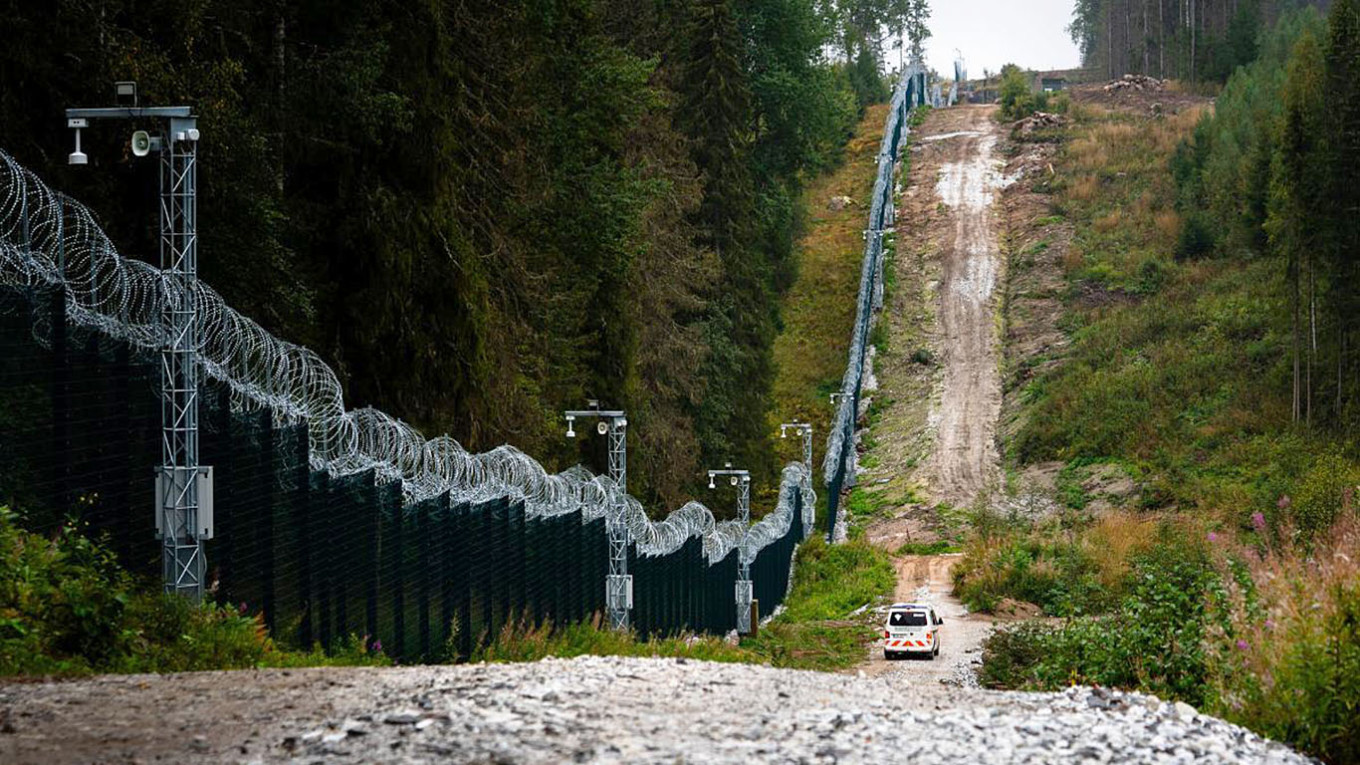
Finland has completed construction on a 200-kilometre fence along its eastern border with Russia, three years after the project was initiated in response to Moscow's full-scale invasion of Ukraine, the Finnish public broadcaster Yle reported on Monday. Interior Minister Mari Rantanen presented the finished barrier near a shuttered border crossing, describing it as a necessary response to elevated security risks and suggesting that the fence could be extended further. “What we particularly need is EU funding for eastern member states so that projects like this can be financed,” Rantanen said. The new fence, which cost €356 million to build, features barbed wire, patrol roads, loudspeakers, night lighting and surveillance cameras, according to Finnish border authorities. Annual maintenance is estimated at between €2 million and €3 million.
The barrier spans Finland's south-eastern border with Russia and parts of its eastern flank, covering a section of the 1,340-kilometre frontier they share—the longest of any EU or NATO member state. Finland's decision to erect the fence followed its historic entry into NATO in April 2023, a move that prompted retaliatory measures from Moscow. In December 2023, Helsinki closed all eastern border crossings indefinitely after an influx of asylum seekers, which Finnish authorities characterised as a "hybrid attack" orchestrated by Russia in retaliation for joining the alliance. The Kremlin has denied those accusations. Over the summer, Russia closed five railway border checkpoints with Finland without explanation or indication of when they might reopen.
The fence is part of a broader pattern of border fortification among EU and NATO member states bordering Russia or its ally Belarus. Similar barriers have been built in Estonia, Latvia, Lithuania and Poland, primarily to stem the flow of migrants, which Western officials have described as engineered by Moscow and Minsk. Finland's Interior Ministry last week proposed extending the country's Border Security Act until the end of 2028, a temporary law that grants border guards the authority to turn away asylum seekers under certain circumstances. The completion of the fence marks a physical and symbolic hardening of Europe's north-eastern frontier, underscoring the lasting impact of Russia's war on regional security and the deepening divide between Moscow and its neighbours.