Green Party divided as Polanski defends contested Zionism motion
The Green leader says he respects the democratic will of members but wants to amend the motion at the first opportunity, as the party faces criticism from across the political spectrum
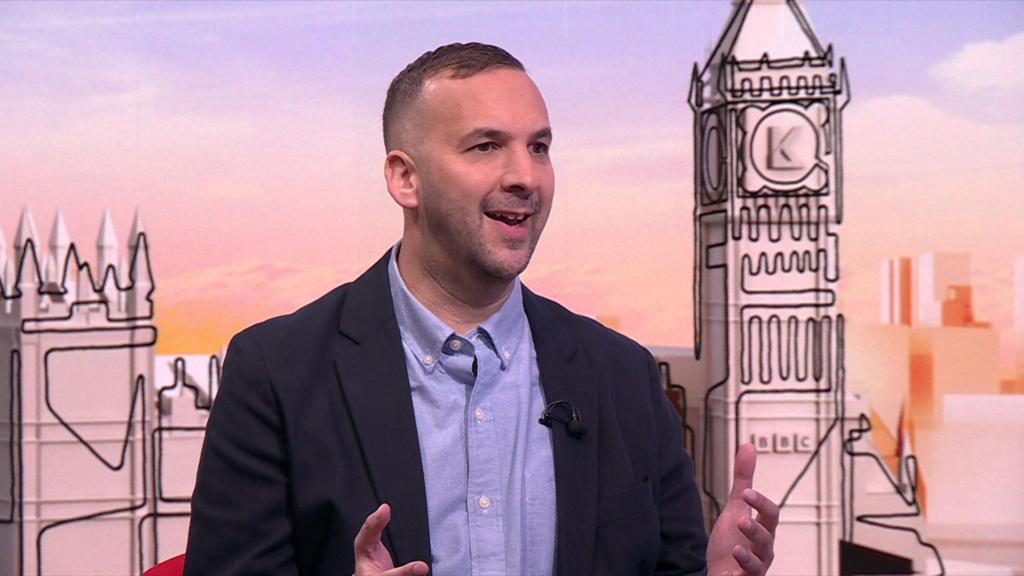
Zack Polanski has said he will not overturn a motion passed by Green Party members declaring Zionism a form of racism, insisting he respects the democratic will of the party even as the row threatens his leadership.
The Green leader told Sunday with Laura Kuenssberg that while he would like to make amendments, the motion would remain party policy until 2028. Passed at the party's conference earlier this month by 1,022 votes to 813—a small fraction of its 230,000 members—it described Zionism as an ideology supporting "an ethnonationalist Jewish state in historic Palestine to the exclusion and/or domination of the non-Jewish population". It also asserted the party's backing for "a single democratic state throughout historic Palestine", a full arms embargo on Israel and a commitment to Palestinian liberation.
The motion has divided the party and provoked a backlash from MPs, Jewish campaigners, the government and the European Green movement, with the equality watchdog writing to the party for more information. The fallout overshadowed the final days of Polanski's campaign in the Holborn and St Pancras by-election, in which he finished second to Labour, and raised questions over his leadership. He was criticised for not voting on the motion.
Asked whether he would now step in to overturn it, Polanski said: "I'm not going to try to overturn it. At the first available opportunity, I do want to amend it—I want to move away from one state, towards saying that Israelis and Palestinians should decide that future for themselves." He said this would not happen until 2028 because party rules make conference votes binding for two years. Pressed on whether he would change those rules, he replied: "I think if members have made a decision, then I respect the democratic will of our members."
Adrian Ramsay, a former Green co-leader and current MP, called for action sooner. "I don't think it's tenable for us to continue the next two years with this policy that's been adopted given the huge political distraction that it's been for our councillors across the country," he told the BBC News Channel. "One way forward could be to have a ballot of all party members to establish very clearly where does the party as a whole stand—my view is we would see a different answer." Polanski had previously said he would not have voted for the motion without two amendments, one avoiding the commitment to a single democratic state and another specifying that the motion should not be used to discipline Jewish Green members who attend synagogues that consider themselves Zionist. Both were voted down at conference. Green MPs, including Ellie Chowns, have called for a review of the party's member-led decision-making given how few people took part in the vote.
Asked whether he thought Zionism was racist, Polanski said he did not consider the question controversial, adding: "I think what's controversial is that 75,000 Palestinians have been murdered in the last few years." Asked whether he accepted that for many Jewish people Zionism meant the right to a safe place to live, or a homeland, he said: "I think that's what people think it means, but actually in practical application—which is what we're talking about here—that homeland has come to the cost of the Palestinian people. I want equal rights for Israelis and Palestinians—the practical application of Zionism has not resulted in that." Questioned on whether Israel had a right to exist, he said he did not think "any state has a right to exist under international law". Asked whether he would apologise for his handling of the row, as Vivien Lichtenstein, chair of Jewish Greens, has requested, he said: "I'm not sorry at all."
Phil Rosenberg, president of the Board of Deputies of British Jews, accused Polanski of being "all over the place" on the issue. "Let us remember that, as of now, the Green Party's platform erases Jewish identity and experience, calls for Israel's elimination, and tells the vast majority of Jews, who overwhelmingly believe in the right of Israel to exist, that they are not welcome in the party," he said. Polanski has said no Jewish Green members will be excluded on the basis of their faith or background, and that being Jewish and supporting Israel are "two separate things".
His latest remarks follow a fortnight of criticism from across the political spectrum. Labour has said it will end power-sharing agreements with the Greens on local councils unless its councillors disown the motion, while Prime Minister Andy Burnham called it "antisemitic". Polanski said it was up to Green councillors to do what they saw fit.