Government pushes settlement expansion in West Bank ahead of October elections
Thirty Israeli families have moved into the former settlement of Kadim near Jenin, two decades after it was evacuated, as the government presses ahead with expansion in the occupied West Bank despite widespread international condemnation.
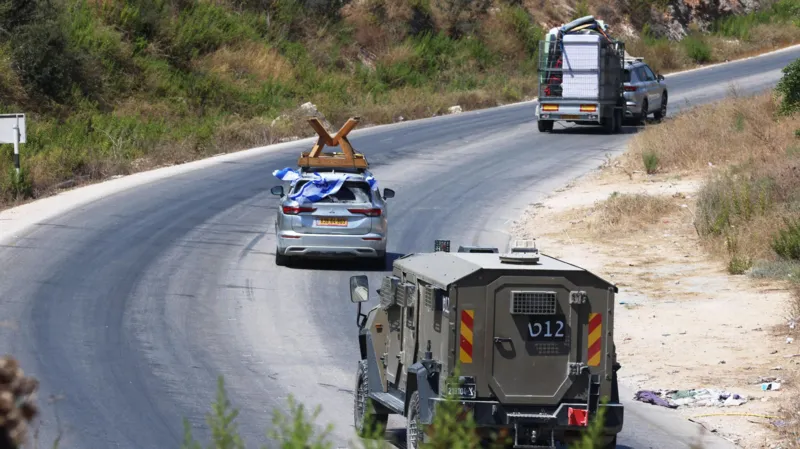
A new generation of Israeli settlers has returned to Kadim, a hilltop outpost outside the Palestinian city of Jenin, two decades after a previous government ordered its evacuation. Thirty families, described by the regional settlers’ council as “pioneers”, arrived from Tel Aviv on Thursday, their cars flying blue-and-white flags as they passed Palestinian villages and farmlands. Some dragged trailers laden with bedding, furniture and building materials.
The move overturns a ban on Jewish settlement in the area that had been in place since 2005, when Kadim and three other northern West Bank settlements were dismantled under Ariel Sharon’s unilateral Disengagement Plan. At the time, the settlements were deemed too isolated, costly to protect and of limited strategic value. The same plan saw all Israeli soldiers and settlers withdrawn from the Gaza Strip.
Speaking at a reopening ceremony, Israel’s far-right Finance Minister Bezalel Smotrich declared: “Twenty-one years after the crime of expulsion from northern Samaria, we have completed the correction.” He was joined by the justice minister, the Knesset speaker and Yossi Dagan, head of the regional settlers’ council, who vowed that settlers would one day return to Gaza too.
All Israeli settlements in the occupied West Bank are illegal under international law. Outposts such as Kadim are also illegal under Israeli domestic law, though they frequently receive state funding and services. The government has approved more than 100 new settlements across the West Bank since taking office in late 2022, including 19 in the northern district. Kadim is the last of the four evacuated in 2005 to be reopened; Ganim, Sanur and Homesh have already been formally resettled.
The return has stirred deep anxiety among Palestinian residents. A vegetable farmer who lives in a house on a hill behind Kadim, born there 53 years ago, recalled watching the settlement rise and fall. “Back then, the settlers were living alongside us, and we coexisted peacefully,” he said. Now, he fears a repeat of recent demolitions along a bypass road where, he said, the army destroyed shops and drove his nephews from their land. “There’s no more displacement left in me,” he added. “It’s a life of fear.”
The pace of change is striking. In recent weeks, white trailer homes have appeared on the hilltop. A café on the road from Kadim to Israel, where this correspondent sat drinking coffee only weeks ago, has been reduced to rubble along with dozens of neighbouring Palestinian businesses. Two new Israeli military bases are also rising nearby, behind concrete walls topped with watchtowers and barbed wire, and a military outpost is being built on land beside Jenin refugee camp – the first such base on territory under full Palestinian Authority control since the Oslo Accords.
Palestinian residents describe a climate of intimidation. Samer Jaber, a partially blind teacher with a leg injury, lives next to the newly opened settlement of Emek Dotan, west of Jenin. He said settlers had filmed him and his children, shone floodlights through his windows at night and tried to enter his home. “Fear dominates everything,” he said. “All of them have weapons.”
The Israeli military confirmed the Jabriyat outpost had been ordered “in accordance with operational needs”. The Palestinian Authority governor for Jenin, Kamal Abu al-Rub, said the seizures signalled a plan to divide the city in the manner of Hebron or Jerusalem. He described the two decades without settlers in the area as “bliss”. “Now,” he said, “we live in the hell orchestrated by them.”
With Israeli elections scheduled for October, Hagit Ofran of Peace Now said the rapid construction around Jenin was part of a broader push to expand settlements before the vote. The international community has voiced growing protests, but as Samer Jaber put it, with bitterness: “Europe has no time for us, America is preoccupied with Iran, Russia is busy with Ukraine, the United Nations is finished.” His resignation echoed the farmer’s: “There’s no more displacement left in me.”