Government defends ethanol policy as motorists report wear and performance loss
India's accelerated transition to 20% ethanol-blended petrol has provoked widespread consumer complaints and street protests, with motorists questioning the viability of a fuel many vehicles were not designed to use.
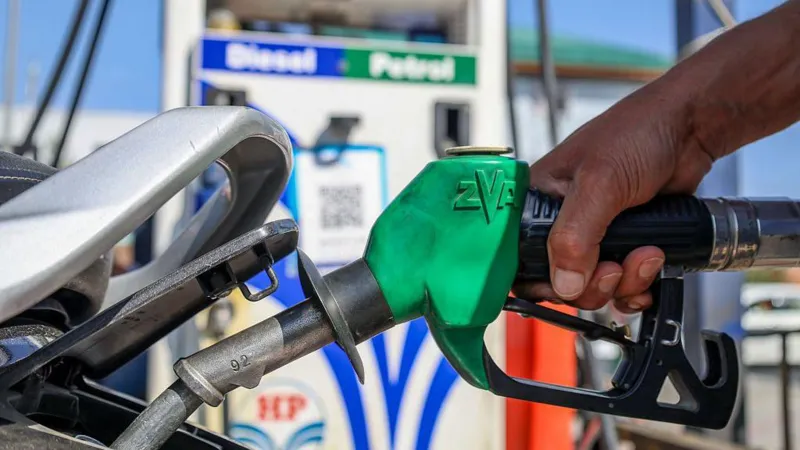
India's ambitious drive to increase the share of biofuels blended with petrol has ignited a fierce backlash from motorists, who have taken to the streets and social media to voice their discontent over a policy that many argue was implemented without adequate preparation for a vehicle fleet largely unsuited to the higher ethanol content. The world's largest two-wheeler market and third-largest car market has been steadily increasing the proportion of ethanol derived from sugarcane and maize in its petrol since the mid-2000s, a strategy designed to reduce dependence on imported oil and curb carbon emissions, yet the decision in April to make E20, a blend containing 20 per cent ethanol, the standard fuel at every pump has intensified complaints from consumers who say their vehicles are suffering as a result. Although unblended petrol remains available, it is often 40 to 50 per cent more expensive than E20, depending on the state, and many motorists, it is understood, are unaware that they can request it, leaving them with little practical choice but to use the mandated blend.
Over the past several months, social media platforms have been flooded with grievances from drivers reporting engine wear, diminished fuel efficiency and reduced performance, culminating in a protest in Delhi last week organised by an entrepreneur who frequently backs the opposition Congress party in televised debates, where motorists accused the government of unilaterally imposing E20 and burdening them with higher servicing costs and limited options at fuel stations. The government of Prime Minister Narendra Modi has dismissed these complaints as "misleading" and "social media misinformation", issuing statements last month asserting that the fuel was rolled out after extensive testing and does not damage engines, while also seeking to debunk what it characterised as the "more colourful myths that have circulated on social media". In an unusual show of unity, six automakers joined a government press conference over the weekend to defend the policy, with Rahul Bharti, senior executive officer for corporate affairs at Maruti Suzuki, stating that India's largest carmaker had serviced more than 15 million older vehicles which were not E20 compliant and found no fuel-related faults, though the automakers did concede that the use of E20 had resulted in a 3 to 3.5 per cent drop in fuel efficiency due to the lower energy content of ethanol, a figure that some estimates suggest could be as high as 4 to 12 per cent.
The government's broader rationale for the biofuel push rests on three pillars: reducing India's oil import bill, supporting farmers and cutting emissions, given that ethanol burns cleaner than petrol and is produced domestically from crops such as sugarcane and maize, and government data suggests the policy has largely delivered on these objectives. India imports the vast majority of the crude oil it consumes, and the disruption to global oil markets during the Iran conflict has only strengthened the case for producing more fuel at home, with other oil-importing Asian nations including Indonesia and Vietnam also accelerating plans to expand their ethanol-blended and flex-fuel programmes. Brazil, the model often cited by Indian officials, built its ethanol-ready vehicle fleet gradually over four decades before mandating higher blends, allowing consumers there to choose between E27 petrol and 100 per cent ethanol, with pump prices frequently making ethanol the cheaper option, yet India compressed a similar transition into just three years, moving from 10 per cent ethanol in 2022 to a mandatory 20 per cent blend by 2025, five years ahead of schedule, a pace that critics argue skipped the essential step every other major market took first: giving vehicles time to adapt before raising ethanol levels.
More than 75 per cent of vehicles on Indian roads are not E20 compliant, according to Puneet Gupta, director of auto research firm Mobility Global, an analysis echoed by a Thomson Reuters Foundation study last year which found that only some 20 per cent of new petrol vehicles sold in the past 15 years were designed for the higher blend, a statistic that has fuelled concerns, particularly among owners of pre-2023 vehicles built for lower ethanol concentrations, who fear engine corrosion and reduced performance. Complaints have mounted in recent months, with protesters at last week's Delhi demonstration describing problems they said emerged after using E20, and the BBC's conversations with several car and two-wheeler service centres and mechanics in Mumbai revealed a mixed picture, with some reporting no issues thus far while others cited cases they believed were linked to the higher ethanol blend. Mohammed Arif, who repairs motorcycle engines at a workshop, said he has serviced several older bikes over the past year for fuel residue build-up in carburettors, which he attributes to the higher ethanol content, a problem that reduces performance and requires more frequent cleaning, thereby increasing servicing costs for customers, while Basil Jacob, who runs a car servicing centre, reported that customers are experiencing lower fuel efficiency, forcing them to fill up more often without any corresponding saving at the pump, as E20 retails at the same price as before.
Some experts have suggested that potential risks may not manifest immediately but could emerge after months of E20 use in the form of accelerated wear and tear on components, a view articulated by Hormazd Sorabjee, editor of Autocar India, who told the BBC that "it will be a slow-burn impact" with possible corrosion in fuel delivery systems after 10,000 to 20,000 kilometres of use, though he added that proper maintenance could mitigate the problem and that some social media concerns were overblown. Ethanol attracts moisture, which can separate from the fuel over time and cause corrosion, and it can also loosen old engine deposits, occasionally clogging fuel pumps and injectors, potentially leading to faster wear, more frequent servicing and additional part replacements, although Sorabjee suggested the long-term costs were unlikely to be significant. A survey conducted by online community platform LocalCircles of more than 44,000 people who bought petrol vehicles before 2023 found a marked increase in those reporting "an unusual increase in wear and tear or need for repairs", yet no scientific studies are publicly available to substantiate either the claims of damage or the government's and automakers' assurances that extensive testing found none, an evidence gap that is fuelling considerable confusion.
"If you're going to force this on the public, you should be able to prove it's safe," said a senior industry expert who spoke on condition of anonymity, adding that the most certain outcome is the loss in fuel efficiency, which should have made the fuel cheaper and optional. The issue is further complicated by uncertainty over warranties and insurance, with Gupta questioning whether automakers that have publicly backed E20 would honour warranty claims if fuel pumps or fuel lines fail after prolonged use of the blend, a concern that deepened last month when private insurer ICICI Lombard first suggested in a blog post that using E20 in non-compliant vehicles could amount to "negligence" and lead to claim rejection, only to later reverse its position, stating that motor policies "remain fully valid" with E20 use, though experts note that motor insurance typically covers accidental damage, not wear and tear caused by fuel, leaving a significant question mark for owners in India's highly cost-sensitive market. As the debate rages on, with neither side able to produce definitive scientific evidence to settle the matter, the E20 mandate stands as a bold experiment in energy policy, one that has already exposed the tensions between environmental ambition, industrial readiness and consumer protection in the world's most populous nation.