Giant whales flock to Greenland as melting ice opens new seas
Decades of research reveal that humpback, fin and minke whales are migrating to East Greenland in unprecedented numbers as rising temperatures open up once ice‑locked coastal waters.
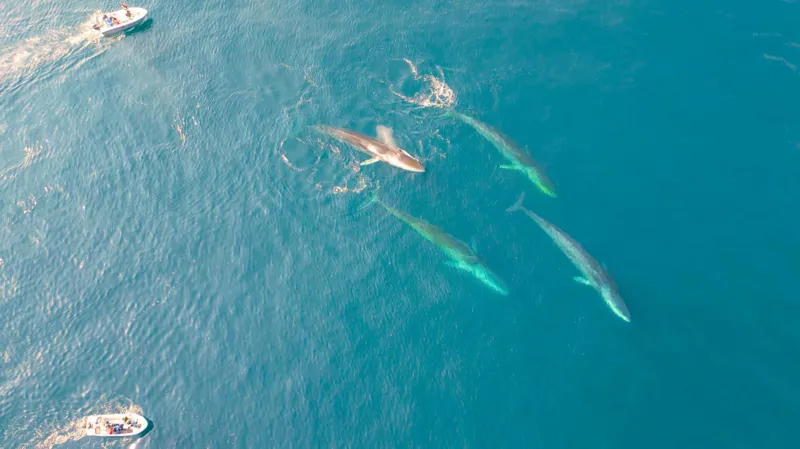
For centuries, the coastal waters of East Greenland remained sealed by sea ice, locking out some of the world’s largest marine mammals. Now, as climate change warms the sea and melts that ice, hundreds of giant whales—humpbacks, minke and fin whales—are moving in to take advantage of newly accessible feeding grounds, according to a decades‑long study that has documented a “major ecological regime shift” in the region.
The transformation is stark. Ship‑based surveys did not record a single humpback whale sighting until 2006. By 2007, seven were observed; by 2024, there were 150 ship‑based sightings. Combining aerial surveys from the summers of 2015 and 2024 with satellite tracks of 15 tagged whales and testimony from Inuit hunters, researchers estimated that some 4,000 humpbacks, 6,000 fin whales and 6,000 minke whales visited the Greenland Sea last summer. The lead researcher, Prof Mads Peter Heide‑Jørgensen from the Greenland Institute of Natural Resources, told the BBC that the changes in the region were “probably the most radical we can see anywhere in the subarctic”.
The shift is driven by rising sea temperatures and changing food availability. The whales appear to be feeding on fish and krill that have migrated into the warming waters of East Greenland, with the three species consuming an estimated 800,000 tonnes of prey over a single summer season. Prof Heide‑Jørgensen describes the result as seasonal Arctic “feeding frenzies”—a dramatic departure from the historical absence of these marine mammals in the area.
It remains unclear from the study whether the influx represents an overall population increase or a redistribution from other regions, such as West Greenland. That distinction is sensitive in a country where some whales are hunted, and other experts have expressed concern that the study suggests a migration away from western waters. Nevertheless, the scientists say their findings indicate that these “opportunistic” baleen whales are adapting and may even be benefiting from the environmental changes.
Not all Arctic species are faring so well. Narwhals and belugas, which share habitat with the newly arrived whales, may be facing displacement or increased competition. “For some species, climate change is not necessarily a problem—it opens up new opportunities,” Prof Heide‑Jørgensen observed, “but other species are losing their habitat.” The East Greenland case thus offers a vivid illustration of how global warming is redistributing marine life, creating winners and losers in a rapidly transforming ocean.