Giant tuna returns to North Sea after six-decade absence
Atlantic bluefin tuna have been caught off the coast of Whitby for the first time in an estimated 60 years, with researchers tagging the giant fish as part of a study into their return to British waters.
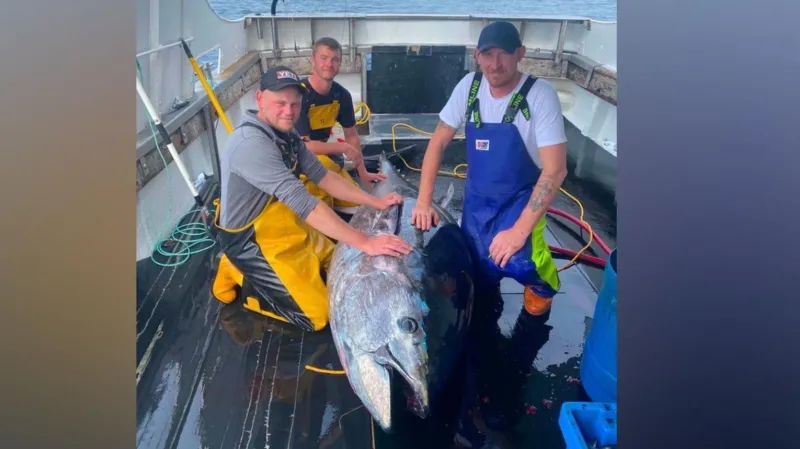
Atlantic bluefin tuna, the giant migratory fish that once made Scarborough and Whitby world-famous destinations for game fishing, have been caught off the Yorkshire coast for the first time in an estimated 60 years. The five-person crew of The Dominator landed a 338kg specimen on Sunday, about ten miles from Whitby Harbour, and repeated the feat a day later with another fish weighing over 300kg, according to crew member Jack Gardner. The 28-year-old from Paull, near Hull, described the moment as the "best feeling ever", recalling how the fish jumped out of the water and left the crew looking at one another "in awe". "We couldn't believe that we had actually hooked into one," he said. The crew had been heading home when they spotted a group of birds and decided to investigate, leading to the historic catch. "We knew they were in the waters, it was just whether we could catch them or not because they are fast fish," Gardner added.
The bluefin tuna, nicknamed "tunny" in the interwar period, had not been seen in the North Sea since the 1960s due to overfishing and the depletion of herring shoals, according to researchers from the University of Exeter. The species has, however, returned to the South West coast in recent years after decades of absence, and since 2018 researchers have tagged 165 bluefin tuna from the Atlantic coast of England, Wales and Jersey. The fish found off Whitby are "considerably larger and may be genetically distinct from those already tagged", a university spokesperson said. Dr Lucy Hawkes, who is leading the research, attributed the return to "some careful and judicious management of fisheries" and noted that the UK's current quota for fishing the species was "really small" compared to overall stock levels. "Bluefin tuna are also top predators who can only be in these waters if the ecosystems underneath them are healthy," she added. "Essentially their presence is a good way of signalling your waters are doing well, but we have no idea where they've come from – which is why tagging is so important."
During the interwar period, Scarborough and Whitby attracted celebrities such as John Wayne and Errol Flynn, who travelled to the area to fish for the giant tuna. The Scarborough Tunny Club, founded in the 1930s, counted actors and aristocrats among its members, though it survives today as a fish and chip restaurant. The British record for the largest tuna caught in British waters was set in Whitby in 1933 with a 386kg specimen. The pastime declined during the Second World War, and although the sport resumed, stocks of tuna were in decline by the 1950s as commercial fishing technology advanced.
The recent catches have already generated commercial interest. Lance Varrell, the buyer from Hook to Plate, described the fish as "good quality" and said they would be sold to restaurants, sushi markets and directly to customers. "Bluefin tuna is very popular. It's a very premium fish – they call it the Rolls Royce of the sea," he said, adding that Japanese chefs based in London would pay as much as £100 per kilogram "if it's really good". Gardner expressed his immense pride in his crewmates and skipper Clive Easton for their role in the historic catch, while Dr Hawkes and her team will continue to follow the fish "day by day" over the next two years "to figure out who the heck they are and where they come from".