Georgia warns it risks being "given away" to Russian interests as West focuses on Iran
Salome Zurabishvili tells The World House that inattention from the West is allowing Russia to tighten its grip on the strategically pivotal Caucasus nation
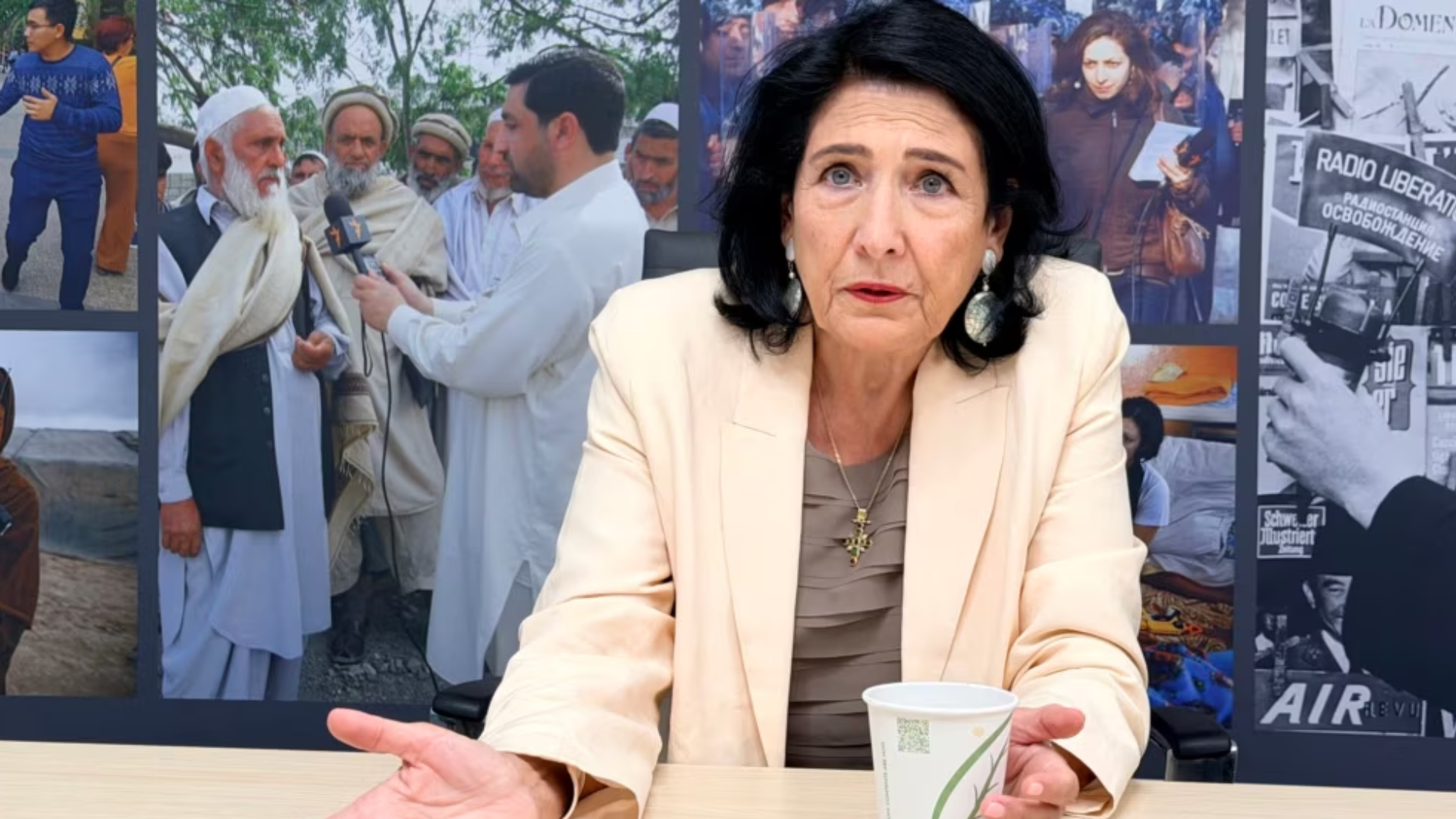
Georgia's former president, Salome Zurabishvili, has issued a stark warning to Western capitals that the small but strategically vital Caucasus nation risks being "given away" to Russian interests if Washington's diplomatic focus remains fixed on de-escalation with Iran, even as protesters mark more than 560 consecutive days on the streets against what is widely perceived as the country's accelerating democratic decline. Speaking to RFE/RL in Washington on June 16, shortly after receiving Freedom House's 2026 Mark Palmer Prize, Zurabishvili argued that any easing of tensions in the Middle East should create an opportunity for Western allies to redirect their attention towards what she described as an increasingly urgent political struggle unfolding on Europe's periphery: a slow-burning democratic crisis compounded by Moscow's expanding influence through Georgia's ruling establishment. Receiving the award, she said, carried significant symbolic weight for Georgian civil society after nearly two years of sustained protests and intensifying repression, adding: "I think it means that they are not forgotten."
That sense of being overlooked has sharpened as global crises have proliferated, but Zurabishvili maintained that should the prospect of a wider confrontation with Iran recede, Washington ought to view Georgia not as a peripheral democracy in trouble but as a central node in the next phase of regional competition. "America cannot just give away Georgia to Russia's interests," she insisted. Her term as president ended on December 29, 2024, amid a political crisis triggered by her rejection of the results of the October parliamentary elections; she vacated the presidential palace on the day her successor was sworn in. Her remarks come at a moment when the ruling Georgian Dream party has sought to position itself as an indispensable regional actor amid Middle East instability, even presenting a recent telephone conversation between its representatives and US Secretary of State Marco Rubio as evidence of a diplomatic thaw with Washington. Zurabishvili dismissed that effort as political theatre. "They've been lobbying with some not very efficient lobbies in Washington," she said. "But they don't understand that you cannot lobby on one side and then flirt with the enemies of the people that you are lobbying."
Painting a picture of a government that, in her assessment, no longer pursues an independent strategic course but instead calibrates its foreign policy to remain within the limits of what Moscow would tolerate, Zurabishvili said: "They really don't have a strategy. Their strategy is to try to be close to anybody that they are allowed by Russia to be close to." That approach, she argued, had produced a foreign policy that is opportunistic and inconsistent, aligning where useful with actors ranging from Hungary to Slovakia while attempting periodic resets with Washington and Brussels. Yet her deeper concern centred less on diplomacy than on infrastructure. According to the former president, Georgia is increasingly functioning as what she termed a "gray zone" — a space where sanctions enforcement, financial oversight, and border controls are becoming ever harder to monitor. "By now, Georgia has become a gray zone where everything can happen," she said.
She cited what she described as cases of foreign nationals obtaining Georgian documentation, largely unregulated cryptocurrency activity, and the arrival at Georgian ports of vessels linked to Russia's so-called shadow fleet. She also pointed to more than 100 weekly flights between Georgia and Russia, arguing that the sheer scale of movement raises serious questions about enforcement capacity. The concern, she suggested, is not simply criminality but strategic permissiveness: a system increasingly vulnerable to exploitation by Russian networks and other sanctioned actors. At home, Zurabishvili said the domestic political environment has deteriorated sharply. She described a state apparatus where parliament functions largely as a rubber stamp, opposition leaders face mounting legal pressure, and new laws increasingly criminalise dissent. "It cannot get much worse," she said.
Among her gravest anxieties is an ongoing effort to ban opposition parties through Georgia's Constitutional Court, a move that could radically narrow political space ahead of future elections. She said hundreds of people she described as "conscience prisoners" remain in detention, and argued that the system increasingly resembles the Kremlin's model of political control. "It's a very Russian model," she observed. But she emphasised one major distinction: Georgian civil society remains active, organised, and defiant. For nearly two years, protesters have remained on the streets, resisting what they see as Georgia's accelerating authoritarian turn. For Zurabishvili, that resilience is now colliding with a changing geopolitical environment.
Last week, the US House of Representatives passed legislation targeting Russian, Chinese, and Iranian influence across the Caucasus — a sign, she said, that Washington may finally be beginning to look more closely at the region's shifting fault lines. Still, she questioned why such scrutiny required legislation at all. "What I'm surprised of is that it should need legislation," she remarked. Her broader concern is that while the West has adapted to Russia's military threat, it remains behind in countering the Kremlin's hybrid tools of disinformation, political infiltration, economic pressure, and increasingly artificial intelligence. "What is done about the use of artificial intelligence to interfere?" she asked.
Looking ahead, she warned that Georgia's ruling party may be entering a period of internal instability. She pointed to arrests within its own ranks and signs of growing political anxiety as evidence that Georgian Dream's confidence may be eroding alongside Russia's own wartime image. "The yesterday's Putin is no longer the strongman of Europe," she said. That volatility, she argued, could make snap elections more likely. "They might be tempted by just throwing elections in advance," she said, although she cautioned that Georgia's opposition remains fragmented and insufficiently prepared. To confront what she sees as an increasingly consolidated authoritarian system, she said, the opposition will need something more cohesive than conventional electoral politics: "A united national front." For Zurabishvili, the task of restoring democracy belongs to Georgians, but she said Western allies still bear responsibility for understanding the wider strategic stakes. Because if Iran fades from the top of Washington's foreign policy agenda, she argues, the Caucasus may be where the next test of Western resolve quietly unfolds.