G7 summit sees Trump pledge fresh push for Ukraine peace after Tehran agreement
Having finalised an agreement with Tehran, President Trump has signalled a renewed determination to resolve the Ukraine conflict, though questions persist over the durability of the Iran deal and the prospects for a meaningful breakthrough
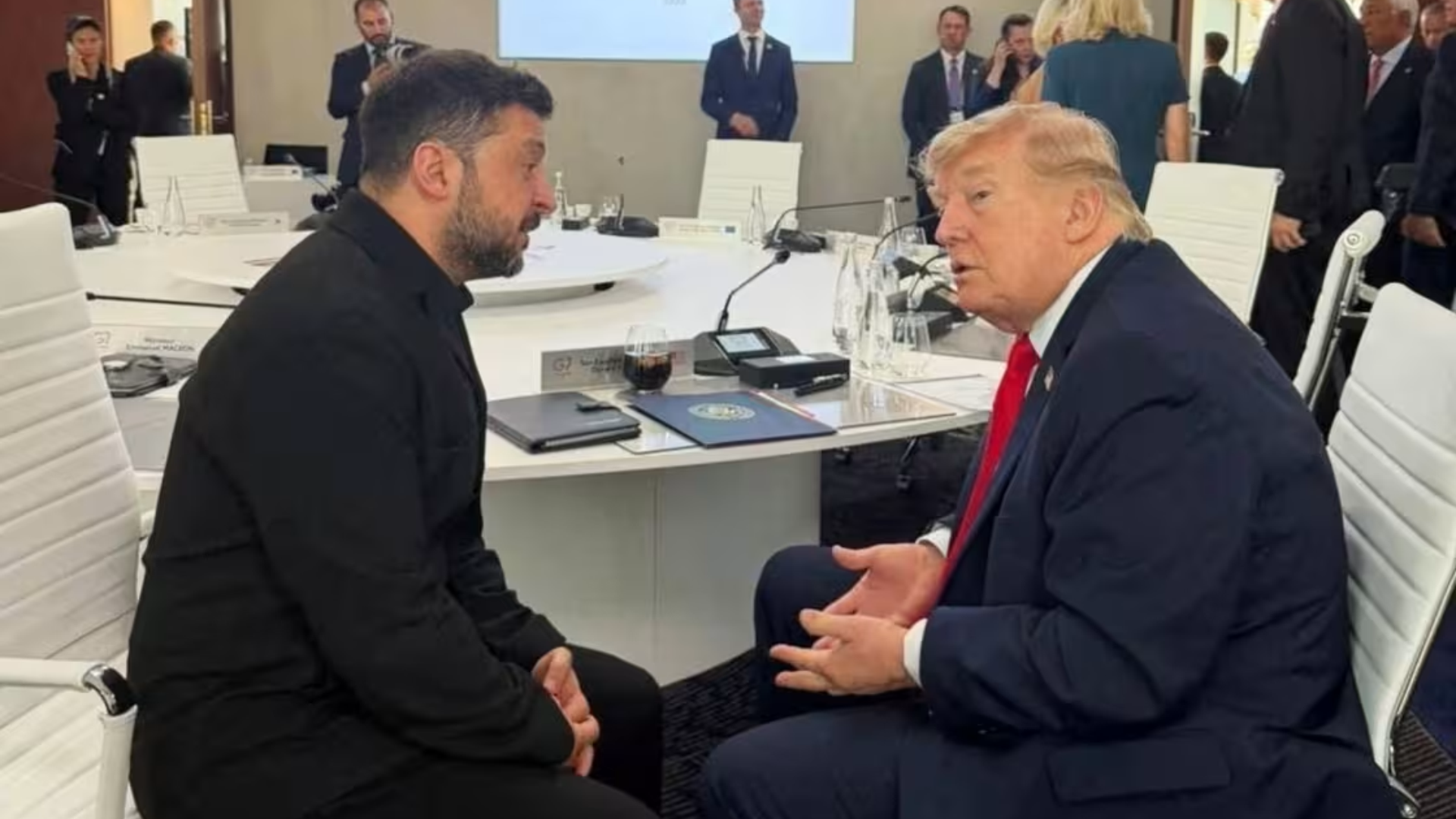
Having put his signature to a framework accord with Tehran, President Donald Trump has swiftly pivoted his attention to the conflict in Ukraine, signalling a renewed determination to bring about an end to the hostilities that have now ravaged eastern Europe for more than four years. Speaking on the sidelines of the Group of Seven summit in the French spa town of Evian-les-Bains on Tuesday, the American president characterised his meeting with Ukraine's Volodymyr Zelenskyy as “very good” and indicated that, with the Iran agreement now concluded, he intended to focus his diplomatic energies upon resolving the Russian war. The president declared that the Iran deal would soon be “in the rear-view mirror,” despite lingering uncertainty over the precise terms of the framework and persistent doubts among allies as to its durability. In comments to reporters, Mr Trump said he would do “whatever I can” on Ukraine, while urging Moscow to come to the negotiating table and confirming that he planned to meet again with Mr Zelenskyy later in the day. The shift in emphasis had been foreshadowed a night earlier, when the president told reporters during a bilateral meeting with President Emmanuel Macron of France: “Now that this is finished, we’re going to be focusing on that.”
The remarks will have been received with considerable relief in European capitals, where leaders have spent months endeavouring to ensure that Washington did not lose sight of the war, which has now entered its fifth year and continues to exact a heavy toll on the continent's security architecture. Mr Trump's previous diplomatic overtures, it will be recalled, foundered after he repeatedly pressed Kyiv to make territorial concessions and appeared to favour many of Moscow's more hard-line positions. His latest comments, however, struck a more accommodating tone, with the president observing that “Russia should make a deal” and acknowledging the immense human cost borne by both sides. “Russia’s lost tremendous amounts of people, and so has Ukraine,” he told reporters. The meeting between the two presidents occurred after a degree of diplomatic choreography; although no direct bilateral encounter had originally been scheduled, they ultimately convened as part of a trilateral discussion with President Macron, before joining a working session with other G7 leaders that centred on the Ukrainian question.
This latest development comes at a moment when Kyiv has demonstrated a growing capacity to inflict significant damage upon Russian military infrastructure, employing drones and missiles to strike deep within Russian territory and thereby shifting the prevailing narrative of the conflict. For its part, Moscow has vowed to respond with “systematic” attacks on the Ukrainian capital, and unleashed a deadly barrage early on Monday that set ablaze a historic monastery in Kyiv. The British Prime Minister, Sir Keir Starmer, said that G7 leaders shared a sense that “things are changing” and that Ukraine was regaining the initiative. European leaders will hope that the mounting domestic pressures confronting President Vladimir Putin might soon be complemented by a reinvigorated diplomatic push from Washington. Yet despite Ukraine's burgeoning confidence, there remains little tangible evidence of an impending breakthrough on the battlefield or at the negotiating table.
Mr Trump, however, sounded an optimistic note, telling reporters that he had held “good conversations” with both Mr Putin and Mr Zelenskyy in advance of the summit and that “maybe we can do something.” This echoed the sort of optimism he frequently expressed during the months in which he actively pressed for a deal to end the war, having initially promised during his election campaign to resolve the matter within twenty-four hours. Despite this newfound focus, no direct encounter with Mr Zelenskyy had been listed on Mr Trump's official schedule for the G7 summit, which is taking place in the French town of Evian-les-Bains, near the Swiss border, from 15 to 17 June. The gathering is being attended by national leaders as well as the EU's foreign policy chief and ministers from Brazil, Canada, the United Arab Emirates and Turkey. In a sign of the importance attached to maintaining American engagement, President Macron could be heard on an open microphone asking Mr Zelenskyy whether a bilateral meeting with Mr Trump had been arranged, as the two leaders walked together before the official talks on Tuesday.
Mr Zelenskyy subsequently wrote on social media that the key focus was to “strengthen air defence for Ukraine and advance diplomacy, to make Russia end its war,” adding that “substantive meetings have already begun.” He later shared photographs from his meeting with Mr Trump and Secretary of State Marco Rubio, describing it as “always important to coordinate positions.” The Ukrainian leader had said on Monday that he had offered to meet Mr Putin at the G7 summit or even in the United States for talks, though his taunting public letter to the Russian leader earlier this month, in which he requested a face-to-face meeting, was swiftly dismissed by the Kremlin. Asked whether an official invitation had been extended to Mr Putin to attend the summit, the Kremlin spokesman, Dmitry Peskov, told reporters on Tuesday: “Of course not,” adding that there were no official channels of communication between Moscow and Kyiv. Mr Peskov reiterated Mr Putin's willingness to meet with Mr Zelenskyy in Moscow, an option the Ukrainian leader has previously ruled out. The Kremlin spokesman further indicated that American negotiators could be travelling to Russia “soon,” but cautioned that no clear dates had yet been fixed, as the United States remained focused on finalising the agreement with Iran. European leaders, who were largely excluded from the negotiating process last year, have been insisted upon by Mr Zelenskyy as indispensable participants in any future talks; it is a demand that Russia has fiercely opposed, and one further complicated by the simmering tensions between Washington and its European allies.